


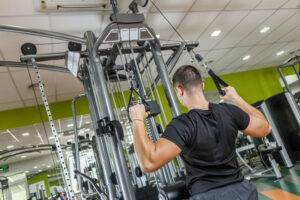
- Multi gym for home offers all in one convenience with built-in safety features, making them ideal for beginners, rehabilitation, and those with limited space
- Free weights provide superior muscle activation and functional strength development, engaging more stabilizer muscles and allowing natural movement patterns
- The best approach often combines both equipment types, leveraging multi gym safety for isolation exercises while using free weights for compound movements
- Home gym space considerations should guide your equipment choices, with multi gyms offering space efficiency while free weights require more versatile room
- Your specific fitness goals ultimately determine which equipment will deliver optimal results for your personal journey
The debate between multi gyms and free weights has been raging in fitness circles for decades. Both have loyal followers who swear their choice delivers superior results. But what does the science actually say about these two fundamentally different approaches to resistance training? As someone who's spent years analysing the research and observing real world results, I can tell you the answer isn't as simple as picking a winner.
The Big Battle: Multi Gym vs Free Weights
Multi gym for home and free weights are two different ways to do resistance training. Multi gyms use fixed movement patterns and guided resistance, and usually have multiple exercise stations in one piece of equipment. Free weights like dumbbells, barbells, and kettlebells, offer unlimited movement possibilities but need more coordination, balance, and core engagement to use effectively.
How Your Choice of Equipment Can Make or Break Your Fitness Goals
The equipment you choose plays a pivotal role in your fitness journey. It's not just about which one can help you build more muscle or strength in isolation it's also about which one fits your lifestyle, space limitations, learning style, and long term goals. If you choose the wrong one, you may end up feeling frustrated, hitting plateaus, or even giving up on your fitness routine altogether.
Studies that have been published in the Journal of Strength and Conditioning Research have suggested that the most important factor in achieving long term results is not the minor differences in muscle activation, but the equipment that you enjoy using. The best equipment is the one that you will consistently use, with the correct form, progressive overload, and the right intensity.
Practicalities of Space and Budget
First off, let's tackle the practical considerations. A full fledged multi gym usually needs a dedicated space of around 50-100 square feet but offers multiple exercise options within that space. Free weights might initially seem to take up less space, but when you consider the need for a bench, rack, and enough space to move around, the space requirements often increase significantly. For those in apartments or shared living spaces, multi gyms can offer all in one functionality in a smaller footprint than a full free weight setup.
When it comes to cost, it's all about the quality. You can get a beginner multi gym for between £600 and £1000, but if you're a professional, you could be looking at more than £3,000. A complete free weight setup with good quality barbells, dumbbells, a bench, and a rack will usually cost you between £1,200 and £2,000. But you need to consider more than just the upfront cost. You also need to think about how long it will last, how many different exercises you can do with it, and how much you could sell it for if you needed to. And when you look at those factors, free weights usually come out on top.
Workout Efficiency
Multi gyms and free weights each have their own perks when it comes to getting the most out of your workout. Multi gyms make it easy to switch between exercises without having to change any settings or load plates, making them perfect for circuit training, supersets, and workouts when you're short on time. According to a 2018 study published in the International Journal of Exercise Science, people who used a multi gym for the same exercises were able to cut their total workout time by about 30% compared to those who used free weights.
Free weights require more setup time but offer a wider range of exercises and more freedom of movement. They allow for smooth progression between weight increments, while multi gyms usually have larger jumps between resistance levels. For systematic, progressive training programs where precise weight increases are important, free weights offer better control over resistance progression.
Future Progress Potential
Perhaps the most significant long term difference between these types of equipment is the maximum progress they allow. Multi gyms naturally restrict progress once you've reached their built in resistance capabilities. Most home models max out between 150-300 pounds of resistance, which advanced lifters can surpass for certain exercises. This limitation isn't just about raw strength, it's about the continued adaptation stimulus that drives ongoing improvement.
Free weights provide endless opportunities for progression, only limited by your strength and the amount of weight you can get. This makes them especially valuable for those who are committed to fitness for the long haul. However, as the weights get heavier, the demand for proper technique increases, and without it, the risk of injury increases.
Multi Gym Benefits: More Than Just a Sales Pitch
Multi gym for home are more than just a sales gimmick. They have real advantages. For example, they are inherently safe for beginners and those who train alone because they have controlled movement patterns. They also have guided resistance systems that specifically target certain muscle groups. This reduces the need for stabilization, making them especially useful for isolation exercises and rehabilitation.
“Multi gyms shine in three key scenarios, beginners learning proper movement patterns, rehabilitation where controlled motion is essential, and isolation work targeting specific muscle weaknesses. Their value comes from safety, convenience, and consistency rather than superior muscle development.” Dr. Stuart Phillips, Exercise Physiologist, McMaster University
All in One Convenience Factor
The primary selling point of multi gyms is their comprehensive functionality within a single piece of equipment. A well designed multi gym allows users to perform 20-30 different exercises targeting all major muscle groups without additional equipment. This consolidation eliminates the need for multiple pieces of equipment, saving both space and setup time. For home gym environments where space efficiency matters, this integrated approach offers significant practical advantages over collecting separate pieces of equipment.
Train Alone Safely with a Multi Gym
When you're training on your own, safety can be a real concern, especially when you're working with heavy resistance. That's where a multi gym really shines. It has built in safety features that take the worry out of training alone. For instance, there's virtually no risk of getting trapped under the weights, which can be a real danger when you're bench pressing or squatting with free weights. The weight stacks on a multi gym stay put when you let go, and there are mechanical stops that keep you from moving too far in any one direction.
Working out alone is safer with a multi gym, which allows you to get closer to muscle failure without risking injury and potentially enhancing muscle stimulation. A study published in the Journal of Strength and Conditioning Research found that people who work out without spotters usually stop doing compound exercises 2-3 repetitions short of true muscle failure when using free weights. This could limit potential growth stimulus.
Assisted Movements for Ideal Technique
Multi gyms are designed to guide you through the correct movements of each exercise, which reduces the need for a high level of technical skill. This makes it easier for beginners to learn the right way to move their bodies, build strength, and reduce the risk of injury. With exercises like lat pulldowns, chest presses, and leg extensions, the machine ensures that the right muscles are being worked without the technique falling apart.
On the other hand, this guidance can be both beneficial and restrictive. It helps to prevent incorrect form, but it also limits the natural variation in movement that helps to develop functional strength and maintain joint health. The natural movement patterns of your body may not exactly match the fixed path of the machine, which could lead to unnatural stress on your joints during some exercises.
Targeted Muscle Development Through Isolation
Multi gyms are great for targeting specific muscle groups, whether it's for aesthetics or rehabilitation. They stabilize the joints around the muscle you're working on and minimize the involvement of other muscles. This means the stress is directed exactly where it needs to be. That's why multi gyms are so effective for bodybuilding style training. If a certain muscle group is lagging, you can give it the attention it needs.
Workouts such as pec flyers, lateral raises, and leg extensions are more effective at isolating the target muscle on machines than when using free weights. A 2017 electromyography study discovered that machine based lateral raises resulted in 23% greater middle deltoid activation and significantly less upper trapezius involvement than dumbbell variations, proving that they are better at isolation.
Benefits of Time Efficiency
Multi gyms are a great time saver for those who are always on the go. You can cut your total workout time by 20-40% because you don't have to change plates, set up equipment, or rest between exercises. This is especially helpful when you're doing high intensity workouts like supersets, drop sets, or circuit training, where quick transitions between exercises can boost your metabolism.
Another benefit of a multi gym for home is that it can help to conserve mental energy. Since the machine's design limits the types of exercises that can be performed, it can reduce decision fatigue compared to the nearly limitless exercise options available with free weights. For those who prefer consistency and routine, this simplified approach can make it easier to stick to a regular workout schedule.
Why Free Weights Win: The Scientific Evidence
While multi gyms may be more convenient and better for isolation, the science is clear, free weights are better for overall muscle growth, functional strength, and sports performance. Numerous studies have shown that free weight exercises generally activate more muscle mass, produce larger hormone responses, and improve intermuscular coordination more than machines.
Free weights have a proven scientific advantage due to their lack of stability. Your body is forced to control the weight in all three planes of motion, unlike machines that only focus on a single plane. This extra challenge engages more stabilizer muscles and boosts neuromuscular coordination, which directly benefits real world physical tasks.
More Muscle Engagement and Utilization
Studies have repeatedly shown that free weight exercises engage more muscles than machine exercises. An in-depth electromyography study published in the Journal of Strength and Conditioning Research discovered that free weight bench presses engaged 20-30% more total muscle tissue than machine chest presses with the same weight. This increased engagement is due to the use of stabilizing muscles in the shoulder area, core, and even lower body during free weight exercises.
When more muscles are engaged, it can have a big impact on building strength and burning calories. The more muscles you use, the more energy you need during your workout, and this can boost your metabolism after you're done exercising. Both of these can help you reach your body composition goals.
Building Real World Strength
One of the most compelling reasons to choose free weights is their proven ability to develop functional strength that you can use in your everyday life. Because they require several muscle groups to work together to stabilize and move the weight, free weights are great for building strength that will help you in your day to day activities and improve your athletic performance. A study from the University of Saskatchewan found that people who trained only with free weights for 16 weeks saw a 58% improvement on tests of functional movement, compared to a 21% improvement for those who trained with machines.
Free weight training is more functional because it more closely resembles the unstable, multi directional force demands we encounter in everyday life and sports. When you lift a heavy object at home or push against an opponent in sports, the resistance isn't conveniently guided along a fixed path, making free weight training more specific to real world demands.
Increased Activation of Stabilizer Muscles
Free weights require constant micro adjustments throughout movements due to their unguided nature. This significantly increases the workload on stabilizer muscles that are responsible for maintaining joint integrity and efficient movement. Even when they're not the main focus, free weight exercises provide a substantial training stimulus to core muscles, structures in the rotator cuff, and small postural muscles. This comprehensive development results in balanced muscular systems that promote joint health and prevent injuries, which is something that targeted isolation cannot achieve.
Benefits of Natural Movement
Free weights allow your body to move in the way it naturally wants to, rather than forcing it to adapt to a set path. This means that your joints can move in the way that is best for your body's specific measurements the length of your limbs, where your muscles attach, and the structure of your joints. This reduces the risk of putting unnecessary stress on your joints, and allows you to find the range of motion that is most efficient and comfortable for your body.
When you're doing exercises like squats, presses, and rows, it's especially important to be able to move naturally as the weight increases. Your body naturally changes the path of the bar to increase leverage and decrease joint strain. You can't do this with fixed-path machines. If your movement patterns don't match the machine's design, you may create chronic stress points.
Comparing Muscle Building: Which is More Effective?
How you respond to different training equipment may also depend on your biomechanics, muscle fibre makeup, and past training experience. Some people truly see better results with certain types of equipment, based on their ability to mentally connect with the muscle and use the correct form.
| Factor | Multi Gym Advantage | Free Weight Advantage |
|---|---|---|
| Muscle Activation | Superior isolation of target muscles | Higher total muscle recruitment |
| Safety Near Failure | Allows training to failure safely | Requires spotters for maximum intensity |
| Progressive Overload | Convenient but limited by stack weight | Unlimited progression potential |
| Exercise Variety | Limited by machine design | Nearly unlimited exercise variations |
Hypertrophy Results: Multi Gym vs Free Weights
When examining muscle hypertrophy specifically, research indicates that both equipment types can produce significant growth when used with appropriate intensity and progression. However, free weights typically offer advantages for compound movements targeting large muscle groups, while machines may provide superior isolation for smaller muscle groups or finishing movements. This complementary relationship explains why most professional bodybuilders incorporate both tools rather than pledging allegiance to one approach exclusively.
Increasing the Intensity of Your Workouts
Progressive overload, or the gradual increase of stress on your body during workouts, is a key principle for physical adaptation. Multi gym for home usually allow you to increase resistance in 10-15 pound increments by adjusting the weight stack pin. This large increase in resistance levels can make it more difficult to progress, especially for smaller muscle groups or beginners. For these individuals, a 5-pound increase could be a significant percentage of their working capacity.
Free weights excel in their ability to provide progressive overload flexibility with micro-loading options as small as 1.25 pounds. This level of precision allows for consistent progression without overwhelming increases in resistance. This ability to progress incrementally gives free weights a notable advantage for long term development, particularly for upper body exercises where smaller increases are often needed for continued progression.
How the Mind-Muscle Connection Varies
When it comes to hypertrophy, or muscle growth, the mind muscle connection, your ability to focus on and engage specific muscles during a workout can make a big difference. Some people find it easier to establish this connection when using machines because they isolate muscles and don't require as much stabilization. Because you don't have to worry about balance, you can fully concentrate on contracting and extending the muscles you're targeting. This increased focus can lead to better muscle activation and growth, which is especially beneficial if you're trying to build muscle for bodybuilding.
On the other hand, free weights help you develop a different kind of body awareness, proprioception and coordinated recruitment patterns across several muscle groups. This overall awareness helps build the neural pathways that lead to better movement quality in your daily life and athletic activities. The kind of mind muscle connection that matters the most depends on your specific training goals.
Free Weights vs. Machines: Which Builds More Strength?
If you're looking to build strength, the research suggests that free weights are the way to go for most people. Numerous studies have shown that free weights lead to greater strength gains over time compared to machines. This is because free weights require you to stabilize the weight yourself, leading to neural adaptations and improved muscle coordination.
Free weights engage your nervous system to coordinate several muscle groups at once while maintaining the correct form throughout complex movement patterns. This neural demand creates changes beyond simple muscle hypertrophy, such as improving motor unit recruitment, rate coding, and intermuscular coordination. These neural improvements often account for most of the strength gains in the first 8-12 weeks of training before significant hypertrophy contributes.
Raw Strength Gains: What the Studies Say
According to a pivotal study published in the Journal of Strength and Conditioning Research, the development of strength was compared between two groups over a 16-week period. One group trained exclusively with free weights, while the other used machines. Both groups performed the same exercises and maintained the same volume and intensity. Despite having similar changes in muscle size, the free weight group showed a 28% greater increase in strength on standardized tests. This difference underscores the neural aspect of strength that is more effectively developed through training with free weights.
This benefit is most evident in compound exercises such as squats, deadlifts, and presses that work several large muscle groups at the same time. The coordination needed to perform these exercises effectively adds a lot to your ability to produce force, more than what the strength of individual muscles might suggest.
How They Affect Power Development
Power, or the capacity to create force quickly, is a key part of athletic performance and overall ability. It also shows some of the biggest differences between the two types of equipment. Free weights let you move explosively, with natural phases of speeding up and slowing down. This helps you develop the ability to produce power. Being able to speed up through full ranges of motion trains your nervous system to call on muscle fibres quickly. This ability is crucial for developing power.
Many multi gym for home use weight stacks with built-in inertia properties that resist rapid movement, which limits the potential for power development. The mechanical linkage systems in many machines also provide consistent resistance throughout the range of motion, rather than accommodating the natural strength curve of human muscles. This mismatch can limit power development at the exact joint angles where it's most useful.
Real World Activity Transfer
One of the most compelling arguments for the superiority of free weights is their ability to better transfer to real world physical demands. The neuromuscular patterns developed through free weight training more closely mimic the unstable, multi-directional force requirements encountered in daily life and sports activities. This specificity of training explains why athletes almost universally emphasize free weight movements as the foundation of strength development programs.
Free weight training also has the added benefit of helping to prevent injuries. By strengthening joints through their natural movement patterns and developing the stabilization systems that support them, free weight training better prepares the body for unpredictable physical challenges that could potentially cause injury.
Who Gets the Most Out of Multi Gyms?
Even though free weights have a lot to offer, there are certain groups of people who can really benefit from using multi gyms. Knowing who these people are can help you decide if a multi gym is the right fit for you. The safety features, guided movements, and convenience that multi gyms offer can be really valuable for certain types of training and certain goals.
There are three main situations where multi gyms shine, for beginners who are learning the basics of movement, for people who are recovering from injuries, and for people who are short on space or time and need a total body workout. These scenarios take advantage of what multi gyms do best and limit their downsides.
Form Development for Beginners
Multi gyms provide a controlled environment for beginners to learn basic movements, which reduces the risk of injury. The guided movement of a multi gym helps to establish proper muscle patterns without the technical complexity of free weights. This simplified approach allows beginners to concentrate on important aspects such as controlled tempo, full range of motion, and appropriate intensity without being overwhelmed by balance and coordination demands.
Research that looks at injury rates among novices found that there are significantly fewer accidents when training with machines compared to free weight programs. This safety benefit provides assurance during the crucial early training phase when movement patterns and strength foundations are being established. For many, it makes sense to start with machines and then move on to more complex free weight movements as their skills develop.
Use in Rehabilitation
Multi gyms can be used as a tool for rehabilitation, especially after injuries. They offer a controlled environment for rebuilding strength, while also protecting the healing tissues from too much stress. The isolation of machine exercises allows for specific muscle groups to be loaded precisely, minimizing the demand on the injured structures. Machine based training is regularly used by physical therapists and rehabilitation specialists during the recovery phase, before moving on to more complex movement patterns.
Machines offer a steady resistance profile, which provides reliable measures to track progress during rehabilitation without the variability that comes with stabilization requirements. This controlled progression builds confidence during the vulnerable rehabilitation phase when the main concern is preventing re-injury.
People with Limited Time
If you're someone who's always running against the clock, a multi gym for home can be a game changer. The fact that you can easily switch from one exercise to another without needing to change or set up any equipment can make your workouts 30-40% quicker than if you were using free weights. This can be the difference between getting in a solid workout or skipping it altogether. So, if you're someone with a hectic schedule, a multi gym can be a lifesaver.
Not only does this save time, but it also conserves mental energy. The decision fatigue that comes with unlimited exercise options disappears when training options are constrained by the machine's design. For those who value consistency and simplicity over endless variety, this streamlined approach removes barriers to regular training.
When Free Weights Are More Beneficial
Although multi gyms are advantageous for certain groups, free weights are obviously more beneficial for a number of fitness goals and demographics. Knowing these situations can help determine when the cost of free weight equipment and the time it takes to learn the correct form will produce significantly improved results.
Free weights shine when it comes to enhancing athletic performance, building strength over time, and improving functional capacity. These goals are best achieved with the neuromuscular coordination, proprioceptive development, and limitless progression potential that comes with free weight training.
Training for Athletes and Specific Sports
If you're an athlete, you'll find that free weights give you better performance results than machines. Free weights are unstable, which helps you develop your sense of proprioception, your ability to coordinate different muscles, and your ability to stabilize your body. These are all important for athletic movements. Studies that look at different types of strength training for improving performance have consistently found that free weights are better than machines for improving performance in specific sports.
Free weight training develops multi-planar strength, which better prepares athletes for the unpredictable force vectors they may encounter during competition. Free weights train the body as a whole, rather than as isolated components, which helps develop coordinated strength expression that directly improves performance.
Seasoned Weightlifters in Search of Greater Challenges
As one's training experience grows, the constraints of multi gyms become more noticeable. Seasoned weightlifters often surpass the resistance capabilities of home multi gym systems, especially for exercises such as squats, deadlifts, and rowing movements. The fixed movement paths also become increasingly restrictive as weightlifters develop the body awareness and control to optimize their individual biomechanics.
Free weights provide nearly limitless potential for progression and a wide range of exercise variations to break through plateaus. By changing leverage, tempo, and stability requirements, you have countless options for progression beyond just increasing the weight. This flexibility becomes more and more important as you get more experienced with training and need new stimuli to keep making progress.
For Those Who Want to Be Strong and Agile in Real Life
If your goal is to be strong and agile in real life and not just at the gym, free weights are the way to go. Exercises like deadlifts, clean and press variations, and Turkish get ups require complex coordination and develop integrated strength. This strength is practical and can be applied to everyday physical challenges. This type of training builds bodies that look strong and are strong.
Free weight exercises, when done correctly, reinforce natural movement patterns, which in turn support joint health and movement quality in the long run. By strengthening the body through its natural biomechanical pathways rather than artificially isolated patterns, free weight training can help maintain functional capacity throughout life.
Understanding Injury Risks: Dispelling Misconceptions
When comparing the risk of injury between different types of equipment, there are a lot of misconceptions. Many people believe that machines are safer than free weights, but this is only partly true and doesn't tell the whole story. The risk of acute injury, or injury that occurs during a single workout session, is usually lower with machines because there is no risk of dropping weights and less technical skill is required.
However, the risk of chronic injury, overuse injuries that develop over time, presents a more complicated scenario. The fixed movement paths of machines may not align perfectly with an individual's unique biomechanics, which can lead to repetitive stress at specific joint angles. Free weights, on the other hand, allow for natural self adjustment of movement patterns. This may actually decrease the risk of chronic injury, despite the higher risk of acute injuries.
Typical Misunderstandings About Multi Gym Safety
Believing that multi gyms remove all danger of injury can lead to a misguided feeling of safety that can be hazardous in and of itself. Although the chances of crushing and dropping injuries are certainly lower, using the equipment incorrectly can still lead to significant harm. Despite the machine's guided design, using too much weight with poor form, doing partial repetitions that stress the end ranges, and not adjusting the machines to fit individual body sizes and shapes can all lead to injuries.
How to Avoid Injuries When Using Free Weights
While free weights can potentially cause more immediate injuries, you can reduce this risk significantly by learning the correct techniques and gradually increasing the weight you lift. Before you add a lot of weight, you should practice the basic movements with light or no weights. This will help you avoid injuries. You can also improve your safety by learning how to brace yourself properly, understanding what to do if you can't lift the weight, and using a spotter when you need one.
When you're working out at home and don't have a spotter, you can make your workout safer by setting up safety systems like power rack catches, using alternatives to dumbbells for some exercises, and knowing when to stop a set before you risk injury. These steps let you enjoy the benefits of free weight training while reducing the risks.
Technique Necessities for Both Types of Equipment
Both types of equipment need the correct technique for safe and effective workouts, although the technical necessities are quite different. Multi gym for home need the correct adjustment to individual body size, correct control of movement through the full range of motion, and the selection of resistance that allows the correct execution without compensating. The common misunderstanding that machines remove the need for technique often leads to bad workout habits that limit the results and increase the risk of injury.
Combining the Best of Both Worlds: Clever Ways to Integrate Multi Gym and Free Weights
If you're lucky enough to have both multi gym and free weights at your disposal, you can combine the benefits of both for even better results than using one or the other exclusively. This integrated approach takes advantage of the strengths of each type of equipment and minimizes their weaknesses. It's the approach used by the most successful strength coaches and bodybuilders around the world, rather than sticking strictly to one or the other.
Free weights are great for building foundational strength through compound movements, while machines are perfect for targeted isolation work and metabolic stimulus. This combination touches on all the necessary training stimuli needed for well-rounded physical development.
Combining Both Workout Styles
By combining both free weights and multi gym equipment in the same workout, you can maximize your fitness results. Start with free weight compound movements when you have the most energy and focus. Then, use multi gym machines to increase your training volume and target specific muscles. This way, you can avoid technique breakdowns when you start to get tired.
Employing both types of equipment in periodization
Advanced programming may utilize the variation of equipment as a periodization technique, favouring free weights during mesocycles focused on strength and integrating more machine work during hypertrophy or recovery phases. This deliberate variation keeps training stimuli consistent while controlling fatigue and joint stress over extended training periods.
For instance, a strength athlete might focus on free weight compound movements during pre-competition strength phases, then integrate more machine work during recovery or volume accumulation phases where technique and joint stress management become more crucial considerations.
Example of Split Routines for Best Results
For practical use, a balanced approach might include free weight compound exercises (squats, deadlifts, presses, rows) as the base of the workout, followed by machine based isolation exercises focusing on specific muscles. This method maximizes functional strength development while ensuring comprehensive muscle development through targeted isolation. The specific balance depends on individual goals, with performance focused trainees emphasizing free weights more heavily while physique-focused individuals might incorporate more machine work.
Finalizing Your Choice: Practical Aspects
Once you've considered the physiological aspects, it's time to think about the practical aspects of your decision. These practical factors often end up being the deciding factor in how satisfied you are with your equipment, beyond any theoretical training benefits. Even the most perfectly designed piece of equipment won't do you any good if it's too inconvenient or uncomfortable to use.
The perfect gear choice is a combination of scientific training principles and the practical realities of your lifestyle, preferences, and environment. Being honest about your training habits, space limitations, and psychological approach to exercise will lead to more satisfying equipment decisions than focusing exclusively on theoretical optimization.
Thinking About Your Home Gym Space
One of the biggest practical issues for home gyms is simply not having enough room. Multi gyms usually need around 50-100 square feet of space that you can dedicate to them, but they give you lots of different exercises all in that one area. While you can't make them smaller, you know exactly how much room you'll need even as you get better and stronger.
Choosing the Right Equipment for Your Fitness Goals
When it comes to choosing the right equipment, your fitness goals should be the main factor. Whether you're looking to maintain your health, manage your weight, or build basic strength, both multi gyms and free weights can be effective, as long as you use them consistently and follow the principles of progressive overload. However, if your goals are more specific, such as competitive powerlifting, Olympic weightlifting, or functional fitness competition, free weights are the clear winner.
If you're recovering from an injury, new to working out, or have serious safety worries, you may want to focus on using a multi gym, particularly in the beginning. You should take into account your experience, technical ability, and desire to learn the right moves when making this decision.
Preparing for Your Fitness Future
When choosing equipment, it’s easy to forget to consider how your fitness journey may change over time. Many beginners who start with machines find themselves drawn to the more challenging free weight exercises as they become more confident and capable. Choosing equipment that can adapt to your changing goals will provide more long-term satisfaction than a system that you may outgrow.
If you're not sure about the direction of your long term training, starting with basic free weight equipment that can be expanded over time often offers more flexibility than immediately investing a lot of money in a comprehensive multi gym. This step by step approach allows you to explore different training methods before making a significant financial commitment.
Our experts at Fitness Option can help you find the perfect workout equipment to help you reach your fitness goals. Whether you're looking for a space saving multi gym for your home or a complete free weight setup for intense strength training, we've got you covered.