


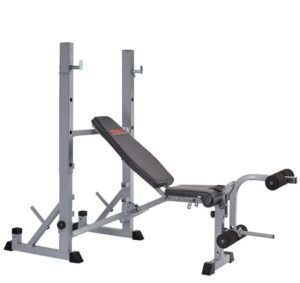
- best foldable weight bench is an incredibly versatile piece of equipment that can be used for over 30 different exercises targeting every muscle group
- Adjustable benches offer the most workout variety, allowing for flat, incline, and decline positions to hit muscles from different angles
- You can build serious strength and muscle with just a bench and dumbbells, no need for an expensive home gym setup
- For optimal results, include bench exercises for often neglected body parts like lower body and core, not just chest workouts
- Even small apartments can accommodate compact, foldable bench options that store easily when not in use
The best foldable weight bench might seem like a one trick pony for chest day, but it's actually the most versatile cornerstone of any effective home gym setup. Whether you're just starting out or looking to level up your fitness game, understanding how to maximize this essential piece of equipment can transform your results without ever stepping foot in a commercial gym.
A single bench, used correctly, can take the place of thousands of dollars worth of gym equipment and provide a comprehensive full body workout. Your weight bench is the key to unlocking impressive upper body strength, powerful legs, and a solid core, all from the comfort of your own home.
Revamp Your Home Gym With These Weight Bench Workouts
The modest weight bench presents training opportunities that floor workouts just can't compare to. With the right support and positioning, you can handle heavier weights safely and reach greater ranges of motion, two important elements for muscle and strength building. The effectiveness of bench training comes from the stability it offers, letting you concentrate solely on exercising the target muscles instead of using up energy on balance.
Their studies have shown that regular bench workouts at home can give you the same strength gains as going to the gym, if you do it right. A good weight bench is stable and versatile, making it a great choice for beginners and advanced lifters alike.
Aside from the typical chest exercises, your bench also allows for efficient workouts for your shoulders, back, arms, legs, and core. This versatility makes it the most logical initial purchase for anyone who is creating a home workout area with limited space or money.
Choosing the Right Weight Bench for Your Home Gym
Weight benches come in all shapes and sizes, and the best one for you depends on your workout plan, how much room you have, and how much you're willing to spend. Knowing the pros and cons of different bench styles can help you pick the one that will give you the most bang for your workout buck.
Flat Benches: The Perfect Starting Point
Flat benches are the most basic and cost effective way to start weight bench training. These simple platforms stay in a fixed horizontal position and usually take up the least amount of space, making them perfect for small spaces. Even though they are simple, flat benches can be used for many effective exercises from chest presses to seated curls and can safely hold a lot of weight.
The major drawback is their stationary position, which prevents the necessary angle adjustments for targeting muscle groups from various angles. However, for those just starting out or those on a tight budget, a solid flat bench provides outstanding value and can serve as the backbone of a successful strength program.
Adjustable Benches: A Flexible Option for Advanced Training
For most home gym enthusiasts, the best foldable weight bench hits the mark. It provides a wide range of exercise choices without breaking the bank or taking up too much space. These benches come with several adjustment points that let you switch between flat, incline, and decline positions. Each position enables different movement and muscle activation patterns.
Incline positions are great for focusing on the upper chest and front deltoid muscles, while decline positions help develop the lower chest and advanced abdominal work. Adjustable benches that are more expensive offer smaller angle gradations, more stable frames, and thicker padding for improved comfort during longer workouts. While they are more expensive than flat benches, the variety of exercises they allow makes them a worthwhile investment for anyone who is serious about comprehensive strength development.
Olympic Benches: The All In One Solution for Dedicated Lifters
Olympic benches are the ultimate weight bench solution for serious strength trainers. These sturdy systems usually come with built in barbell racks, safety catches, and sometimes even leg developers or preacher curl attachments. The standout feature is that they're designed to be used with Olympic sized barbells and weight plates, making it possible to do some serious heavy lifting that's almost on par with what you can do in a commercial gym.
Despite the fact that these models provide excellent stability and weight capacity, they require a lot of space and are more expensive. Most Olympic benches are not easily movable or storable, making them only suitable for dedicated home gym spaces. However, for competitive lifters or those who prioritize maximum strength gains, the investment provides professional level training capabilities without leaving home.
Foldable Options: Maximizing Your Space
Living in an apartment or a small space doesn't mean you have to miss out on bench training. Foldable models are a great solution. These smart designs can be collapsed to a fraction of their size, often fitting under beds or in closets when not in use. Foldable benches have come a long way in terms of stability and weight capacity. Top of the line options can support up to 600 pounds despite their small footprint.
While you might lose a little stability compared to fixed benches and usually have fewer adjustment positions, if you're choosing between no bench and a foldable bench, these space saving designs are a great compromise. They allow you to train effectively without permanently giving up living space.
What You Need to Get the Most Out of Your Bench
Your weight bench is the heart of your home gym, but to truly unlock its potential, you’ll need the right gear to go with it. The best part is you don’t have to get everything all at once, you can start with the basics and build up your arsenal as you get stronger and more skilled.
Choosing Between Dumbbells and Barbells: What's Best for You
- Dumbbells: These are great for a wider range of motion, better stabilizer muscle recruitment, and can be used for unilateral training to address strength imbalances.
- Barbells: These are perfect for heavier loading for maximum strength development and offer more stability for compound movements.
- Adjustable options: Save space and money with adjustable dumbbells or a single barbell with plate weights.
- Fixed weights: These are quicker to use during workouts with no adjustment time, but they do require more storage space.
- Resistance bands: This is an inexpensive addition that can be anchored to your bench for additional exercise variations.
For most people working out at home, starting with a good set of adjustable dumbbells provides the most versatility with minimal space requirements. These can be paired with your bench for dozens of effective exercises targeting every major muscle group. As your strength increases, consider adding a barbell setup if space allows, especially if powerlifting movements like the bench press are among your priorities.
Choosing the Right Weight Plates and Collars
When you decide to use a barbell or adjustable dumbbells for your best foldable weight bench exercises, the type of weight plates you choose is important. Standard plates are made to fit 1-inch bars, and Olympic plates are designed for 2-inch bars. If you're using your weight bench at home, consider rubber coated or bumper plates. They're quieter and won't damage your floors, which is a big plus if you live in an apartment or like to work out early in the morning.
Locking collars are a must have safety feature that keeps weights from shifting during exercises. Choose quick release collars over screw on versions for a more efficient workout. Begin with a weight that provides a challenging but doable workout, usually a few 5, 10, and 25-pound plates, then add heavier weights as you get stronger.
Essential Safety Gear for Solo Workouts
Working out alone demands additional safety measures, particularly when lifting heavier weights. Safety spotter arms or adjustable safety catches are indispensable for barbell bench pressing without a workout buddy. These attachable devices keep the bar from coming down on you if you can't complete a lift, literally saving your life during solo workouts.
Also, think about placing a non-slip mat under your bench to stop it from moving during workouts, and keep a towel nearby to help you hold on when you start to sweat. For those who don't have spotter arms, it's important to practice the “roll of shame” method for safely getting out of a failed bench press with lighter weights before trying it with heavier ones.
Maximize Your Strength with Upper Body Bench Exercises
Your weight bench is a fantastic way to build up your upper body strength and muscle. You may be most familiar with the standard bench press, but your bench can be used for a multitude of upper body exercises that work every muscle from different angles.
1. Bench Press: The Right Way and Other Styles
The bench press is a tried and true workout for building up your chest muscles, but it's important to do it right to get the best results and avoid injury. Lie down so that your eyes are right under the bar and plant your feet firmly on the ground. Keep a small arch in your lower back. Hold the bar a little wider than your shoulders, then lower it to the middle of your chest in a controlled way. Push up, but keep your wrists straight and don't let your elbows stick out too much.
Step by Step Strength Training Program
With a step by step strength training program, your weight bench can become an effective tool for results. You can start with a program that lasts four weeks where you perform compound movements three times per week, slowly increasing the weight by 5-10% when you can do 12 reps with perfect form. The secret to ongoing progress is systematic overload, you must consistently challenge your muscles with either more weight, more reps, or shorter rest periods.
Strength Training Hypertrophy Routine
For the best muscle growth with your bench, aim for 8-12 reps per set with moderate weights and take shorter rest periods of 60-90 seconds. This method of time under tension helps to create the metabolic stress and muscle damage needed for the best hypertrophy. Break your training into push, pull, and leg days to allow for the right recovery while keeping a high weekly volume.
Work opposing muscle groups, such as chest press immediately followed by bent over rows in supersets to improve workout efficiency and stimulate greater blood flow. This method optimizes the muscle building stimulus while keeping sessions under 45 minutes, which is ideal for natural hormone production.
If you're more experienced, you can use techniques such as drop sets on your last set for each exercise. Begin with your usual weight, then reduce it by 20-30% as soon as you reach your limit and continue until you can't do any more. This prolonged tension causes tiny muscle tears that, when healed properly, can lead to noticeable muscle growth.
Technique Tips to Avoid Hurting Yourself
Doing exercises the right way isn't just about getting the best results, it's the main way to avoid hurting yourself while using your best foldable weight bench at home. Since you don't have gym staff or trainers around to make sure you're doing the exercises right, you need to be aware of how you're moving. One good way to do this is to take videos of yourself from different angles regularly. That way, you can watch the videos to see how you're moving and catch any problems before they get serious.
During all bench exercises, keep your spine in a natural alignment instead of forcing it into exaggerated positions. You can create and maintain a slight natural arch in your lower back for back support during pressing movements. However, avoid arching too much as it can put too much stress on your vertebrae. When doing seated exercises, make sure your lower back is touching the bench pad. This will help prevent stress on your lumbar spine.
It's also important to pay attention to your joint alignment. Make sure your wrists are directly over your elbows when you're doing pressing movements. Don't let your shoulders roll forward when you're doing chest exercises, as this can cause rotator cuff impingement. If you're exercising by yourself, start with weights you can control perfectly throughout the full range of motion. You can then start using heavier weights once you've mastered the technique.
How to Properly Set Up Your Weight Bench
Before you start any workout, make sure your bench is on a flat, non slip surface with plenty of room around it for you to move freely. Make sure all the adjustable parts are locked in place and test the bench's stability by pushing on it from different angles before you add any heavy weights. If you're doing barbell exercises, make sure the bench is lined up so the bar is over the middle of your chest when you're lying down. Also, make sure any safety catches or spotter arms are set at the right height, just below your full extension but high enough to prevent any serious injuries.
How to Breathe Correctly
Breathing correctly isn't something you should overlook, it's essential for both performance and safety during bench exercises. Use the Valsalva manoeuvre for maximum stability during heavy compound movements: take a deep breath into your belly before starting the hard part, then hold your breath and brace your core as you do the hardest part of the lift.
When you're performing isolation movements with lighter weights, try to match your breathing to the rhythm of the exercise. Breathe out when you're lifting the weight and breathe in when you're lowering it. This will help you keep a steady rhythm and make sure that your muscles are getting enough oxygen.
Adjust your approach immediately if you feel lightheaded during breathing techniques. Don't hold your breath for the duration of entire movements, and if you have blood pressure issues, consider using a controlled exhalation through pursed lips instead of completely holding your breath.
Quick Guide to Breathing Techniques
Compound Lifts (Heavy): Inhale before you lower the weight, hold your breath during the hardest part, and exhale after you get past the hardest part
Isolation Exercises (Lighter): Exhale when you lift the weight, inhale when you lower the weight
Rest Periods: Concentrate on deep belly breathing between sets to recover faster
Warning Signs: If you start to feel dizzy, see spots, or your face turns very red, you need to change how you’re breathing
What Not To Do
One of the most common and risky mistakes when training with a weight bench is to pile on the weight before you’ve got your form right. This kind of ego-driven approach can lead to compensatory movements that not only reduce the effectiveness of the exercise but also increase the risk of injury. Other common mistakes include not doing enough warm up sets, not keeping the range of motion consistent between reps, and not maintaining tension in the whole body during heavy lifts. A particular concern for home trainers is trying to do maximum effort lifts without having proper safety systems or spotters in place, never try to test your one rep max on your own without having safety catches properly positioned. Finally, avoid the programming mistake of only doing bench exercises, as this can lead to muscular imbalances, always balance pushing movements with appropriate pulling exercises.
Boost Your Home Workouts
After you've got the basics of bench training down, there are a few advanced techniques that can really amp up your results. Periodization a systematic change in volume, intensity, and exercise selection over certain cycles, stops plateaus and keeps your neuromuscular system on its toes. Plan 4-8 week training blocks that switch between strength focus (lower reps, heavier weights) and hypertrophy focus (moderate weights, higher volume).
Use proven methods like time under tension by taking 3-4 seconds to lower your weight while keeping a controlled 1-2 second lifting phase. Changing the speed like this increases muscle fibre use and metabolic stress without needing heavier weights, especially useful for home workouts with limited equipment.
Think about tracking your workouts to measure your progress beyond just adding more weight. Keep a record of your total volume (sets x reps x weight), how hard you felt each exercise was, and recovery metrics like how well you slept and how sore you were. These data points can show you patterns and correlations that can help you tailor your response to training stimuli.
- Add resistance bands to barbell and dumbbell exercises for accommodating resistance that changes throughout the range of motion
- Implement isometric holds at the most challenging point of movements to increase time under tension
- Utilize pre-exhaustion techniques by performing isolation exercises immediately before compound movements
- Create mechanical drop-sets by changing leverage or grip position rather than weight
- Integrate unilateral (single limb) variations to address strength imbalances
Frequently Asked Questions
After working with hundreds of home fitness enthusiasts, I've compiled the most common questions about weight bench training. These practical answers address the real world concerns that arise when building your strength training program around this versatile piece of equipment.
What weight should I begin with for home bench exercises?
Start with weights that allow you to do 12-15 perfect reps and feel challenging in the last 2-3 reps. For most beginners, this usually means 5-15 pound dumbbells for upper body movements and 15-25 pounds for lower body exercises. The exact starting point can vary a lot depending on your current strength level, previous training experience, and individual biomechanics.
Instead of obsessing over specific numbers, concentrate on flawless technique and steady progression. It's better to start too light and progress quickly than to start too heavy and risk compromising your form and increasing your risk of injury. For the barbell bench press in particular, many adult men can start with 45-95 pounds (including the bar weight), while women often start with 25-45 pounds total, adding weight in 2.5-5 pound increments as they get stronger.
Is it possible to gain a lot of muscle using only a weight bench and dumbbells?
Yes, it is a good adjustable bench along with dumbbells gives you all the essential tools for significant muscle growth. Studies have consistently found that proper progressive overload, enough protein consumption, and adequate recovery are the keys to muscle growth, no matter how complex the equipment is. The bench, dumbbell combination lets you effectively target all the major muscle groups through compound and isolation movements with the right loading parameters.
One of the main benefits of this simple setup is that it encourages the mastery of basic movement patterns and the development of stabilizing muscles that are often overlooked in machine based training. Many competitive bodybuilders and physique athletes make bench dumbbell work the cornerstone of their training because of its effectiveness in promoting balanced muscle development. Concentrate on progressive overload by slowly increasing weight, repetitions, or reducing rest periods instead of always looking for variety in equipment.
How often should I do weight bench exercises each week?
Without overworking yourself, it is recommended to do weight bench exercises 2-3 times per week for each major muscle group, with at least 48 hours of rest in between sessions for the same muscles. This frequency is ideal for muscle growth while also allowing for sufficient recovery time. Beginners can start with full body workouts three times per week (Monday, Wednesday, Friday), while more experienced lifters may prefer split routines that allow for more volume per muscle group (such as upper, lower or push, pull, legs). The best frequency for you depends on your recovery capacity, which can be affected by the quality of your sleep, your diet, your stress levels, and your individual genetics.
What weight bench is the best for a small apartment?
If you are living in a small apartment, you should look for the best foldable weight bench that is designed for small spaces. The Fitness Reality 1000 Super Max is a great choice because it is stable and can hold up to 800lbs, but it folds up to only 9 inches wide for storage. The Bowflex 5.1S is another good option because it has six adjustment angles and can be stowed away, which is perfect for apartment living.
Search for benches that come with transport wheels for easy movement between storage and exercise positions. Height adjustable models offer extra versatility, with the bench serving as a step platform for cardio exercises when not in use for weight training. This multi functionality optimizes utility while minimizing space requirements.
If you have a suitable wall space, you might want to think about wall-mounted folding options like the PRx Performance Profile Rack with an integrated bench. These clever systems fold flat against the wall when you're not using them, sticking out just 4 inches into the room, but they're quick to set up when you want to work out. While they're more costly than standalone benches, they offer full training solutions with a minimal permanent footprint.
Should beginners invest in a weight bench?
For those just starting their fitness journey, a weight bench is one of the best investments they can make. Instead of spending money on trendy equipment that only has a few uses, a bench can take even the most basic dumbbells and make them more effective by allowing for proper positioning during a variety of fundamental exercises. This versatility can help beginners make quicker progress during the crucial early months when forming consistent habits is most important.
If you're a beginner, the bench can give you instant feedback on your stability and technique, something you can't get from floor exercises. The set positioning takes away a lot of variables, so beginners can focus solely on the muscles they're working, instead of being distracted by balance issues that can take away from learning the right form. This focused learning speeds up the neuromuscular connections that are key for building strength.
Aside from the physical advantages, purchasing a bench often results in a psychological commitment that improves adherence to new workout routines. Benches provide immediate use, unlike complex equipment with steep learning curves, and allow for the continued discovery of new movements as skills develop. For cost effectiveness, versatility, and long term value, few fitness investments are as good as a quality adjustable bench for beginners who are serious about strength development.