


Key Takeaways
- A home fold away weight benches is incredibly versatile, allowing you to work multiple muscle groups with one piece of equipment, saving you space.
- Investing in a good weight bench can provide significant long term cost savings compared to gym memberships, while providing 24/7 workout availability.
- Adjustable benches offer the most exercise variety, while folding options are perfect for small living spaces without sacrificing workout quality.
- Regular weight bench workouts can dramatically improve exercise form, reduce injury risk, and enable progressive overload for continued strength gains.
- With the right weight bench setup, you can perform effective full body workouts from the privacy and convenience of your home on your own schedule.
The humble weight bench may seem like a simple piece of equipment, but it's actually one of the most transformative additions you can make to your home fitness arsenal. Whether you're just starting your fitness journey or looking to elevate your existing routine, a home weight bench opens up countless possibilities for strength training and muscle development.
After many years of working out with different types of equipment, I've discovered that a good weight bench offers more versatility and results than most other pieces. Whether you're doing chest presses or Bulgarian split squats, the variety of exercises you can do is amazing. And the best part is that you don't need a huge home gym or a complex setup to get the benefits.
We're going to dive into why a weight bench is a must have for your home gym and how it can totally revamp your workout regimen without emptying your wallet or taking up all the space in your living room.
Revolutionize Your Fitness Routine With a Home Weight Bench
There’s more to a weight bench than meets the eye. It’s not just a place to do bench presses. It’s the cornerstone of a complete strength training program that can compete with any professional gym. The clever design of a weight bench lets you position your body in a way that activates your muscles during different exercises. This targeted method means your workout is as efficient as it can be, both in terms of time and results.
Adding a weight bench to your home gym means you're bringing the power of a professional workout right into your own home. This transition from depending on gym memberships to having your own high quality equipment at home is a game changer in the way you approach fitness. The convenience of it all often leads to more consistency, which is the real key to long term progress.
The beauty of a fold away weight benches is that it can adapt as your strength and skills improve. The same piece of equipment can take you from basic bench presses with light dumbbells to advanced decline flyers and weighted hip thrusts, challenging you over years of progress without becoming redundant.
Compact Equipment for Full Body Workouts
A common myth about strength training is that you need a whole room dedicated to different machines. A good weight bench debunks this myth by offering a small piece of equipment that can give the same results as a full gym. In fact, with just a bench and a set of adjustable dumbbells, you can work out every major muscle group in your body by using different positions and angles.
A weight bench is surprisingly compact for such a versatile piece of equipment. The average model is roughly 4 feet long and less than 2 feet wide when it's set up. You can easily fit one in a spare bedroom, home office, or even a corner of your living room. If you're really short on space, you can get a folding model that you can store upright in a closet or under a bed when you're not using it.
Don't worry, you won't be sacrificing effectiveness for space efficiency. By altering your body position on the bench and adjusting the backrest angle (on adjustable models), you can create different resistance profiles that challenge your muscles in unique ways. This variety is crucial for comprehensive development and preventing the plateaus that come from repetitive training patterns.
Use One Machine to Work Out Multiple Muscle Groups
The real beauty of a weight bench is that it allows you to work out almost every muscle in your body with the right positioning. Most people think of chest development first when they think of a weight bench (and they're not wrong, bench pressing is very effective), but a good bench workout routine can do so much more.
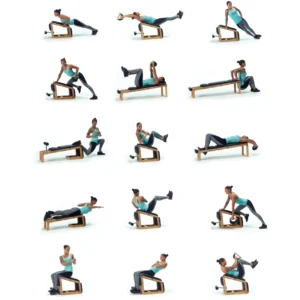
When it comes to building your upper body, a weight bench is a versatile tool that allows you to perform chest presses, flies, shoulder presses, rows, triceps extensions, and bicep curls. The adjustable bench angles allow you to target upper, middle, and lower chest fibres as well as different parts of the shoulder complex. For core strengthening, bench crunches, leg raises, and hip thrusts are effective exercises, and you can increase their intensity by using the bench for leverage and positioning.
“Think of a weight bench as the Swiss Army knife of fitness equipment. With a little imagination, you can get the same or better results from one bench as you would from a whole suite of specialized machines that could cost thousands of dollars.” Elite Strength Coach Perspective
Having a bench also improves your lower body training. Exercises like step-ups, Bulgarian split squats, bench squats, and glute bridges become much more challenging when you use a bench, and they can help you build serious leg and posterior chain strength. That's why a weight bench is the ultimate one piece gym when you're short on space or on a budget.
Adaptable Designs to Suit All Home Spaces
Fold away weight benches designs have come a long way, with many now specifically created for home use without compromising on functionality. The market now boasts a wide range of options, from super compact folding benches to commercial grade adjustable benches that can handle hundreds of pounds of weight. This means that no matter your living situation, from a studio apartment to a fully kitted out home gym, there's a bench to suit your needs.
If you're short on space, folding benches are a fantastic option. They usually weigh less than 30 pounds and can be folded down to about the size of a folding chair, so you can easily store them when they're not in use. Although they might not be able to hold as much weight as fixed models, most can still support over 300 pounds of combined user and weight load, which is more than sufficient for most people's training needs.
If you have a little extra space, adjustable FID (Flat, Incline, Decline) benches offer the most exercise options. These benches usually have multiple backrest angles, from decline positions (-15 degrees) to flat (0 degrees) to almost upright (85 degrees). This range allows for specific targeting of different muscle fibres and provides a broader selection of exercises. Many models also come with leg rollers for secure positioning during decline work and abdominal exercises.
Flexibility That Outperforms Several Devices
When you compare the utility of a weight bench to that of commercial gym equipment, the benefits become obvious right away. A single adjustable bench can take the place of or mimic the functions of several specialized machines that would cost thousands of dollars in total and take up a lot of floor space. This is why, while other trends and equipment have come and gone, the weight bench has remained a constant in fitness.
7. Workout Whenever You Want
One of the most overlooked benefits of a home weight bench is the ability to workout whenever you feel like it. No more rushing to get to the gym before it closes or missing a workout because of the weather. Whether you're a morning person who likes to workout at 5 AM or a night owl who gets a burst of energy at midnight, your home bench is always available.
Having a home gym means you can work out whenever you want, and that often leads to more regular workouts and better results. On those days when you just can’t face the drive to the gym, having a weight bench right there in your home makes it so much easier to stick to your fitness plan. Many people who have home gyms say they work out 30-50% more often once they have a good set-up at home.
Choosing the Right Weight Bench for Your Home Gym
Choosing the right type of weight bench is crucial to meet your specific fitness goals, the space you have available, and your budget. Each type has unique advantages that make them better suited for certain training styles and environments. Understanding these differences will help you make a smart investment that enhances your workout experience rather than limiting it.
Flat Benches: A Great Starting Point
Flat fold away weight benches are the simplest design, providing a steady, non-adjustable surface usually situated 17-19 inches off the floor. Their simplicity is their advantage, they have fewer moving parts and adjustment mechanisms, making these benches more stable and usually able to support more weight than adjustable benches. The flat design promotes correct form for basic movements such as bench presses, rows, and seated exercises.
Get the Most Out of Your Workout with Adjustable Benches
Adjustable benches are designed with a backrest that can be moved to different angles, usually anywhere from 0 degrees (flat) to 85-90 degrees (upright). The best models usually have 5-7 angle settings, but some top of the line options can have up to 12 unique positions. This versatility significantly increases the number of exercises you can do by allowing you to work your muscles from different angles. For example, incline positions focus on the upper chest, while more upright positions target the shoulders and triceps.
FID Benches: The All In One Solution
Flat, Incline, Decline (FID) benches are the most versatile option, as they can adjust to decline positions below horizontal as well as flat and incline positions. This expanded range allows for exercises that target the lower chest fibres specifically and provides more challenging variations for abdominal training. Most FID benches come with leg rollers to secure your position during decline exercises, preventing you from sliding and allowing you to concentrate on proper muscle engagement. While they are usually more expensive than standard adjustable options, the variety of exercises they offer makes them worth it for those serious about comprehensive development.
Folding Benches: Perfect for Limited Space
Those who live in apartments or have small spaces to work with, folding benches are your answer. These models are designed to fold up into a smaller size for storage but still offer the stability you need for a good workout when in use. Good quality folding benches will still offer most of the same features as a non-folding bench, though they may not hold as much weight. Many can fold up small enough to fit under a bed or in a closet, so they're out of sight when you're not using them but still offer a serious workout when you are.
Key Weight Bench Workouts for Optimal Outcomes
A weight bench's real worth shines through when you consider the wide range of workouts it allows. Whether it's isolation exercises that focus on specific muscles or compound exercises that develop functional strength, a well thought out bench routine can match or even surpass the efficiency of much more complex equipment configurations.
When you're planning your weight bench exercises, try to include a mix of different movements. You should aim to include horizontal pushing movements (like bench presses), horizontal pulling movements (like rows), vertical movements, and lower body exercises. This will help you to avoid imbalances and will ensure that you develop strength in a balanced way. This will not only improve your appearance, but will also improve your functional strength.
Boosting Upper Body Strength
Exercises that involve the bench press are some of the best ways to work out your upper body. They target your chest, shoulders, and triceps, and they also engage stabilizer muscles throughout your upper body. You can change the focus of these exercises by adjusting your grip width. If you use a wider grip, you'll work your chest more, but if you use a narrower grip, you'll put more of the load on your triceps. If your bench can be adjusted to different angles, you can use an incline press (at 15-30 degrees) to target your upper chest and front deltoids, or a flat press for overall chest development.
Aside from pressing movements, the bench is a perfect platform for rowing variations that help you achieve a strong, defined back. By lying on the bench with your chest facing down and weights hanging towards the floor, you create the perfect setup for single arm rows that target the lats, rhomboids, and rear deltoids. The fold away weight benches provides stability for your torso, allowing you to focus solely on proper pulling mechanics and maximum back engagement.
| Workout | Main Muscle Groups | Position of Bench | Beginner's Weight |
|---|---|---|---|
| Flat Dumbbell Press | Mid Chest, Triceps | Flat (0°) | 10-25 lbs per hand |
| Incline Barbell Press | Upper Chest, Front Delts | Incline (30°) | 45-95 lbs total |
| Decline Dumbbell Flies | Lower Chest, Pecs | Decline (-15°) | 5-15 lbs per hand |
| Single-Arm Row | Lats, Rhomboids | Flat (0°) | 15-30 lbs |
Using a Bench to Strengthen Your Core
Many people believe the bench is only for upper body workouts, but if you use it in innovative ways, it can be great for strengthening your core. When you use the bench in a decline position, it provides the perfect angle for challenging your abs. You can anchor your feet under the leg rollers to maintain proper form. Doing decline sit-ups and crunches on a bench increases the range of motion compared to doing them on the floor, which means your core has to work harder and will develop more. If you are an advanced trainee, you can hold weight plates across your chest during these movements to continue making progress after bodyweight versions become too easy.
Unconventional Lower Body Exercises You Can Do
When you think outside the box of traditional pressing exercises, the bench becomes a multi functional tool for lower body development. Bulgarian split squats, when performed with the rear foot elevated on the bench, provide an intense unilateral challenge that builds leg strength while enhancing balance and stability. Step-ups, using the bench as a platform, target the quadriceps and glutes while enhancing functional strength for everyday activities. Perhaps the most impressive is the bench's ability to optimize hip thrust exercises by positioning your upper back against the edge of the seat with feet planted on the floor, you achieve the perfect leverage for glute isolation, with or without additional weight.
Finding the Right Home Weight Bench for You
With so many choices out there, it can be hard to find the right weight bench. You'll need to think about a few important things. The best bench will be stable and comfortable. It will also be adjustable and won't take up too much space. And, of course, it will need to fit within your budget. Keep in mind that a good bench is a long term investment in your health. It will probably last longer than a lot of your other equipment. So, it's worth spending a little more to get a bench that really works for you.
Load Capacity Considerations
The load capacity of the bench is perhaps the most important specification to consider. This rating indicates the maximum combined weight of the user and any weights being used during exercises. For most individuals, a fold away weight benches with at least a 600-pound capacity provides adequate support for serious training. This capacity allows for a 200-pound user to safely bench press 400 pounds more than sufficient for most home gym enthusiasts. However, competitive powerlifters or very advanced trainees may benefit from benches with 1,000+ pound capacities that provide extra stability during maximum effort lifts.
How Padding and Comfort Affect Your Workout
When it comes to weight benches, the padding quality plays a significant role in your comfort and performance during workouts. You should look for a weight bench with high density foam padding that is at least 2-3 inches thick. This type of padding will provide you with firm support without sinking under pressure. The upholstery material on the bench should be durable, resistant to sweat, and easy to clean. Vinyl and commercial grade synthetic leather are great choices because they offer a balance of comfort and durability. It's also worth noting that while very soft padding might feel comfortable at first, it can negatively impact your stability during heavy lifts and can wear out more quickly with regular use.
Stability Features That Help You Stay Safe
A good weight bench should be as stable as a rock, even when you're lifting heavy weights. This helps you avoid injuries. Some of the stability features you should look for include a heavy gauge steel frame (usually 11-14 gauge), wide points of contact with the floor, and rubber foot pads that help the bench grip the floor. The bench should feel completely solid and not wobble or creak when you push down on it. If it moves when you push down lightly, it may not be stable enough for you to use safely.
Stability is also a key factor in the design of the frame. Triangular support structures and reinforced joints, especially at the points where the most force is applied during typical exercises, are things to look for. The adjustment mechanism on adjustable benches should lock securely with no play or wiggle when positioned. This solid foundation not only prevents accidents but also allows you to focus completely on proper muscle engagement rather than worrying about bench movement.
Dimensions and Storage
Before you buy a weight bench, make sure you measure your workout area to ensure it will fit. The standard size for a flat bench is around 47 inches long, 12 inches wide, and 17 inches tall. Adjustable benches can be slightly bigger, usually around 50 inches long, 18 inches wide, and 18 inches tall. Make sure you leave at least 2-3 feet of clearance on all sides for safe exercising, especially if you're using dumbbells that require lateral movements.
If your home doesn't have a lot of space for workout equipment, think about how you'll store the bench when you're not using it. Folding models are usually the best for storage because they can be reduced to around 30″ x 18″ x 8″ when folded. This makes them small enough to slide under most beds or stand up in a closet. If you choose a folding model, make sure the folding mechanism is strong enough to handle being used over and over without getting loose or unstable.
Weight is another key factor to consider when it comes to both stability and portability. Heavier benches (40+ pounds) are typically more stable but can be difficult to move. Some companies have tried to strike a balance between these two factors by adding transport wheels and handle grips to their benches. These features make it easier to move the bench around while still keeping it heavy enough to be stable. This is especially useful if you'll need to move your bench around frequently to make room for other activities in a multipurpose space.
How to Set Up Your Weight Bench Workout Station
Building a workout station around your fold away weight benches that's both safe and effective is all about efficiency. The best setup will give you enough space to do all your exercises with a full range of motion, and it will keep any other equipment you need close at hand. This smart setup cuts down on wasted time between exercises and helps you create a focused, productive workout space that will make you want to keep coming back for more workouts.
Think about placing your bench on a rubber floor or a workout mat. This will not only protect your floor but will also provide additional stability during your workout. This type of surface also helps to create a mental boundary for your workout space, which can help to put you in the right frame of mind for an effective workout. For the most versatility, make sure to leave enough space around the bench to be able to move it into different positions based on the exercises you are doing.
Room Size and Arrangement
When planning to put a weight bench in your home, you should look for a clear space that is roughly 8 feet by 6 feet to allow for all of the major types of exercises. This size will give you enough room for the bench and for you to safely move around it with weights. You should try to place your bench in a spot that is away from walls and furniture to avoid accidentally hitting them during exercises, especially ones where you extend your arms out to the sides like dumbbell flies. If you don't have a lot of space, you should focus on having more room at the head end of the bench because that is where most of the movement happens during pressing exercises.
Adding the Right Equipment to Your Weight Bench
A weight bench alone can provide dozens of bodyweight exercises, but adding the right equipment can make it even more effective. Adjustable dumbbells are the most space efficient weight option, providing multiple resistance levels without needing a full rack of individual pairs. Look for models that allow quick weight changes to keep up the intensity of your workout when moving between exercises that target different muscle groups.
If you have a little extra room and money to spare, why not think about getting a basic squat stand or power rack to go at the end of your bench? This pairing will turn your setup into a complete strength station that can handle barbell exercises like bench presses, squats, and overhead presses in a safe manner. Even a simple rack with adjustable J-hooks and safety catches can significantly increase the number of exercises you can do, while also providing vital safety features for those times when you're training without a spotter.
Keep Your Weight Bench in Top Shape with These Tips
A fold away weight benches is a long term investment that can last for years if you take good care of it. Make sure to check and tighten all bolts and fasteners regularly, especially those located at pivot points on adjustable models. These parts are under a lot of stress during use and adjustment, and they can gradually loosen over time. If you neglect this simple maintenance task, your weight bench might start to wobble, and it could even fail while you're training.
Not only does maintaining your bench tidy enhance its aesthetic, but it also prolongs the lifespan of the upholstery. After each use, clean the bench surface with a gentle antibacterial solution to eliminate sweat and oils that can wear down materials over time. Pay particular attention to seams and stitching, where moisture can gather and cause early wear and tear. For vinyl and leather surfaces, use a suitable conditioner every 1-2 months to avoid drying and cracking.
Keep adjustable benches in tip top shape by occasionally using a silicone based product to lubricate any moving parts. This will help to keep everything running smoothly and prevent any metal on metal wear and tear. Avoid using WD-40 or similar petroleum based products as they can attract dust and potentially damage any nearby upholstery. If your bench uses pop pins for adjustments, keep these mechanisms clean and regularly check for any signs of wear that could affect their locking function.
Weight Bench Workout Progression: From Novice to Pro
One of the best things about weight bench training is that it's scalable. The same basic equipment can provide a challenge for everyone from complete novices to professional athletes. This is achieved through the correct selection of exercises and loading strategies. Effective progression isn't just about lifting heavier weights. It also involves including more complex movements and advanced techniques as your strength and coordination get better.
To make steady progress, stick to the principle of progressive overload. You can do this by making small but consistent increases in either resistance, repetitions, or technical difficulty. This systematic approach helps you build both strength and resilience in your connective tissues while reducing the risk of injury. Record your workouts to make sure you're constantly pushing yourself without making jumps that are too big for your current fitness level.
Where to Begin
Start off with some basic exercises to get your form right and build up some strength. You should focus on controlled movements with light weights or even just bodyweight before adding more weight. A flat bench press with dumbbells is a great place to start because it allows for natural arm movement while also building up your pressing strength and stability. You can also do seated overhead presses, supported rows, and bench assisted squats to make sure you're building up strength in a balanced way.
Begin your workout routine by doing 2-3 sets of 10-12 repetitions per exercise. Focus on smooth, controlled movements rather than lifting the maximum weight you can. Rest for 60-90 seconds between sets to recover, but also to maintain a good training rhythm. Aim to do 2-3 full body workouts per week, with at least one day of rest between workouts. This allows your muscles to adapt and strengthen in response to the new stimulus.
Advanced Workout Combinations
Once you've improved your strength and technique, start incorporating more challenging variations by changing bench angles, grip positions, and exercise tempos. Start doing supersets that pair opposing movement patterns like bench press immediately followed by rows to increase workout density and stimulate greater muscle development through increased time under tension. This approach not only builds more impressive strength but also improves muscular endurance and work capacity that transfers to daily activities and sports performance.
Advanced Techniques for Continued Growth
Experienced trainees can maximize their fold away weight benches results by implementing advanced intensity techniques that push muscles beyond their comfort zone. Drop sets (continuing an exercise with progressively lighter weights after reaching failure), rest, pause training (taking brief 10-15 second pauses when reaching failure, then continuing), and mechanical advantage drop sets (changing grip or body position to target muscles from different angles without resting) are all powerful methods that can be perfectly executed using a weight bench and appropriate resistance tools. These techniques should be applied selectively within a well designed program to prevent overtraining while continuing to stimulate new adaptations even after years of consistent training.
The Outcome: What to Expect From Regular Bench Workouts
Regular training with a weight bench results in amazing transformations in both physical capacity and appearance. Most users notice significant strength increases within the first 4-6 weeks as neuromuscular efficiency improves, allowing better recruitment of existing muscle fibres. This initial adaptation period often results in strength gains of 20-30% on key movements like bench press and rows even before significant muscle growth occurs.
After 8-12 weeks of regular training, you will typically see visible muscle development, with the most dramatic changes in the upper body muscles. The chest, shoulders, and arms respond particularly well to training based on the bench, developing greater definition and fullness that transforms posture and physical presence. These changes aren't just cosmetic, the functional strength gained translates directly to improved performance in daily activities, reduced injury risk, and enhanced metabolic health through increased muscle mass.
Ready to get fit and feel fabulous? Our personalized fitness equipment is here to help. We will guide you every step of the way on your journey to a healthier, happier you. Click Here to learn more and start unlocking your full fitness potential today.