



Here's what you need to know about the power of kettlebell workouts:
- best beginners kettlebell workout are time efficient, combining strength, power, and conditioning into one comprehensive workout.
- The kettlebell swing, the foundation of kettlebell training, activates your entire posterior chain and can burn up to 20 calories per minute during intense sessions.
- If you're new to kettlebell training, you should master fundamental movements with lighter weights before progressing to advanced exercises to prevent injury and build proper technique.
- Training with kettlebells 2-3 times per week can significantly improve core strength, posture, and athletic performance in as little as four weeks.
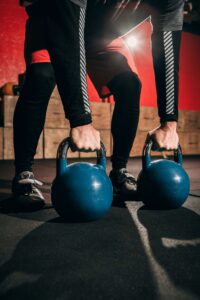
But kettlebells are more than just another gym tool. When used correctly, this cannonball shaped weight with a handle can be a complete training system. It can transform your fitness. It's one of the most efficient workouts you can do, combining strength, cardio, and mobility work. This is achieved in a single session. Whether you're looking to build muscle, burn fat, or improve athletic performance, the right kettlebell workout can deliver impressive results. Moreover, this occurs with minimal time investment.
What sets kettlebells apart from your regular dumbbells is their unique centre of gravity. This demands your stabilizing muscles to work harder, thus giving you a full body workout. This occurs even with the most basic movements. This is why kettlebell training is so effective for core development and improving functional strength. It is strength that you can use in your everyday life. Studies have even shown that regular kettlebell workouts can significantly boost power output. They can also increase VO2 max with just 4-8 weeks of consistent training.
Why You Should Add Kettlebells to Your Workout Routine
While traditional strength training often focuses on isolated muscle groups, kettlebell exercises are designed to engage multiple muscle groups at once. This leads to more effective workouts that build strength for everyday life. The uneven weight distribution of a kettlebell creates an unstable load. This causes your body to use more muscle fibres and burn more calories. This is more than what would be achieved with similar exercises with dumbbells or barbells. If you're a fitness enthusiast with a busy schedule, kettlebells could be the answer. They deliver maximum results with minimal equipment and time investment.
Unlike traditional weight training, the dynamic nature of many kettlebell exercises targets your fast twitch muscle fibres. These powerful movements, such as swings and snatches, build explosive power. They also strengthen your cardiovascular system. This unique blend of strength and cardio benefits is why everyone, from elite military units and professional athletes to busy professionals, have adopted kettlebell training. It offers quick body composition changes and performance enhancements.
Perhaps the most significant advantage of kettlebell training is that it helps to create a strong, injury resistant body. The dynamic movements of kettlebell exercises strengthen joints across their full range of motion. They also improve coordination and build balanced, functional strength. This helps to prevent injuries in everyday life and other physical activities. Unlike machines that lock you into rigid patterns, kettlebells require and develop genuine stability and control. Therefore, they are perfect for long-term fitness development.
Top 10 Kettlebell Exercises for Full Body Strength
“The kettlebell is the Swiss Army knife of fitness. You can use it to train for just about any athletic endeavour. Whether you're a weekend warrior or a pro athlete, the kettlebell is one of the most effective tools for improving performance.” Pavel Tsatsouline, Founder of Strong-First and kettlebell training innovator
There are countless ways to use best beginners kettlebell workout, but some exercises are just more effective and efficient than others. The ten exercises listed here are the bread and butter of any good kettlebell routine, working multiple muscle groups at once and improving both strength and cardio fitness. Once you've got these moves down, you'll have a full body workout you can do almost anywhere, and all you need is one or two kettlebells.
What's great about these exercises is that they can be scaled. Each movement can be modified for beginners or intensified for advanced athletes, making them suitable for almost any fitness level. As you progress through these exercises, concentrate on perfect technique before increasing weight or repetitions. Keep in mind that kettlebell training is as much about skill development as it is about conditioning, precision in movement leads to greater results and lower risk of injury.
We'll take a closer look at each exercise, including the right way to do them, what not to do, and how to include them in your training for the best results. These are the exercises you'll be doing in the workouts we'll give you later in this guide.
1. Kettlebell Swing – Power's Bedrock
The kettlebell swing isn't just a workout, it's the fundamental movement that uncovers the distinctive advantages of kettlebell training. This explosive hip hinge pattern develops immense power in your posterior chain (glutes, hamstrings, and lower back) while concurrently challenging your core, shoulders, and grip. A correctly performed swing is a demonstration of controlled power, not a front raising arm movement. The power comes entirely from your hip snap, with your arms merely directing the path of the weight rather than directly lifting it.
Start with your feet shoulder width apart and the kettlebell just in front of you. Bend at the hips (don't squat) while keeping your back straight and your core tight, then grab the handle with both hands. Start the movement by “hiking” the kettlebell back between your legs, then powerfully push your hips forward, allowing the momentum to swing the weight up to chest height. As the kettlebell starts to come down, guide it back between your legs and repeat. Your glutes should visibly tighten at the top position, with your body forming a straight line from head to heel.
Typical errors include lifting the weight with your arms, squatting instead of hinging, and letting your lower back round. Start with a lighter kettlebell than you think you need, even seasoned lifters usually start with 16-24kg (35-53lbs) for men or 8-16kg (18-35lbs) for women. Master 2-3 sets of 10 perfect swings before moving on to higher reps or heavier weights. The swing is the foundation for many other kettlebell moves, so taking the time to perfect your technique here will benefit you throughout your kettlebell journey.
2. Turkish Get-Up: Conquer This Total Body Challenge
At first sight, the Turkish Get-Up might seem needlessly complicated, but it's actually one of the most complete exercises out there. This multi step movement requires you to go from laying flat on your back to standing up while keeping a kettlebell locked out overhead the entire time. Along the way, you'll build shoulder stability, core strength, hip mobility, and total body coordination like few other exercises can offer. Many fitness experts view the Turkish Get-Up as a comprehensive diagnostic tool for identifying mobility limitations and strength imbalances.
Start by laying down on your back with the kettlebell securely in your right hand, arm extended straight up with the weight directly above your shoulder. Bend your right knee and place your right foot flat on the floor while extending your left arm and leg at a 45-degree angle. Push through your right heel and roll onto your left elbow, then onto your left hand, pushing your torso upright. Slide your left leg back to achieve a half kneeling position, keeping your eyes on the kettlebell overhead. From here, stand up straight. Reverse the movement exactly to return to the starting position, then repeat on the opposite side.
Begin by practicing the movement without any weight, then move on to a very light kettlebell. Most people should be able to perfect the technique with 8-12kg (18-26lbs) before adding a lot of weight. The Turkish Get-Up trains your body to move in a coordinated way and builds impressive shoulder stability and core strength. Instead of rushing through sets with a lot of repetitions, practice 2-3 repetitions per side with flawless form. This exercise values patience and precision over speed.
3. Goblet Squat: The Ultimate Lower Body Exercise
The goblet squat is a total body strength exercise that enhances lower body strength and core stability at the same time. It's a variation of the traditional bodyweight squat, where you hold the kettlebell in front of your chest (like you're holding a goblet). This creates an anterior load that naturally encourages good squatting form, keeping your chest up, spine neutral, and weight centred through your feet. This makes the goblet squat not just a great strength builder but also a corrective exercise that can improve movement patterns for all other squat variations.
Start with your feet a little wider than your shoulders, toes slightly turned out. Hold the kettlebell by the handle, the curved sides (the horns), close to your chest, elbows pointed down. Start the move by pushing your hips back while bending your knees, keeping your chest up and your core tight. Go down until your thighs are at least parallel to the floor, ideally with your elbows inside your knees at the bottom. Push through your heels to stand back up, squeezing your glutes at the top.
Using the goblet position, you can naturally counterbalance your body to maintain the right posture throughout the exercise. Start off with a weight that lets you maintain perfect form for 10-15 reps, then you can increase the weight. This exercise is great for beginners who are learning how to squat and for advanced users who want to improve their mobility and the quality of their movements while carrying a weight. Add 3-4 sets of 8-15 reps of this exercise to your workout, making sure to focus on moving smoothly and in control instead of lifting the heaviest weight you can.
4. Kettlebell Clean and Press: An Explosive, All in One Workout
The kettlebell clean and press is a two in one exercise that combines explosive power, shoulder strength, and full body coordination. It starts with the kettlebell between your legs, transitions into a powerful clean that brings it to your shoulder, and ends with an overhead press. It's one of the few exercises that offer as much muscle recruitment and metabolic demand, making it a go to for those looking for both strength and conditioning benefits.
Start with the kettlebell between your feet, slightly behind your centre of gravity in a hinge position. Grab the handle with one hand and initiate the clean by explosively extending your hips and knees while simultaneously pulling the kettlebell upward. As the kettlebell reaches chest height, quickly rotate your arm around and through, allowing the kettlebell to rotate smoothly around your wrist to rest in the “rack position” at your shoulder. From this position, press the kettlebell overhead by driving through your heels and extending your arm fully, keeping your core tight and body aligned. Lower the weight back to the rack position, then to the starting position, and repeat.
The clean part of the exercise isn't about strength, it's about skill. The kettlebell should move smoothly around your wrist, not flop onto your forearm. You should practice the clean by itself until you've got it down before you add the press. Start with a lighter weight (12-16kg for men, 8-12kg for women) and do 3-5 reps on each side for a few sets. This exercise builds a lot of work capacity when you do it for a moderate to high number of reps, so it's great for both strength training and conditioning circuits.
5. Single Arm Row: Strengthen Your Back
While the kettlebell single arm row may appear simple in comparison to other, more dynamic best beginners kettlebell workout exercises, it is critical for developing balanced upper body strength and preventing shoulder injuries. This exercise targets your lats, rhomboids, rear deltoids, and biceps, while also challenging your core anti-rotation strength. The kettlebell's thick handle also increases the grip requirement, enhancing forearm strength that benefits all other kettlebell exercises.
Start by placing a kettlebell on the floor and positioning yourself in a split stance, with your right foot in front. Bend at the hips until your upper body is almost parallel to the floor. Remember to keep your back straight and your core muscles engaged. Take hold of the kettlebell with your left hand, letting your arm hang straight down. To row the kettlebell, pull it up to the side of your torso by driving your elbow up and back. At the top of the movement, squeeze your shoulder blade. Lower the kettlebell slowly and with control, then repeat for the number of reps you want before switching sides.
The kettlebell row is a great workout because it requires your core to work hard to keep your torso from rotating toward the side that is weighted. Make sure to keep your shoulders square to the ground throughout the movement. Do 3-4 sets of 8-12 repetitions per arm, and choose a weight that is challenging for you in the final repetitions while still keeping strict form. This exercise is great for counterbalancing all the pressing movements in a typical training program, which helps create balanced shoulder development and improved posture.
First Kettlebell Exercises for Beginners to Master
Before trying out complicated kettlebell movements, beginners should concentrate on learning the basics. Starting with these simple exercises will help you develop the right movement patterns and the necessary strength for more advanced techniques. Once you've mastered these basic exercises, you'll be less likely to get injured and more likely to progress quickly when you're ready to try more difficult movements. Even the most advanced kettlebell athletes regularly practice these basic exercises to improve their technique and increase their work capacity.
When you're just starting out, the three moves you need to have down are the kettlebell deadlift, the two hand kettlebell swing, and the kettlebell goblet squat. These are the basic moves that hinge, swing, and squat, which are the building blocks of all kettlebell training. If you spend about 2-3 weeks really nailing these exercises, you'll be able to move on to the more advanced stuff safely and effectively.
Start with only 2-3 kettlebell workouts a week, giving yourself 48 hours between each one to recover. Each workout should include all three basic movements, doing 3-4 sets of 8-12 reps with perfect form. As you get more comfortable with these movements and your technique gets better, you can slowly add more volume, intensity, or complexity by moving on to the more advanced exercises we talked about before.
Right Way to Hold a Kettlebell to Avoid Hurting Yourself
The way you hold a kettlebell is the key link between you and the weight, so it's vital to get your grip right to avoid injury and make your workouts more effective. Kettlebells aren't like dumbbells or barbells, and you'll need to use different grips depending on the exercise you're doing. Get your grip right and you'll avoid problems like strained wrists, bruised forearms, and torn calluses that can stop you in your tracks.
When doing ballistic exercises such as swings and cleans, you should use the “hook grip”. This grip involves wrapping your fingers tightly around the handle, but not letting your thumb overlap them. This allows the kettlebell to rotate smoothly around your hand during dynamic movements. For overhead exercises like presses and jerks, you should use the “corner grip”. This grip involves placing your hand in the corner of the handle where it meets the bell, which creates a stable base for pressing movements. Occasionally, during carries and holds, you should use the “bottoms up grip”. This grip involves holding the kettlebell upside down with the weight over the handle, and it challenges your grip strength and shoulder stability.
During most exercises, don't grip the kettlebell too tightly, hold it firmly enough to control it, but not so tightly that you create unnecessary tension throughout your body. A common mistake is gripping the handle too tightly, which wastes energy and restricts the proper flow of movement. Keep your wrist aligned with your forearm whenever possible, avoiding too much bending or extending that can lead to strain or injury. If you're unsure, record a video of your technique and compare it to expert demonstrations to identify and correct any issues with your grip.
Start Light: Choosing the Right Kettlebell Weight
One of the most common mistakes made by beginners with best beginners kettlebell workout training is starting with a weight that is too heavy. While your ego might want to push you to use a heavier weight, choosing the right starting weight will allow you to learn the correct technique without compensating with bad form. For most men who are new to kettlebell training, a 16kg (35lb) kettlebell is a good starting weight. It provides enough resistance to be challenging, but it is still light enough to allow for the development of good technique. For women or those with less experience in strength training, an 8kg (18lb) or 12kg (26lb) kettlebell is usually a good starting weight.
Don't think of lighter weights as being “too easy.” Kettlebell training is more about mastering the movements than it is about lifting the heaviest weight possible. Many experienced kettlebell users can get a great workout using weights that seem too light because they've learned how to create tension and power with perfect form. Your first kettlebell should be light enough that you can do 10-15 perfect two handed swings without straining or breaking form.
As your budget permits, you should consider buying two kettlebells, one that's lighter for mastering overhead and technical moves, and one that's a bit heavier for swings and lower body exercises. You can slowly add heavier weights to your collection as you get better. But remember, with kettlebells, improving your technique often gives you better results than just increasing the weight, so focus on perfecting your form before you move on to a heavier weight.
Start with These 3 Exercises Before Moving On
- Kettlebell Deadlift: This is the ideal starting point because it teaches you how to hinge your hips without the complexity of the swing. Before you progress to swings, make sure you can do 3 sets of 15 reps with perfect form.
- Two Hand Swing: This is the basic ballistic movement that teaches you how to generate power through your hips. Before you attempt one handed variations, aim to do 50-100 total perfect reps per training session.
- Goblet Squat: This exercise builds lower body strength and mobility while teaching you how to brace your core and squat properly. Before you move on to more complex squatting patterns, make sure you can do 3 sets of 12 reps with perfect form.
Advanced Kettlebell Techniques to Challenge Yourself
Once you've mastered the basic kettlebell movements and built a solid foundation, you're ready to take on more challenging techniques that will take your strength, power, and conditioning to the next level. These advanced movements require more technical proficiency, mobility, and strength, but they also deliver results that simpler exercises can't. Make sure you approach these techniques gradually, breaking down complex movements into manageable parts before you attempt the full exercise.
Complexes (sequences of different exercises performed back to back), flow training (smooth transitions between exercises), and sport specific techniques from competitive kettlebell lifting are often included in advanced kettlebell training. These techniques can significantly improve work capacity, power endurance, and total body coordination, more so than traditional strength training. However, these techniques should be learned gradually, preferably under the supervision of an experienced coach.
When you start using these more challenging methods, remember to focus on your recovery needs. The increased mental demands and training volume mean you need to be careful about planning the intensity and frequency of your workouts. Most people who have been using kettlebells for a while find that doing 3-4 dedicated kettlebell workouts per week, each lasting 30-45 minutes, gives them the best results while still letting them recover between training days.
Complexes with Two Kettlebells
Training with two kettlebells is the next step in your kettlebell training journey. It significantly increases the strength and conditioning stimulus by engaging both sides of your body at the same time. Using two kettlebells doesn't just double the weight you're moving, it also creates unique stability challenges that make your core and stabilizing muscles work even harder. Complexes with two kettlebells sequences of exercises you do back to back without putting the weights down are especially good for building a lot of work capacity, muscular endurance, and mental toughness.
Starting with the double kettlebell front squat is a great way to get into bilateral training. You hold two kettlebells in the rack position (the handles are at shoulder height, your elbows are close to your body, and the kettlebells are resting on your forearms) and then do a regular squat. This immediately makes your core work harder while also strengthening your legs and upper back. After this, you can move on to the double kettlebell clean, the double kettlebell press, and finally the double kettlebell clean and press complex. These exercises require a lot of shoulder flexibility and core stability, so you should start them slowly with lighter weights than you would use for single kettlebell exercises.
If you're looking for a best beginners kettlebell workout complex that'll push your whole body to the limit, give the “Total Body Blitz” a go. Execute 5 double kettlebell cleans, 5 double kettlebell front squats, 5 double kettlebell push press, and 5 double kettlebell swings, all without putting the kettlebells down. Do this for 3-5 rounds, taking a 90-120 second rest between rounds. Begin with kettlebells that are roughly 25-30% lighter than what you'd usually lift for individual exercises, since you'll get tired fast during complexes. This method offers incredible metabolic conditioning while also increasing functional strength throughout your body.
Advanced Kettlebell Training
Advanced kettlebell training is built around ballistic kettlebell exercises. This type of exercise involves an explosive acceleration and then a brief period where the kettlebell is weightless. These exercises can increase power, work capacity, and cardiovascular conditioning all at once, making them a highly efficient training tool. The most common progression of these exercises is from the two handed swing to the one handed swing to the kettlebell snatch. This progression has revolutionized the conditioning of athletes in many different sports.
The one handed swing is a more challenging version of the two handed swing, as it requires anti-rotation and a stronger grip. You should be able to do 10-15 perfect reps on each side before moving on to the kettlebell clean. This exercise involves smoothly transitioning the kettlebell to the rack position, which adds a layer of complexity. The ultimate ballistic kettlebell exercise is the kettlebell snatch. This explosive move takes the kettlebell from between your legs to directly overhead in one smooth motion. It tests your hip power, grip endurance, shoulder mobility, and timing all at once. It's a tough move to master, but incredibly satisfying once you do.
For most people, a well planned ballistic progression can last anywhere from 8-12 weeks. Each phase should concentrate on mastering the technique before increasing the volume or intensity. Start with 50-100 total swing repetitions per session (broken down into several sets), then slowly introduce one handed swings, beginning with 5-10 repetitions on each side. As you get better, add cleans and eventually snatches, but always go back to the basic movements for higher volume work. This systematic approach builds the necessary strength, technique, and conditioning for advanced ballistic work and helps prevent the technique breakdowns that can cause injuries.
The Art of Kettlebell Flow Sequences
Imagine a dance with your kettlebell. This is what kettlebell flow training is like. It's the artful expression of kettlebell strength that weaves multiple movements into a seamless sequence. It challenges your coordination, endurance, and mental focus. Unlike traditional interval training where exercises are clearly defined, flow training transitions from one movement to another without pausing. It's a continuous dance with the kettlebell. This approach not only provides exceptional conditioning benefits, but it also develops a level of movement mastery that can be applied to athletic performance and injury prevention in everyday life.
Start flow training by pairing two exercises that complement each other, like a kettlebell clean immediately followed by a kettlebell press, then returning to the starting position. As you get better, you can move on to three movement flows (clean, squat, press) and eventually to longer sequences that might include 5-7 different movements performed one after the other. The key to effective flow training is to keep the transitions smooth while never compromising form, even as you get more tired. Start with lighter kettlebells than you'd normally use for individual exercises, as the continuous nature of flow training makes it much harder.
For an intermediate kettlebell flow sequence, you might try the following: start with a kettlebell clean to rack position, reverse lunge, press overhead, windmill to return the kettlebell to rack position, squat, then return to the starting position. This should all be done in one continuous sequence. Do 3-5 reps of the entire flow on one side before switching to the other side. Do 3-4 rounds in total, resting for 60-90 seconds between rounds. This method will challenge your body to keep the correct movement patterns even when you're tired, and it also provides great cardiovascular benefits without having to do traditional “cardio” exercises.
How to do a One Arm Kettlebell Snatch
The kettlebell snatch is arguably the most impressive kettlebell exercise, requiring a combination of explosive power, perfect technique, and a lot of stamina. Unlike the barbell snatch in Olympic weightlifting, you can do a lot of reps with the kettlebell snatch, making it great for both building strength and improving your fitness. Once you've mastered this move, you'll have reached the top level of kettlebell training and you'll see a big improvement in your total body power and stamina.
Like the one handed swing, the snatch starts in a similar way but the arc of motion continues to send the kettlebell directly overhead in one smooth movement, ending with your arm locked out vertically and the kettlebell gently resting on the back of your wrist. The secret to a successful snatch is in the timing of the “punch through”, the moment you transition from pulling the kettlebell upward to pushing your hand through the handle to create a smooth turnover. This technique stops the kettlebell from crashing onto your forearm (a common issue for beginners) and allows for high repetition training without hand damage.
Start snatch training with a lighter kettlebell than you'd use for swings. Many advanced male kettlebell athletes use 16-20kg (35-44lbs) kettlebells for high volume snatch work, while women often use 8-12kg (18-26lbs). Start with 3-5 repetitions per side, focusing on perfect technique before adding volume. A standard benchmark workout is the “snatch test”, 100 snatches in 5 minutes or less with a 24kg kettlebell for men or 16kg for women. This deceptively simple challenge represents a gold standard in kettlebell conditioning that few achieve without dedicated practice of proper technique and progressive training.
Three Comprehensive Kettlebell Workout Schedules Based on Skill Level
The best beginners kettlebell workout training isn’t just about knowing the exercises, it’s about having a structured program that balances intensity, volume, and exercise choice to make steady progress without overtraining. The following workout schedules provide a framework for three different skill levels, each designed to build on what you’ve learned and introduce new challenges when you’re ready. You can follow these programs for 4-6 weeks before moving on to the next level, giving you plenty of time to refine your technique and let your body adapt.
Each of these workouts follows established training principles, including progressive overload, proper exercise order, and balanced movement patterns. Beginners will focus on mastering the basic movements with a moderate amount of volume, intermediates will add complexity and intensity with carefully chosen combinations of exercises, and advanced trainees will incorporate movements that require more skill and a greater density of work. All of these programs include two main training days and one optional skill practice day per week, making them feasible even for those with busy schedules.
While these workouts are a great place to start, keep in mind that the best workout is the one that's tailored to you. Keep track of how you're doing, how well you're recovering, and how good your form is, and tweak your workout as needed. If you push yourself too hard, you risk getting injured, if you don't push yourself hard enough, you won't get the results you want. The key is to be honest with yourself about how you're doing and to occasionally record yourself so you can check your form.
15-Minute Beginner Circuit (4 Exercises)
This beginner friendly circuit helps to develop the basic movement patterns and builds up baseline conditioning without overwhelming new trainees. Do 2-3 rounds of the following circuit, resting for 60 seconds between rounds and 15-30 seconds between exercises. Use a light to moderate kettlebell that allows perfect technique throughout all repetitions, usually 12-16kg for men and 8-12kg for women. Complete this circuit 2-3 times per week on non-consecutive days, allowing 48 hours between sessions for recovery and adaptation.
- Two-Hand Kettlebell Swing: 15 repetitions. Focus on generating power from the hips while maintaining a flat back and strong core.
- Goblet Squat: 10 repetitions. Descend until thighs are parallel to the floor, keeping chest up and weight centred through your feet.
- Single-Arm Row (each side): 8 repetitions per side. Maintain a stable hinge position throughout, pulling the kettlebell to your hip pocket.
- Kettlebell Halo: 5 repetitions in each direction. Move slowly and with control, keeping the kettlebell close to your head throughout the movement.
As this circuit becomes more manageable, increase the challenge by first adding an additional round rather than increasing weight. This builds work capacity and reinforces proper movement patterns before introducing heavier loads. After 3-4 weeks of consistent training, consider progressing to 3-4 rounds or introducing slightly heavier kettlebells for the lower body movements while maintaining perfect technique. The goal of this beginner phase is movement mastery first, conditioning second, and strength development third.
25-Minute Intermediate HIIT Workout
This intermediate workout introduces more dynamic movements and alternates between strength focused and conditioning focused segments to build both qualities simultaneously. Perform the strength pairing as a superset (exercise A followed immediately by exercise B) for 3-4 rounds, resting 60 seconds after each superset. Then complete the conditioning circuit for 3 rounds with minimal rest between exercises and 60-90 seconds between rounds. This workout should be performed twice weekly with at least 48-72 hours between sessions.
Strength Combo (3-4 rounds):
A. One Arm Kettlebell Clean and Press: 6-8 reps each side
B. Kettlebell Front Rack Reverse Lunge: 8-10 reps each sideConditioning Circuit (3 rounds):
1. One Arm Kettlebell Swing: 15 reps each side
2. Kettlebell Renegade Rows: 8 reps each side
3. Kettlebell Goblet Squat Jumps: 10 reps
4. Kettlebell Russian Twists: 15 reps each sideThis workout introduces unilateral (single sided) work that addresses strength imbalances while building core stability. The conditioning circuit incorporates both ballistic movements and bodyweight variations that maintain elevated heart rate throughout. Use a moderate kettlebell for the strength portion (16-24kg for men, 12-16kg for women) and a slightly lighter kettlebell for the conditioning circuit to maintain technique as fatigue accumulates. Track your work capacity by recording total workout time, aiming to complete the prescribed work more efficiently over the 4-6 week progression.
40-Minute Advanced Full Body Workout
This advanced best beginners kettlebell workout uses complex movement patterns and strategic work to rest ratios to create a substantial strength and conditioning stimulus for experienced kettlebell users. The session begins with technical practice of advanced movements, moves on to strength development with heavier kettlebells, and finishes with a high intensity complex that builds tremendous work capacity. This challenging workout should be done no more than twice a week with at least 72 hours between sessions to allow for full recovery.
Section Exercise Sets/Reps Rest Technique Work Turkish Get-Up 3-5 reps each side 30 sec Kettlebell Snatch 5-8 reps each side 60 sec Strength Focus Double Kettlebell Front Squat 4 sets × 6-8 reps 90 sec Single Arm Kettlebell Press 4 sets × 5-6 reps each 60 sec Kettlebell Windmill 3 sets × 4-5 reps each 60 sec Conditioning Finisher The “Iron Circuit”: 10 Swings + 5 Cleans + 3 Presses (each side) 4-5 rounds 90-120 sec This workout plan includes double kettlebell exercises for increased loading, unilateral movements for balanced development, and complex movement patterns that challenge coordination under fatigue. Choose the right kettlebell weights for each section, heavier for strength work (20-32kg for men, 16-20kg for women) and moderate for technique and conditioning portions. The workout may seem simple on paper but delivers exceptional results through the strategic combination of movement patterns and carefully designed work-rest intervals. Advanced trainees can increase the challenge by reducing rest periods or adding an additional round to the conditioning finisher as their work capacity improves.
Typical Kettlebell Errors That Could Be Holding You Back
It's not uncommon for even seasoned fitness buffs to make key mistakes when using kettlebells in their workout regimen. These missteps can not only hinder your progress, but they can also cause frustration, stalling, and even injuries. By recognizing and steering clear of these frequent errors, you can accelerate your progress and get the most out of each kettlebell workout. The most effective kettlebell users pair skilful technique with smart workout planning, resulting in a sustainable strategy that delivers results over time.
Mistakes That Can Cause Injury
The most harmful mistake you can make with kettlebells is trying to do advanced moves before you've got the basics down. This usually means trying to use brute force to do exercises with bad form instead of using the right body mechanics. In swings and other fast moves, this often means lifting with the arms and shoulders instead of pushing with the hips, which can really hurt your lower back. Also, if you press kettlebells over your head with your shoulders in the wrong place, you can pinch nerves and hurt your rotator cuff, which can stop your training in its tracks.
Another common mistake is not holding the kettlebell properly during cleans and presses. When you do it right, the kettlebell should rest comfortably against your forearm in the rack position with your wrist straight and elbow tight to your body. Many beginners let the kettlebell rest on their outer forearm or wrist, which strains the wrist and limits the weight they can use effectively. Practice rack position holds with lighter kettlebells before moving on to dynamic movements, focusing on keeping your elbow connected to your torso and your wrist neutral throughout.
One of the most common technical mistakes that is often overlooked is not breathing correctly during kettlebell exercises. A lot of people either hold their breath throughout the movements or breathe randomly with no coordination to the exercise. For ballistic exercises like swings and snatches, you should exhale forcefully at the moment of highest exertion (the hip snap), while grinds like presses and squats benefit from breathing techniques like the “kettlebell breathing ladder” where you inhale at the top and exhale during the exertion phase. Breathing properly not only improves performance but also serves as a crucial safety mechanism for core stability and spinal protection.
Common Mistakes That Halt Progress
The most common mistake is treating kettlebell training like traditional weight lifting, focusing only on increasing weight rather than improving movement quality, work capacity, and power endurance. Unlike barbell training where progressive overload primarily comes from adding weight to the bar, kettlebell training offers multiple progression pathways: improving technique, increasing repetitions, reducing rest periods, extending time under tension, and only then increasing kettlebell weight. Many people stall by fixating on weight increases while neglecting these other important variables.
Another frequent mistake is not allowing enough recovery time between intense kettlebell sessions. The explosive nature of many kettlebell exercises results in significant neural fatigue as well as muscular demands, necessitating more complete recovery than many people allow. Advanced kettlebell users usually limit intense sessions to 2-3 times a week, supplementing with lighter technique practice or other training on other days. Continuing to do intense kettlebell workouts daily usually results in a decline in technique, a decrease in power output, and eventually symptoms of overtraining that can take weeks to resolve.
Another common pitfall for kettlebell lovers is program hopping, which is when you switch between different workout styles without giving your body enough time to adapt and master them. To get the most out of the best beginners kettlebell workout training, you need to stick with a progressive program for at least 4 to 6 weeks before making significant changes. This gives your body time to get used to the specific movements and weight parameters and build up the necessary conditioning for more advanced exercises. Instead of always looking for something new to do, concentrate on perfecting a core group of movements and slowly improving your skills with them through strategic progression.
Structuring Your Kettlebell Training for the Best Results
For the best results, you want to balance the intensity, volume, and type of exercise in your kettlebell programming. This will help you make steady progress without overtraining. Kettlebell training is great because it allows you to work on several fitness qualities at once. You can improve your strength, power, endurance, and mobility all in the same session. All you need to do is sequence your exercises strategically and choose the right loading parameters. Once you understand how to structure these variables, you'll have a training approach that's not only effective but also sustainable over the long term.
How to Set Reps and Sets to Meet Your Goals
Depending on what your main workout goal is, you should adjust your sets and reps accordingly. Different set and rep combinations will yield different results. If you want to build maximum strength, you should use heavier kettlebells, do fewer reps (3-5 reps), and rest for longer periods (2-3 minutes). The best exercises for this are double kettlebell front squats, single arm presses, and heavy goblet squats. On the other hand, if your goal is hypertrophy (muscle building), you should use moderate weights, do a higher volume of reps (8-12 reps per set), and rest for moderate periods (60-90 seconds). The most effective exercises for this are clean and press combinations, rows, and controlled swings. If you're looking to condition and lose fat, you should do a high number of reps (15-25+) and rest for shorter periods (30-45 seconds). This will give you the metabolic stimulus you need. The best exercises for this are ballistic exercises like swings, snatches, and clean complexes.
Rest Intervals for Peak Performance
Rest periods are crucial to your kettlebell workout as they not only affect the immediate training stimulus but also the long term adaptation. If you're looking to develop power, you should rest for 2-3 minutes between sets. This allows your body to fully replenish its phosphocreatine stores, which means you can apply maximum force in each set. This is particularly beneficial when you're practicing technical movements like the snatch or Turkish get-up, where the quality of the movement is more important than the conditioning effects.
Shorter rest periods (30-60 seconds) are beneficial for metabolic conditioning and fat loss as they keep your heart rate up and create the “oxygen debt” that leads to cardiovascular adaptation and calorie burning. This method is especially effective with kettlebell complexes where you do several exercises in a row before taking a break. More advanced trainees can use Tabata style intervals (20 seconds of work, 10 seconds of rest) with suitable kettlebell exercises for highly time efficient conditioning workouts that yield significant results in a short amount of time.
Weekly Workout Schedules
A good weekly kettlebell workout schedule balances intensity, volume, and movement patterns while allowing adequate recovery between sessions. For most people, 3-4 kettlebell focused workout days per week provides the best results while preventing overtraining. A sample four day schedule might include: Monday, strength focus with heavier kettlebells and fundamental movements, Wednesday, conditioning emphasis with ballistic exercises and complexes, Friday, technical practice of advanced movements, Saturday, hybrid session combining moderate strength work with shorter conditioning finishers. This approach ensures each fitness quality receives dedicated attention while maintaining complementary development across all attributes.
How to Use Kettlebell Workouts to Meet Your Fitness Goals
Because the best beginners kettlebell workout training is so versatile, it can be tailored to help you reach a variety of fitness goals. Whether you're looking to lose fat, build strength, improve your endurance, or enhance your athletic performance, there's a kettlebell workout for you. By understanding how to adjust your workouts to meet your specific needs, you can ensure that you're always making progress towards your goals while maintaining a balanced fitness routine. Plus, you can switch up your workouts as your goals change, creating a long term plan for overall fitness.
Shedding Pounds: Metabolic Conditioning Circuits
One of the reasons kettlebell training is so effective for fat loss is because it combines resistance training and cardiovascular conditioning at the same time. The explosive nature of many kettlebell exercises gets your heart rate up quickly, while the resistance aspect of the training helps to maintain lean muscle mass. This creates the perfect conditions for sustainable fat loss. Studies have found that high intensity kettlebell workouts can burn as many as 20 calories per minute. This makes them more time efficient than traditional steady-state cardio, and they also offer the added benefit of strength training.
Here are some kettlebell workouts to try:
- Swing Intervals: Do as many kettlebell swings as you can for 30 seconds, then rest for 30 seconds. Repeat this 10 to 15 times.
- Tabata Complex: Work for 20 seconds, then rest for 10 seconds. Do this for 8 rounds, switching between kettlebell swings and goblet squats.
- Fat-Burning Ladder: Do 10 kettlebell swings, 10 push-ups, and 10 goblet squats. Then do 9 of each, then 8, and so on until you get to 1. Time yourself to see how long it takes you to do the whole ladder.
- AMRAP Challenge: Set a timer for 12 minutes. Do as many rounds as you can of 15 kettlebell swings, 10 kettlebell rows on each side, and 5 kettlebell clean and presses on each side.
To get the best fat loss results, do these workouts 2 to 3 times a week. Make sure to take at least one rest day in between. Use a weight that you can handle, even when you get tired. For most men, this will be 16 to 24 kilograms. For most women, it will be 12 to 16 kilograms. These workouts should be hard, but you should be able to keep going. You should be breathing hard, but able to recover in between sets. Keep track of how many rounds and reps you do, and how you feel after. This will help you see if you're improving, and if you're pushing yourself too hard.
Balance these high energy sessions with 1-2 weekly strength focused workouts using heavier kettlebells and fewer repetitions to keep muscle mass during weight loss phases. This combined approach makes sure you're losing fat instead of precious metabolically active muscle tissue, building a leaner, stronger body instead of just becoming a smaller version of your current self. The most effective weight loss protocols keep this balance between high intensity conditioning and strategic strength work throughout.
Building Strength: Heavy Kettlebell Routines
Despite the common association of kettlebells with conditioning, they can also be used to build strength in a unique way when used correctly. The offset centre of mass that kettlebells have creates instability that traditional weights don't have. This recruits more stabilizing muscles and creates what kettlebell experts refer to as “strong endurance”, or the ability to express strength repeatedly without getting tired. To develop the most strength, use heavier kettlebells (24-32kg for men, 16-24kg for women), do fewer repetitions (3-6 per set), and rest for longer periods of time (2-3 minutes between sets).
The double kettlebell front squat is an amazing exercise for developing lower body strength, as it allows for a lot of weight to be used while also building core and upper back strength through the rack position hold. Similarly, the single arm kettlebell press is great for developing pressing strength while also requiring a lot of anti-lateral flexion from your core. For posterior chain development, heavy single leg deadlifts and weighted swings are great exercises because they allow for a lot of weight to be used through the hips and hamstrings without requiring extremely heavy kettlebells that might compromise technique.
When you're creating the best beginners kettlebell workout strength routine, remember the basic principles of strength training, progressive overload, enough recovery, and movement pattern balance. A strength focused session could look like this: 4-5 sets of 3-5 reps of double kettlebell front squats, then 4 sets of 4-6 reps per side of single-arm presses, and finish with 3-4 sets of 5-8 reps of kettlebell rows. Do 2-3 of these sessions a week, with 48-72 hours in between sessions that target the same movement patterns. Keep a close eye on your performance, with the goal of adding reps or increasing the kettlebell weight in a systematic progression while keeping your technique perfect.
Endurance Training: High-Volume Techniques
Training with kettlebells is an innovative way to improve endurance by bridging the gap between traditional cardiorespiratory work and strength endurance. High volume kettlebell protocols, especially with ballistic exercises like swings and snatches, develop exceptional work capacity and stamina that transfers directly to athletic activities and everyday tasks. These protocols usually use moderate weights with higher repetitions (20-50+ per set) or timed sets (1-5 minutes of continuous work) to build both local muscular endurance and systemic cardiovascular conditioning at the same time.
Boosting Athletic Performance: Developing Explosive Power
For athletes looking to improve their performance, kettlebell training provides a straightforward way to develop explosive power, rotational strength, and a work capacity that directly transfers to sport movements. The dynamic nature of kettlebell exercises develops the rate of force development and power endurance, qualities that traditional weight training often doesn't optimally address. Sports that require repeated bursts of effort (like basketball, soccer, and hockey) can particularly benefit from the kettlebell's ability to train explosive output with incomplete recovery, which mirrors actual game conditions.
The kettlebell swing is the cornerstone for power development. It teaches explosive hip extension, which is key for jumping, sprinting, and throwing movements. Studies have shown that structured kettlebell training programs that focus on swing variations can greatly improve vertical jump height and sprint performance. For athletes who do rotational sports (like baseball, golf, and tennis), adding exercises like the kettlebell rotational swing and single arm snatch can help develop the core sequencing and power transfer that's crucial for rotational power. And it's safer and more controlled than just practicing the sport on its own.
Try to incorporate athletic performance protocols 2-3 times per week, either as standalone sessions or as part of a larger training session. A sample power development sequence might include 6-8 sets of 6-10 explosive kettlebell swings with full recovery between sets (90-120 seconds), focusing on maximum power output rather than conditioning effects. For sport specific preparation phases, incorporate complexes that combine power exercises with sport specific movement patterns, such as kettlebell swings immediately followed by vertical jumps or rotational throws. This approach bridges the gap between weight room strength and on field performance by training the body to express power in movement patterns relevant to your sport.
Key Safety Tips for High-Intensity Kettlebell Workouts
As you ramp up the intensity of your kettlebell workouts, it's crucial to follow safety guidelines to avoid injuries and keep making progress. Unlike workouts on machines, which guide your movements, kettlebell exercises require you to control your own movements and be aware of your body. This is especially important when you're lifting heavier weights or starting to feel tired. By following safety guidelines, you can work out hard without hurting yourself. This will help you make steady progress over time, instead of having to take breaks because of injuries that could have been prevented.
- Master technique with lighter weights before progressing: Always prioritize movement quality over load, particularly for technical exercises like snatches and Turkish get-ups.
- Create adequate space for training: Ensure at least 4-5 feet of clearance in all directions, particularly for ballistic movements where control might be temporarily compromised.
- Implement proper footwear strategies: Either train barefoot or in minimal shoes with flat, non-compressible soles to maintain stable connection with the ground.
- Use appropriate flooring: Train on surfaces that offer some shock absorption without excessive cushioning, rubber mats or wooden platforms are ideal.
- Monitor grip fatigue: When grip strength begins to fail, terminate the set rather than risking a kettlebell slip or drop that could cause injury.
The importance of proper breathing techniques cannot be overstated for kettlebell safety. Ballistic exercises benefit from forceful exhalation at the moment of exertion (the hip snap in swings and snatches), while grinding movements require braced core breathing to maintain torso rigidity. Many kettlebell injuries occur when breathing patterns break down under fatigue, compromising core stability and spinal protection. Practice conscious breathing during lighter technical sessions to ingrain proper patterns that will maintain under higher intensities.
Remember, kettlebell training is progressive, so don't try to rush it. Kettlebells can give you a killer workout, but your body still needs time to adapt to the new movements and build up strength and endurance. It's better to slowly increase the volume of your workouts and then the intensity. This way, you'll master the movements and reduce your risk of injury. Keeping track of your workouts can help you gradually increase the intensity without pushing yourself too hard.
Warming Up Correctly
A good kettlebell warm-up isn't just about getting your body hot, it's about getting ready for specific movements, getting key joints moving, and waking up important stabilizing muscles that keep you safe during intense training. Start with 3-5 minutes of light cardio (like jumping jacks, marching in place, or a light jog) to get your blood flowing and your tissues warm. Then move on to joint mobilization, working from the top down, neck circles, shoulder rotations, arm circles, spinal rotations, hip circles, knee circles, and ankle rotations. This systematic approach ensures that all the joints involved in kettlebell movements get the specific preparation they need.
The last and most vital part of your warm up is to prepare your movement patterns using lighter kettlebells than your working weights. Do 8-10 reps of each primary movement in your upcoming workout with roughly 40-50% of your working weight. For instance, before heavy kettlebell swings with a 24kg bell, do a set with 12kg to practice the movement pattern without considerable fatigue. This method not only reinforces proper technique but also serves as a neuromuscular primer that enhances performance in your working sets. For particularly technical movements like snatches or Turkish get-ups, include additional technique practice with very light weights (or even no weight) to refine movement quality before adding significant load.
Resting Between Training Sessions
Just as important as the workout itself is the rest you get in between your best beginners kettlebell workout training sessions. This is crucial for both preventing injuries and making steady progress. On your days off, you should still engage in active recovery techniques such as light mobility work, low intensity walking, or gentle yoga flows. These activities promote blood flow without making you feel more tired. You should also strategically time your nutrition intake, especially after your workout. Consuming 20-30g of protein within 30 minutes of your workout and replacing carbohydrates will speed up your recovery by providing the essential building blocks your tissues need to repair themselves. Staying hydrated is just as important. Even minor dehydration can significantly impair your recovery processes and your performance in your next workout. Aim to drink at least half of your body weight in ounces every day, and drink even more when you’re working out.
Revolutionize Your Workout with Kettlebell Training Basics
What makes kettlebell training so transformative isn't just the exercises, but the core principles that guide effective use. These principles, prioritizing movement quality over quantity, power over endurance, proper progression, and systematic programming, form the basis for sustained success with kettlebell training. By learning these principles rather than just following pre-determined workouts, you gain the knowledge to adapt your training as your skills and fitness improve. This ensures you'll continue to see progress for years, not just weeks or months.
- Focus on movement mastery: Perfect technique yields greater results with lighter weights than poor technique with heavier ones
- Embrace progressive variation: Systematically modify exercise difficulty, volume, density, and load rather than changing programs entirely
- Balance intensity with recovery: Maximum results come from optimal training stress followed by adequate recovery, not constant maximum effort
- Train movements, not muscles: Emphasize integrated movement patterns rather than isolated muscle work for functional strength development
- Maintain appropriate training density: Strategic organization of exercises, sets, and rest periods maximizes training effect without unnecessary fatigue
Perhaps the most important principle for long term kettlebell success is consistency over intensity. The greatest results come not from occasional all out efforts but from regular, progressive training that accumulates over time. Three moderate sessions weekly for a year will transform your fitness far more effectively than sporadic ultra-intense workouts followed by recovery days stretched into weeks due to excessive soreness or minor injuries. The kettlebell masters who maintain exceptional fitness into their 60s and beyond universally emphasize this sustainable approach, training at 70-80% of maximum capacity most days, with strategic intensity increases carefully programmed and followed by appropriate recovery.
It’s important to keep in mind that kettlebell training is as much a workout as it is a skill practice. Each session is a chance to improve movement patterns, increase efficiency, and become more aware of your body. Shifting your mindset from just “working out” to “practicing movement” can help you continuously improve instead of hitting plateaus. Consider recording your technique from time to time, especially for technical movements, and compare it to expert demonstrations to see where you can improve. This kind of objective feedback can speed up skill development and prevent technique drift, which can sneak up on you over time.
Lastly, it's crucial to understand that kettlebell training is about focused attention rather than mindless exertion. Unlike machine based training, which can be done while watching TV or scrolling through your phone, kettlebell exercises require and develop a mindful presence. This mental training aspect, learning to focus solely on the task at hand, has benefits that go beyond physical fitness, improving concentration, stress management, and performance in all aspects of life. If you approach each kettlebell session as a chance to develop both physical and mental skills at the same time, you'll understand why this centuries-old training method continues to produce amazing transformations for those who commit to its principles.
Want to kick your fitness routine up a notch? Our fitness equipment has everything you need to succeed. From fitness workouts to nutritional guidance, we've got you covered. Say goodbye to plateaus and hello to progress with our fitness equipment. Click Here to start your journey to a fitter, stronger you.