




Summary
- Exploring the best home running machines routines can make your treadmill sessions more effective. Setting up a workout area with entertainment options can greatly increase your motivation and consistency on the treadmill.
- Committing to just five minutes of exercise, the 5-minute rule, often leads to full workouts by overcoming the initial resistance to getting started.
- Preventing boredom and plateaus by varying your best home running machines routines with HIIT sessions, progressive runs, and entertainment based workouts.
- Joining virtual running communities and tracking visual progress make treadmill workouts more engaging and provide accountability.
Do you find yourself staring at your treadmill gathering dust? You're not alone. Even the most dedicated fitness enthusiasts struggle with treadmill motivation. The monotony, the seemingly endless minutes, and that feeling of running nowhere fast can derail even the best intentions.
Running on a treadmill doesn't have to feel like a chore. With the right mindset, your treadmill can become your go to workout machine instead of a pricey coat rack.
The true key to sticking with a treadmill routine is to develop habits that you can keep up with and figure out what makes you want to put on those sneakers every day. Let's talk about some tactics that can really help you stay motivated to use your treadmill over the long haul.
Why You're Not Using Your Treadmill (And How to Start)
When you first buy a treadmill, it's exciting. But then the reality sets in, it's hard to stick to a workout routine. The reasons people stop using their treadmills are usually because the workouts are boring, they don't see results right away, or life just gets in the way. Knowing what the problems are is the first step to solving them.
Don't think of motivation as something you either have or don't have. Instead, think of it as something you can actively work on. Studies have shown that it takes about 66 days to form a habit, not the 21 days that is often quoted. This means that you need to be consistent, especially in the first two months when your treadmill habit is still forming.
Contrary to popular belief, the secret to sticking with your treadmill workouts isn’t sheer determination, but rather a well thought out plan. By focusing on your surroundings, your attitude, and the types of workouts you do, you can change the way you view your treadmill and even begin to enjoy your workouts.
Create an Inviting Treadmill Space
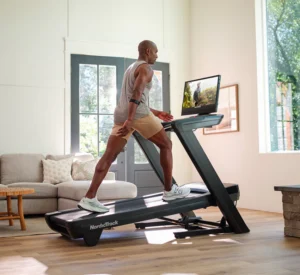
Believe it or not, your surroundings can greatly affect your motivation. If your workout area is messy and uninviting, your treadmill is likely to end up as a clothes rack. To avoid this, make sure your workout space is clean, organized, and inviting.
- Put your treadmill in a place where you'll want to use it (not tucked away in a dark corner)
- Make sure you have good airflow with a fan or an open window
- Get lighting that makes you feel awake and ready to go
- Keep the space around your treadmill open and welcoming
- Add things that motivate you, like a vision board or a chart that shows your progress
There's a lot of psychology behind designing your environment. When your workout space feels like a place you want to be instead of a place you're scared of, you take away one of the biggest things that stops people from exercising regularly.
Establish a Special Exercise Area
Consider the best home running machines routines space as a holy workout area. Even in a small apartment, you can mentally separate your exercise area from your living area. You can use room dividers, different types of flooring (like a workout mat), or even different lighting to create a mental border. This separation will help you mentally shift into “exercise mode” when you step into your treadmill area.
Upgrade Your Entertainment System
Let's face it, running on the spot while staring at a wall isn't exactly thrilling. Entertainment isn't just a nice to have for treadmill workouts, it's often a must have for regular workouts. Install a television at eye level, get a tablet holder, or place your treadmill in front of a window with a good view.
Think about making “treadmill only” entertainment rules, shows you only permit yourself to watch while exercising. This forms a strong motivation loop where you actually anticipate your treadmill time to see the next episode of your favourite series.
For those who find that watching screens while running causes motion sickness, audiobooks and podcasts are excellent alternatives. Many runners report running longer distances when engrossed in a compelling audiobook.
Have Water and Towels Close at Hand
There's nothing like having to get off your treadmill over and over again to get what you need to kill your workout vibe. Have a small table or shelf close enough to your treadmill to hold your water bottles, towels, wireless earbuds, and anything else you might need while you're working out. It's a small thing, but it takes away any potential excuses and interruptions.
Always have a spare water bottle filled and ready to go. Staying hydrated can greatly improve your performance, and having everything you need on hand will prevent any mid workout interruptions that could throw off your motivation.
7 Motivation Tips That Really Do The Trick
Aside from the physical aspect, there are specific motivation strategies that can change the way you feel about treadmill workouts. These methods can help you overcome the mental obstacles that prevent you from starting, as well as the difficulties of staying consistent over time.
1. Plan Your Treadmill Workouts
Loose plans often fail. Saying “I'll run sometime this week” is a sure fire way to not run at all. Instead, treat your treadmill workouts like important meetings that can't be rescheduled. Set aside specific times in your schedule and don't let anything else interfere.
There's a reason why many people choose to work out in the morning. It's because they can get it done before the day's responsibilities get in the way. However, the best time to work out is when you're most likely to stick to it. So, when you're scheduling your treadmill sessions, be honest about your routine and what you like to do.
Try out the “habit stacking” method by linking your treadmill workout to a routine you already have. For instance, “After I finish my morning coffee, I'll spend 30 minutes on the treadmill.” This establishes an automatic reminder to get moving.
2. Participate in Online Running Groups
Having others hold you accountable can be a strong motivator. Studies have found that those who work out with others (even if it's online) are more likely to stick with it than those who work out alone. Consider joining online treadmill running groups, taking part in virtual challenges, or finding a treadmill partner to regularly check in with.
Nowadays, a lot of treadmills can be hooked up to apps such as Zwift or iFIT. These apps simulate a virtual running experience where you can either compete with other runners in real time or take part in workouts led by an instructor. The social aspect of these apps changes the solitary nature of the best home running machines routines into a group activity, making it a lot more fun.
Posting your workout progress on fitness apps or social media can provide the push you need to stay consistent. Knowing that others are keeping track of your progress can be a surprisingly powerful motivator.
3. Apply the 5-Minute Rule
When you're lacking motivation, try to spend at least five minutes on your treadmill. This small commitment helps you get past the initial reluctance to start, which is usually the most difficult obstacle. Once you've been moving for five minutes, the mental and physical momentum usually propels you into a full workout.
This method works because it tackles the biggest obstacle to working out, getting started, instead of obsessing over the entire length of the workout. Many runners say that once they've gotten into the swing of things, it's easier to keep going than to stop.
4. See Your Progress
It's so motivating to see your progress in a visual way. Create a system where you can see your consistency and progress. This could be as simple as a calendar where you mark off the days you've worked out, a graph where you track your improvements in distance or speed, or a chart with milestones and rewards for when you hit certain goals.
While digital fitness trackers and apps offer detailed metrics, a physical visualization of your progress that you see daily can have a powerful psychological impact. Consider putting up a whiteboard near your treadmill to keep track of your weekly goals and achievements.
5. Tailor Your Tunes to Your Workout
Did you know that music can significantly affect your workout performance? Studies have shown that matching your running pace to music with the appropriate beats per minute can boost your endurance by as much as 15%. Make playlists that are designed for different kinds of workouts, choose fast, energetic songs for your HIIT workouts and more steady, rhythmical songs for your longer endurance runs.
Try out music services specifically designed for workouts like Rock-My-Run or Pace-DJ that sync music beats with your running rhythm. Many runners have found that music not only makes treadmill workouts more fun, but also enhances their performance levels.
6. Celebrate Your Achievements
Set up a reward system that praises regularity rather than just performance milestones. For instance, after finishing 20 treadmill workouts, reward yourself with new running shoes or workout clothing. The excitement of getting these rewards becomes extra motivation to keep up your routine even on days when you don't feel like running.
7. Discover Your True Motivation
Common goals such as “losing weight” or “getting fit” often don't provide enough motivation to maintain a long term exercise routine. Try to find what truly motivates you, it could be wanting to have more energy to play with your kids, using exercise as a stress management tool, or wanting to prove to yourself that you can stick to a difficult commitment. Write down your real motivation and put it somewhere near your treadmill where you can see it.
Make sure you revisit and refine your “why” on a regular basis as you progress through your fitness journey. Your original motivation may change as you become more fit and begin to experience the many benefits of regular exercise.
Overcome Boredom With These Treadmill Workout Alternatives
Monotony is the motivation killer for treadmill workouts. If you're doing the same steady state run at the same pace day after day, boredom is inevitable. Variety isn't just more interesting, it's also more effective for fitness gains.
Mixing up the best home running machines routines not only keeps your brain interested but also challenges your body in unique ways. This helps to prevent your body from hitting a plateau. The trick is to have a variety of workout formats that you can switch between to keep things both physically and mentally fresh.
Fast and Furious HIIT Sessions (20 Minutes or Less)
High Intensity Interval Training (HIIT) takes short workouts and turns them into big calorie burners and fitness enhancers. These workouts switch between periods of intense effort and intervals of recovery. A simple treadmill HIIT workout could involve 30 seconds of sprinting followed by 90 seconds of recovery walking, repeated 10 times. The great thing about HIIT is that it's efficient, studies have shown that these brief, intense sessions can provide the same or even more benefits than much longer steady state workouts.
Stamina Boosting Progressive Runs
Progressive runs are an excellent way to build stamina by gradually increasing the intensity of your workout, either by increasing speed or incline. Start with a comfortable warm-up pace for 5-10 minutes, then increase your speed by 0.1-0.2 mph every 2-3 minutes until you reach a challenging but sustainable pace. This approach not only builds cardiovascular endurance, but it also helps to keep your mind engaged in the workout progression. The constant adjustments help to prevent the mental fatigue that comes from maintaining the same pace for an extended period of time.
Low Impact Incline Walking Workouts
Don't overlook incline walking as a workout option. It's a powerful tool for both recovery days and serious workouts. Walking at a moderate pace (3.0-3.5 mph) on a steep incline (6-12%) provides a challenging workout without the joint impact of running. These workouts are great for building strength in your lower body, particularly in the muscles of your posterior chain, and they provide active recovery on the days between your more intense running workouts.
Studies have found that walking on an incline can burn as many calories as running, while also decreasing the amount of force on your joints by up to 24%. This makes it a great choice for anyone who has concerns about their joints or anyone who wants to mix things up without adding extra stress to their joints.
Chit Chat on Treadmill: The Pyramid Workout
One of the most captivating incline workouts follows a pyramid structure. Start with a 5-minute flat warm-up, then increase incline by 1% every minute until you reach your max (usually 8-12%). Then work your way back down, decreasing 1% each minute. This format creates a natural progression that keeps you mentally engaged throughout the workout.
Pyramid workouts have a huge mental advantage. You're always either working towards a peak or looking forward to a recovery period. This structure gives your mind something to hold onto during the workout, making time seem to fly by.
Workouts Inspired by Entertainment
- TV Show Intervals: Ramp up speed, incline during commercials or when the scene changes
- Movie Challenge: Walk during dialogue, jog during action sequences, sprint when the scene gets intense
- Workouts Based on Music: Sprint during the chorus, recover during the verses
- Audiobook Pace Play: Change your speed based on how intense the story is
- Workouts Inspired by Gaming: Use mobile gaming apps that are specifically designed for use on a treadmill
These workouts, which are inspired by entertainment, create natural interval patterns that make your workouts feel more like play than exercise. The distraction factor significantly reduces how hard you feel like you're working, which often allows you to work harder and longer than you would during a standard workout.
Several runners have discovered that reserving specific shows or podcasts for treadmill time provides a strong motivation to use the machine. When you link your treadmill to entertainment you like, the mental resistance to getting started is significantly reduced.
Keep in mind that these best home running machines routines aren't meant to replace your regular training, they're just there to help you stick with it and enjoy it more, especially on days when you're not feeling very motivated or during longer sessions.
Example of a 4-Week Treadmill Exercise Program
Following a structured program helps you avoid the stress of decision making and provides a clear path to progression. This four week program slowly increases intensity while adding variety to keep things interesting. Adjust the speeds and inclines to match your fitness level, and concentrate on the structure rather than the exact numbers.
Week 1: Laying the Groundwork
Monday: Walk or run for 20 minutes at a pace that feels comfortable to you (RPE 4-5/10) | Wednesday: Do a 20-minute interval workout (run faster for 1 minute, then recover for 2 minutes, repeat 7 times) | Friday: Do a 25-minute progressive workout (increase your speed by 0.1 mph every 5 minutes) | Saturday: Take a 15-minute recovery walk at a slight incline (2-3%). This week, concentrate on creating a routine and determining what paces feel comfortable for different types of workouts.
Week 2: Increasing the Intensity
Monday: 25-minute steady workout with 2% incline (RPE 5-6/10) | Wednesday: 25-minute pyramid intervals (30s/60s/90s/60s/30s fast with equal recovery, repeat 2x) | Friday: 30-minute entertainment workout using TV show intervals | Saturday: 20-minute incline pyramid (increase 1% every 2 minutes up to 6%, then back down). This week, we start to introduce more structured intervals and start to incorporate incline work.
Week 3: Variety is the Spice of Life
Monday: 30-minute stamina run with speed bursts (30 seconds faster every 5 minutes) | Wednesday: 20-minute HIIT workout (20s sprint, 100s rest x10) | Friday: 35-minute progressive run (start slow, finish fast) | Saturday: 25-minute “rolling hills” program (alternating 1% and 4% incline every 2 minutes). Week three shakes things up with a mix of workout styles to challenge various energy systems and keep your body guessing.
Week 4: Challenge Week
Monday: 35-minute mixed speed and incline workout (5 min segments alternating between speed focus and incline focus) | Wednesday: 25-minute pyramid HIIT (15s/30s/45s/60s/45s/30s/15s sprints with equal recovery, repeat 2x) | Friday: 40-minute endurance builder (steady state at challenging but sustainable pace) | Saturday: “You choose” day, repeat your favourite workout from the previous three weeks. This culmination week integrates the various elements while extending duration for a satisfying finish.
Once you've finished this four-week cycle, take a moment to assess what you liked best and what helped you reach your goals. Plan your next block to focus on the types of workouts you found to be the most effective and fun. Slowly increase the length or intensity of these workouts, but make sure to keep mixing it up so you don't get bored on the treadmill.
Maximizing Your Treadmill Workout
Simply stepping onto the treadmill isn't enough, you need to make the most of your workout to truly reap the benefits. Many people who use treadmills make basic errors that not only lessen the workout's impact but also raise the risk of injury. These mistakes range from bad form to poorly planned workouts.
The best treadmill workouts combine intensity with good form. Instead of just ramping up the speed until you can't go anymore, smart workouts play around with a few different factors like how long you're running, how steep the incline is, how fast you're going, and how long you rest in between to make the perfect workout for what you want to achieve.
By understanding the science behind the effective best home running machines routines , you can turn a mediocre workout into a session that produces results. By making small adjustments in form, managing intensity, and structuring your workout, you can get significantly better results from the same amount of time.
- Don't hold onto the handrails while you run (you'll burn up to 20% fewer calories)
- Look straight ahead, not down at your feet or the console
- Land on the middle of your foot rather than heavily on your heels
- Lean forward slightly from the ankles, not the waist
- Take shorter, more frequent steps rather than over striding
Essentials of Good Form
Just because you're running on a treadmill doesn't mean your form should be any different. Stand tall with your shoulders relaxed and slightly back, engage your core, and keep your arms bent at about 90 degrees. Your foot should land under your centre of gravity, not out in front of you. The moving belt of the treadmill can encourage over striding if you're not mindful of your form, which can increase impact forces and the risk of injury.
It’s common for people to stare at their feet or the console while using a treadmill, but this can mess up your posture and strain your neck. Try to look straight ahead, like you would if you were running outside. If you need to look at the console, try to do it quickly using just your eyes instead of tilting your head down.
Heart Rate Monitoring Techniques
Heart rate training zones provide objective feedback about workout intensity and help prevent both under-training and overtraining. For fat burning, aim to maintain 65-75% of your maximum heart rate; for cardiovascular conditioning, 75-85%, and for performance training, 85-95%. Rather than trying to maintain your highest possible heart rate throughout, effective workouts often move strategically between zones, creating cardiovascular adaptations while managing fatigue.
Deciding to Boost Speed or Incline
Speed and incline are two different ways to intensify your workout. Speed will increase your cardiovascular demand and engage your fast twitch muscle fibres. Incline will focus more on your posterior chain (glutes, hamstrings, calves) and lessen the impact forces. If you're trying to lose weight, incline walking can be just as effective as running and easier to maintain. If you're trying to improve your performance, you'll need to work on your speed.
Top training programs strategically use both variables. If running is causing joint pain, consider slowing down and increasing the incline. If your fitness improvements have plateaued, alternate between workouts focused on speed and workouts focused on incline to create new training stimuli.
Make Treadmill Workouts a Part of Your Everyday Life
Long lasting fitness isn't about pushing yourself to the limit, it's about creating routines that make regular exercise a no brainer. The people who get the most out of their treadmill workouts don't just rely on willpower; they incorporate their workouts into their daily lives to the point where not doing them feels weirder than doing them.
Connect your treadmill workouts with other regular habits in your daily routine. Maybe you always hop on the treadmill immediately after your morning coffee, or you include it as part of your cool down routine after work. These trigger-based habits form automatic behaviour patterns that eliminate the need for conscious motivation.
One of the strongest motivators for long term fitness is seeing yourself as a fitness enthusiast. When you start to see yourself as “someone who regularly runs” rather than “someone trying to run more,” it becomes a habit. Share the best home running machines routines goals with others, join communities of like minded exercisers, and celebrate your consistency milestones. Your treadmill workout will eventually become part of your identity.
Commonly Asked Questions
Even if you've been using a treadmill for a while, you might still have questions about how to make your workouts as effective as possible. By learning more about the ins and outs of treadmill training, you can make sure you're getting the most out of your workouts and avoid common mistakes that can lead to frustration or injury.
A lot of people have questions about treadmills. They want to know how to get the most out of their workouts. They also want to know how to stay safe, especially if they're new to working out or if they're getting back into it after a long time off. We've got answers to some of the most common questions to help you make the most of your treadmill workouts.
- Adapting your workout to fit different fitness goals
- Preventing common injuries from treadmill use
- Comparing treadmill running to outdoor running
- The best workout frequency for different goals
- Keeping your home treadmill in good working order
Keep in mind that your fitness level, age, health conditions, and personal preferences will all play a part in determining the best approach for you. Use the tips provided here as a starting point, but always listen to your body and make adjustments as needed. If you have specific health concerns, be sure to consult with a healthcare provider.
How much time do I need to spend on the treadmill to get results?
The time it takes to see results from treadmill workouts varies based on your initial fitness level, how often you exercise, the intensity of your workouts, and what your specific goals are. If you're just looking to improve your cardiovascular health, you should aim to get in 150 minutes of moderate intensity exercise (like a brisk walk) or 75 minutes of high intensity exercise (like jogging or running) each week. This usually means doing 30 minutes of moderate exercise five days a week or 25 minutes of high intensity exercise three days a week.
Many individuals find that their spirits and energy levels are boosted after just a week of regular treadmill exercise. Cardiovascular enhancements usually start to appear within two to three weeks, while noticeable changes in body composition usually take four to eight weeks of regular exercise and a balanced diet. Instead of focusing solely on the length of your workouts, strive for consistency and gradual improvement. Three 30-minute workouts per week will yield better results than one 90-minute workout followed by six days of rest.
Is running on a treadmill or outside better?
Both options have their unique benefits, and neither can be said to be universally “better”. Running on a treadmill gives you a controlled environment, a consistent surface, predictable pacing, and the ability to run no matter what the weather is like. It is usually less impactful than running on the road because of the cushioned decks, especially on higher end models like NordicTrack. Running outside gives you natural changes in terrain, no limitations on pace, exposure to vitamin D for free, and usually a higher calorie burn due to wind resistance and changes in terrain. The best strategy for most runners is to use both options strategically, use the best home running machines routines for controlled workouts and on days when the weather is bad, and run outside for variety and training specific to racing.
What should I do if I feel pain during a treadmill workout?
If you feel sharp or ongoing pain, it's your body's way of telling you something's wrong and it should not be ignored. If you feel a sharp pain, especially in your joints, you should stop your workout right away. It's important to know the difference between normal workout discomfort (like burning muscles, increased breathing rate) and actual pain that could be a sign of an injury.
Shin splints (usually due to ramping up volume too soon), knee pain (possibly due to bad form or over striding), and lower back pain (often due to weak core muscles or bad posture) are all common treadmill related injuries. To address these issues, check your running form, make sure you have the right shoes, increase workout volume slowly, and include strength training for muscles used in running. If the pain doesn't go away after rest and adjustment, see a healthcare professional before continuing.
Is it possible to lose weight by only walking on a treadmill?
Definitely! Walking on a treadmill can contribute to weight loss when it's done regularly and paired with a healthy diet. A 30-minute walk at 3.5 mph burns around 120-200 calories, depending on your weight. These calories can add up over time. To burn even more calories, try adding an incline (which can increase calorie burn by 30-40% at moderate inclines) or interval training (alternating between faster and slower walking speeds).
If you want to lose weight, you should combine regular treadmill walking with strength training (which helps boost your metabolism) and a modest calorie deficit through nutrition. Many people who have successfully lost weight started with simple walking routines and gradually added more challenging elements as their fitness improved. Walking is particularly effective for long term weight management because it's sustainable, it's an activity most people can keep up for years.
What are some tips for keeping my treadmill in top shape?
By taking care of your treadmill, you can extend its life and get the most out of your workouts. After each use, wipe down the console and belt with a dry cloth to remove sweat. Sweat can corrode the electronics and degrade the belt materials over time. Check and tighten all bolts once a month. The vibration from the treadmill can naturally loosen the hardware. Lubricate the belt as recommended by the manufacturer. This is typically every 3-6 months. Lubricating the belt can reduce friction, decrease the strain on the motor, and prevent the belt from wearing out prematurely.
Place your treadmill on a flat surface and put a special equipment mat underneath it to lessen vibration, safeguard your floors, and stop dust from gathering in the motor area. Make sure the area around the air vents is clear to avoid overheating. For belt upkeep, change the tension as needed (you should be able to lift the edge of the belt 2-3 inches from the deck) and re-centre the belt if it starts veering to one side.