



Quick Look: Home Bike HIIT
- Bike HIIT workouts can burn up to 400 calories in just 20 minutes, making them 2-3 times more efficient than steady state cardio
- The afterburn effect from HIIT cycling can boost your metabolism for up to 24-48 hours after your workout
- Correct bike setup is essential for maximizing intensity and avoiding injury during high intensity intervals
- You can achieve significant fitness results with just 2-3 HIIT cycling sessions per week, making it ideal for busy schedules
- Alternative equipment like spin bikes, upright bikes, and even traditional bicycles with trainers can all be effective for home HIIT workouts
Ready to take your home cycling routine to the next level? High-intensity interval training (HIIT) on your stationary bike is about to become your new best friend for fitness results in minimal time. A well structured bike HIIT session can burn more calories in 20 minutes than an hour of traditional cardio, making it perfect for busy fitness enthusiasts looking to maximize results.
The best home stationary bikes workouts plans following the principles of High Intensity Interval Training (HIIT) have become increasingly popular, and it's not hard to see why. These short, high intensity workouts trigger what's known in the fitness world as the “afterburn effect”, where your body continues to burn calories long after you've stopped pedalling. Whether you're using a spin bike, an upright stationary bike, or even a regular bike mounted on an indoor trainer, you can turn any bike setup into a fat burning HIIT workout.
What You'll Gain From This Home Bike HIIT Guide
This all inclusive guide will teach you everything you need to transform your home cycling setup into a fat-burning HIIT studio. You'll learn workout structures that are backed by science, correct form techniques to get the most out of your workout and prevent injury, and routines that can be customized to fit any fitness level. I'll let you in on the specific resistance settings, timing intervals, and recovery protocols that will give you the best home bike HIIT workout possible.
Aside from the workouts, you'll also get to know how to monitor your progress using important metrics, how to incorporate your cycling HIIT with other fitness methods, and the food strategies that help with the best performance and recovery. At the end of it all, you'll have a comprehensive guide to doing professional level HIIT bike workouts right in your own home.
20 Minutes to a Fitter You: The Magic of HIIT Cycling at Home
HIIT bike workouts are a simple yet effective way to get in shape: they involve alternating between bursts of all out effort and short periods of recovery. This method causes your muscles to build up an oxygen deficit that your body has to work extra hard to make up for, leading to a much higher calorie burn than you'd get from a steady state workout. A typical 20 minute HIIT bike workout can burn anywhere from 250 to 400 calories, depending on your weight and how hard you push yourself, that's as much as many people burn in 40 minutes of traditional cardio.
When you finish your workout and step off the bike, that's when the real magic begins. Your body is still working hard to return to its pre-workout state, and your metabolic rate stays high for several hours after you finish exercising. This is called excess post exercise oxygen consumption, or EPOC, and it can add an extra 10-15% to the number of calories you burn during your workout. The harder you push yourself during your intervals, the bigger this afterburn effect will be.
How High Intensity Bike Workouts at Home Boost Your Fitness
High intensity interval training (HIIT) on a home bike can deliver impressive results, even though the workouts are short. These intense sessions cause a range of physical changes that you can't get from steady state cardio. Your cardiovascular system gets better at delivering oxygen to your muscles, the number of mitochondria in your cells increases, and your body gets better at using both carbohydrates and fats for energy.
These changes will directly improve your athletic performance in all your activities. You'll see improved endurance during longer rides, more power on climbs, and more overall energy throughout your day. The best part? You can get these benefits from just 2-3 HIIT sessions a week, which is less than an hour of actual exercise time.
Not only does HIIT best home stationary bikes provide physical advantages, it also offers significant mental strength training. The ability to power through those high effort intervals cultivates a mental toughness that can be applied to other areas of life. Despite the physical rigor, the concentrated, time bound structure of these workouts often induces a meditative, stress relieving flow state for many people.
- Better use of oxygen (VO2 max)
- Improved function of mitochondria
- Higher lactate threshold
- Improved metabolism of glucose
- Lower blood pressure and better heart health
The Science of the Afterburn Effect
Where HIIT cycling really stands out compared to traditional cardio is in the afterburn effect, or EPOC (Excess Post exercise Oxygen Consumption). When you push yourself through those all out intervals, you create a significant oxygen debt and metabolic disturbance that your body has to work to correct long after you're done exercising. Your heart rate stays elevated, protein synthesis goes up to repair muscle tissue, and your body temperature stays higher, all processes that require more energy expenditure.
Why Home Bike HIIT Workouts Are Perfect for Time Poor Individuals
One of the biggest advantages of home bike HIIT workouts is their time saving nature. In our busy modern lives, finding hours to dedicate to exercise can seem like an insurmountable challenge. HIIT cycling solves this problem by delivering high quality results in a fraction of the time. A study published in the Journal of Physiology found that three 20-minute HIIT sessions per week can produce the same cardiovascular benefits as five 45-minute sessions at a moderate intensity. This equates to a time saving of nearly three hours per week, with the same or better results.
Not only is the workout itself time efficient, but so is the preparation. With a bike in your home, you cut out the travel time to the gym, waiting for machines to be free, and all the other time consuming aspects of regular fitness. This is why many busy professionals and parents find that they can stick to a HIIT cycling routine when they’ve failed to keep up with other exercise programs, the time commitment is so much smaller.
HIIT Cycling vs. Traditional Cardio
HIIT cycling and traditional steady state cardio are two vastly different exercise methods. Steady state cardio mostly works out slow twitch muscle fibres and burns calories during the workout itself. On the other hand, HIIT not only works out both slow and fast twitch muscle fibres, but also results in metabolic changes that last for days. According to research from the American College of Sports Medicine, HIIT can result in up to 9 times more fat loss than steady state cardio when the two are compared on an hour for hour basis.
Another advantage of HIIT best home stationary bikes is that it prevents the plateau effect often seen with steady state exercise. When you do the same moderate exercise consistently, your body quickly gets used to it. But with HIIT, you’re always pushing your body in different ways. This keeps your body on its toes, so to speak, instead of getting too efficient at the exercise (which would mean you burn fewer calories). So you keep getting better and better, instead of hitting a wall.
How to Set Up Your Home Bike for High Intensity Workouts
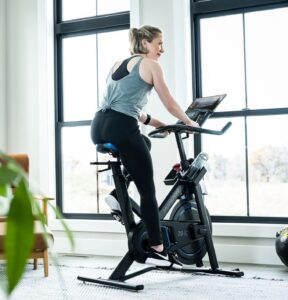
Before you start high intensity interval training (HIIT) on your home bike, you'll need to adjust it for optimal performance. You should adjust your seat height so that your knee is slightly bent (25-30 degrees) when the pedal is at its lowest point. Your handlebars should be at a height that allows you to lean forward comfortably, engaging your core without straining your lower back. These adjustments will help prevent injuries and ensure that you can generate as much power as possible during your high intensity intervals.
When it comes to HIIT, you need a resistance mechanism that can be adjusted quickly. You're going to be switching between high and low resistance levels quickly, so make sure you know how to adjust the resistance on your bike. A lot of experienced riders mark their preferred resistance settings for both recovery and sprint intervals so that they can transition smoothly during intense workouts.
Getting Your Seat and Handlebars Just Right
Getting your bike set up just right can be the difference between a so-so workout and a game changing HIIT session. Your seat height can affect everything from the stress on your knee joints to how efficiently you pedal and which muscles you’re using. If your seat is too low, you’ll be putting too much pressure on your knees and not getting enough power. If it’s too high, you’ll be rocking from side to side, wasting energy and potentially risking injury. Ideally, you want your leg to be extended about 80-90% at the bottom of the pedal stroke, with your hips staying level the whole time.
Where you place your handlebars can impact how comfortable your upper body is and how well you can breathe. If you're doing HIIT workouts, you might want to have your handlebars a little lower than you would for a leisurely ride. This can help you use more of your core muscles and let you put more power into your workout. But you should never feel strain in your back or neck. Keep your elbows a little bent to make a triangle with your arms and body. This can help protect your upper body when you're working out hard.
How to Use Resistance Settings for Various Workouts
Understanding how to control resistance is key to a successful HIIT cycling workout. When doing sprint intervals, it's important to have enough resistance to produce power without “spinning out,” which means pedalling too quickly with little resistance. A good guideline is to adjust the resistance so that you can keep up a speed of 80-100 RPM during your hardest intervals. For recovery intervals, you should drop to around 40-50% of your sprint resistance. This lets you keep moving while also giving you a chance to recover a bit before your next hard interval.
Various HIIT protocols necessitate diverse resistance tactics. Workouts in the style of Tabata (20 seconds on, 10 seconds off) usually perform best with higher resistance settings because the intervals are very short. Longer intervals, like 2-minute efforts, typically necessitate slightly lower resistance levels in order to maintain intensity throughout the entire work period. Experiment to discover your personal optimums for various interval durations.
How Much Room Do I Need and How Should I Set Up?
It doesn't take much space to set up a killer HIIT best home stationary bikes workout at home. Most stationary bikes will fit comfortably in a space about 4′ x 6′, and that gives you enough room to get on and off the bike safely. Put your bike on a flat, stable surface. A mat underneath can help absorb some of the bike's vibrations and keep your floors looking nice. Make sure you have about 6-12 inches of space around the bike on all sides. This gives you a safety buffer and helps air circulate around the bike.
Positioning your bike close to a window or fan can make a big difference to your HIIT workout. These sessions can get pretty hot, so having some good airflow will stop you from overheating and affecting your performance. It’s also a good idea to put your bike somewhere where you can easily see a timer or the workout display without having to crane your neck. And don’t forget to have a small table or stand nearby for your water, towel, and maybe a tablet or phone if you’re following along with a workout video. And there you have it, your very own home HIIT cycling station.
Don't Have an Exercise Bike? Check Out These Options
Don't let a lack of equipment prevent you from reaping the benefits of HIIT cycling. A regular road or mountain bike placed on an indoor trainer can provide an experience similar to high end exercise bikes for a fraction of the price. These trainers usually range in price from £100-300 and transform your current bike into a stationary exercise machine by lifting the back wheel and providing adjustable resistance.
If you don't have a bike, you might want to think about getting a portable pedal exerciser that you can place on the floor in front of a chair. While they're not the best for standing intervals, they can still provide effective seated HIIT workouts. Some of these compact units even come with digital resistance adjustment and performance tracking, and they cost less than £200. You can also join virtual cycling platforms like Zwift or Peloton Digital. They offer structured HIIT workouts that you can do no matter what kind of equipment you have.
4 Fast Paced, High Intensity Cycling Workouts for Weight Loss
These four high intensity cycling workouts gradually get harder, but if you do them regularly, you'll see amazing results. Each one targets a different energy system, and they all create the metabolic disturbance you need to burn the most calories and get fitter. Pick the one that's right for your current fitness level, or do all four in a week for balanced development.
1. The 15-Minute Fat Blaster (Beginner Level)
This exercise familiarizes you with the HIIT cycling technique while also developing your basic fitness level. After a 3-minute slow warm up, complete 6 rounds of 30-second sprints at a moderate intensity, followed by 90 seconds of active recovery. Concentrate on maintaining a steady rhythm during the work intervals, rather than pushing yourself to the limit. This 1:3 work to rest ratio provides plenty of recovery time while still effectively increasing your heart rate.
The secret to this beginner workout is to keep it sustainable. You should feel like you've had a good workout, but not be completely wiped out. Aim for about 75-80% of your maximum effort during the work intervals, which usually means you should feel like you're working at a level of 7-8 out of 10. As you get used to this workout, slowly increase your work intensity before moving on to more advanced workouts.
2. The 20-Minute Metabolic Booster (Intermediate)
This workout features pyramid intervals that gradually increase in intensity before slowly decreasing. After warming up, perform work intervals of 30, 45, 60, 75, 90, 75, 60, 45, and 30 seconds, with recovery periods equal to each work interval. Set resistance at a challenging level where you can maintain 80-90 RPM during the shorter intervals but must dig deep to maintain form during the longer ones.
What's great about this pyramid structure is that it helps you break through mental barriers. Just when the intervals get really tough, they start getting shorter, giving you a strong feeling of achievement. This workout works on both aerobic and anaerobic energy systems, which makes it really good for overall cardiovascular fitness and burning calories.
3. The Half Hour Stamina Booster (Advanced)
This workout for advanced cyclists is designed to build endurance while still incorporating the principles of high intensity interval training (HIIT). After warming up, do 5 sets of the following sequence, 3 minutes of moderate to high intensity (75-80% effort), followed by 30 seconds of all out effort, and then 90 seconds of active recovery. The extended periods of moderate to high intensity result in a significant build up of lactic acid, while the all out effort pushes you well past your lactic acid threshold.
The best home stationary bikes routine is specifically designed to improve your body's ability to handle lactic acid, the stuff that makes your muscles burn during intense exercise. As you get better at this, you'll see a big improvement in all your workouts. This workout also burns a lot of calories both during and after the workout, making it perfect for anyone who wants to lose a lot of fat in a short amount of time.
4. The 10-Minute Morning Energy Boost
For those days when you're short on time but still want to squeeze in a workout, this quick routine is your go to. Start with a 2-minute warm up that gradually increases in intensity. Then, do 8 rounds of 20 seconds of all out effort, followed by 40 seconds of active recovery. This workout is inspired by the Tabata method, which studies have shown can increase your metabolic rate for up to 24 hours after you're done, even though it only takes 10 minutes.
For this workout, you really need to push yourself to the limit during those 20-second bursts. You should feel like you couldn't keep going for even 5 more seconds. Set the resistance high enough that your muscles are tired out by the end of each sprint interval. Even though it's a short workout, it can burn 100-150 calories directly, and potentially hundreds more through the extended afterburn effect.
Getting Your Form Right for Safe HIIT Cycling
Good form is especially important during high intensity intervals, when the forces on your joints can really ramp up. Keep your spine neutral throughout your workout, bending slightly forward from the hips rather than the lower back. Your shoulders should stay relaxed and down, away from your ears, even during maximum effort pushes. This will not only help prevent injury, but it will also allow you to generate more power by properly using your core and glute muscles.
How to Engage Your Core
When you're cycling, your core is the powerhouse that transfers energy from your upper body to your lower body. Before you start your high intensity intervals, make sure your core is activated by pulling your belly button slightly inward, towards your spine. This will engage your transverse abdominis, which acts like a natural “corset” to keep your pelvis and spine stable throughout your workout. Keep this gentle engagement going throughout your session, and pay special attention to it during standing intervals, when having a stable core is crucial for generating power.
If you're a seasoned cyclist, you can try to integrate purposeful breathing techniques to strengthen your core. During the hardest part of each pedal stroke, breathe out with force. This is a technique known as “power breathing” by physiologists. This method boosts the pressure in your abdomen, which can stabilize your torso even more. It could even increase your power output by 5-8% during your hardest efforts, as shown in studies from the Human Performance Lab at the University of Colorado.
How to Breathe While Sprinting
Proper breathing can make a huge difference in your HIIT cycling workouts. When you're pushing yourself during those high intensity intervals, make sure to breathe deeply and rhythmically, not shallowly from your chest. Try to inhale for 2-3 pedal strokes and exhale for 2-3 pedal strokes, creating a controlled rhythm that will help you get the most oxygen. This will help you avoid the common mistake of holding your breath when you're working your hardest, which can hurt your performance and increase internal pressure.
As you pedal harder and approach your maximum, you'll naturally start to breathe faster. Instead of trying to slow your breath, concentrate on fully exhaling, which helps clear out carbon dioxide and prevents your breathing muscles from getting tired. Some top level cyclists even time their breaths to specific parts of the pedal stroke, exhaling during the downstroke (power phase) to help produce more force and stabilize their core.
Avoid These Common Form Errors
Even the most seasoned cyclists can fall into the trap of bad form during high intensity intervals, which can put a damper on results and up the ante for injury. To avoid this, keep your upper body movement to a minimum, especially side to side rocking, which not only saps your energy but also puts uneven pressure on your spine. Keep your elbows slightly bent instead of locked to absorb any vibrations and keep your neck and shoulders from getting tense. Your knees should be directly over your feet during the entirety of your pedal stroke, and should not be bowing inward or splaying outward.
One of the most frequent errors is holding the handlebars too tightly during strenuous workouts. This can cause unnecessary stress in your upper body, limit your breathing, and potentially lead to nerve compression problems over time. Make sure to loosen your grip during intervals, holding the handlebars tightly enough to maintain control but not so tight that your knuckles turn white. Remember, the power comes from your legs and core, not your arms and hands.
Keep an Eye on Your Improvement: Important Metrics
Keeping an eye on the right performance metrics can turn your random best home stationary bikes sessions into a progressive training program. The most important measurements for HIIT cycling include average power output during work intervals, heart rate recovery time between intervals, and total work performed (often measured in kilojoules). These metrics can give you objective feedback on your improving fitness that motivation alone can't capture. Many stationary bikes now include integrated performance tracking, but standalone heart rate monitors and power meters can be added to nearly any setup.
Understanding Heart Rate Zones
Knowing about heart rate zones can help you understand your body's physiological reaction to high intensity interval training (HIIT) on a bike. Zone 1 (50-60% of maximum heart rate) is for easy recovery, Zone 2 (60-70%) is for building an aerobic base. Zone 3 (70-80%) is for improving aerobic capacity and is typically used during recovery intervals. Zones 4 (80-90%) and 5 (90-100%) are for threshold and anaerobic efforts that are targeted during work intervals in HIIT cycling.
One of the best ways to track your fitness progress is by seeing how fast your heart rate goes down after a tough workout. As you get more fit, your heart rate will start to go down faster during your rest periods. You can see your progress over time by tracking how fast your heart rate goes down. This can often show your progress before you start to see physical changes in your body. Try to get your heart rate to go down by at least 20-30 beats in the first minute after a hard workout.
Understanding RPE (Rate of Perceived Exertion)
When you don't have access to high tech heart rate monitors, you can use the Rate of Perceived Exertion scale to keep track of how intense your workout is. This scale, which goes from 1 to 10 (with 10 being the highest level of effort you can put forth), gives you feedback based on how you feel. This feedback often lines up quite well with physiological measurements. If you're doing HIIT cycling, you should aim for a score of 8 to 10 during work intervals and a score of 3 to 4 during recovery periods.
RPE, or Rate of Perceived Exertion, is a fantastic tool because it can adjust for how you're feeling on any given day. Your heart rate can be affected by how well you've slept, how hydrated you are, and how much stress you're under, which can sometimes make it a less reliable measure of how hard you're really working. RPE takes all of this into account and gives you a single subjective score that often more accurately reflects how hard your body is working. Many top-level coaches now use a combination of objective measures and RPE to give the most complete picture of your training.
Performance Tracking Apps and Tools
The boom in fitness technology has brought professional performance tracking into the homes of HIIT cyclists. Apps such as Strava, Wahoo Fitness, and Trainer Road offer a detailed analysis of your workouts when you pair them with the appropriate sensors. Basic setups that combine a heart rate monitor with one of these apps can give you excellent insights for less than £100. If you want more advanced metrics, adding a power meter (which measures wattage output) gives you the best cycling performance data.
Many riders find a lot of value in tracking their health with platforms like Garmin Connect, Apple Health, or Fitbit, beyond just using dedicated cycling apps. These platforms can integrate your HIIT cycling data with your daily activity, sleep quality, and other health metrics to give you a more complete picture of your fitness journey. Being able to see correlations between your workout performance, recovery quality, and lifestyle factors can often reveal insights you might not have expected, which can help you make progress more quickly.
Mixing HIIT Cycling With Other Exercises
By smartly mixing HIIT best home stationary bikes with other types of workouts, you can achieve fitness improvements that you couldn't get with just cycling. If you want the best results, you should do HIIT cycling on the same days as strength training that works on different muscle groups. For instance, you could do upper body and core strength work on the same days as HIIT cycling, and then do lower body strength training on different days. This lets your lower body muscles recover. This way, you can exercise as much as possible without overworking any muscle groups.
Strength Exercise Combinations
The best strength exercises to pair with HIIT best home stationary bikes workouts are ones that address the muscle imbalances that can occur from cycling. Focus on exercises that target the posterior chain, such as deadlifts, hip thrusts, and hamstring curls, to balance out the quad dominant nature of cycling. Core stability exercises like planks and Pallof presses can help to strengthen the muscles that help you maintain the correct posture on the bike. This can potentially increase your power output during intervals by creating a more stable base for generating force.
If you want to get the most out of your workout, try doing your strength training after your HIIT cycling instead of before. This is because, according to the Journal of Strength and Conditioning Research, you'll get the most muscle building benefits from resistance training and the most fat burning benefits from the increased metabolism that HIIT provides. If you can't do these workouts back to back, try to leave at least 6 hours between them to give your body some time to recover.
Options for Cycling on Recovery Days
Active recovery rides are essential in a balanced HIIT cycling program. You should aim to perform these sessions at 40-60% of your maximum heart rate, which may feel surprisingly easy. Aim for 20-40 minutes of smooth, continuous pedalling with as little resistance as possible. This low intensity effort helps to increase blood flow to muscles that are recovering without causing additional fatigue. It helps to speed up the clearance of metabolic by products and reduces muscle soreness.
A perfect recovery ride consists of a high cadence (85-95 RPM) and low resistance, which physiologists refer to as “muscle flossing.” This is the repeated contraction of muscles that helps blood flow through tissues that are recovering, without creating a lot of tension. You should plan these sessions for 24-48 hours after your most intense HIIT workouts, and even if you're feeling great, don't give in to the temptation to increase the intensity. The ability to truly recover often distinguishes successful athletes from those who reach a plateau due to constant under recovery.
Eating Right for Your Home Bike HIIT Workouts
Getting the right nutrition can turn a good HIIT workout into a great one, and it can help you recover faster in between workouts. High intensity interval training demands a lot of energy, and the way you fuel your body for it is different than the way you would for traditional endurance exercise. Your body uses carbohydrates for energy during these intense workouts, so it's important to make sure you have enough stored glycogen. HIIT also causes a lot of muscle damage, which means you need more protein than you would for steady state cardio. For optimal recovery, you should aim for 1.6-1.8 grams of protein per kilogram of body weight per day.
What to Eat Before Your Workout
What you eat before your workout, and when you eat it, can greatly affect your HIIT bike workout. If you're working out in the morning, eat something light that's easy to digest and has a good amount of protein about 30-60 minutes before you start. A banana with a tablespoon of nut butter or a small smoothie with fruit and protein powder are good choices. They'll give you energy without making you feel sick. If you're working out in the afternoon or evening, eat a balanced meal about 2-3 hours before you start. It should have complex carbs, lean protein, and a moderate amount of healthy fats.
For the best results before a high intensity interval training (HIIT) workout, eat a meal that includes 20-40 grams of carbs and 15-25 grams of protein. Try to limit your intake of fibre and fat to avoid digestive problems during your workout. This combination will fill your glycogen stores and provide amino acids that could help prevent muscle breakdown during your workout. If you’re working out on an empty stomach (which is often the case for morning workouts), consider taking branched-chain amino acids (BCAAs) 15 minutes before your workout to help protect your muscles during intense workouts.
What to Eat After Your Workout
HIIT cycling can be tough on your muscles, but eating the right foods within 30-60 minutes after your workout can help speed up recovery. During this time, your muscles are more sensitive to nutrients, especially carbohydrates and protein. Try to eat a meal or drink a shake that has a 3:1 or 4:1 ratio of carbs to protein. For most adults, this means about 60-80 grams of carbs and 20-25 grams of protein. This will help refill your glycogen stores and give your muscles the amino acids they need to repair themselves.
Drinking Guidelines for Intense Workouts
High intensity interval training (HIIT) on an best home stationary bikes can cause significant fluid loss, with sweat rates often reaching 1-2 litres per hour during intense indoor sessions. Start drinking several hours before your workout, aiming for clear or light yellow urine as an indicator of proper hydration. During the workout itself, drink 4-8 ounces of fluid every 15 minutes, preferably containing electrolytes if your session lasts longer than 30 minutes. After completing your HIIT workout, replace lost fluids at a rate of 16-24 ounces for every pound of body weight lost during exercise.
Jump Into Your First High Intensity Interval Training (HIIT) Cycling Workout
There’s no better time to start your HIIT cycling journey than now. Start with the beginner-level workout we’ve outlined above, focusing on correct form and consistent effort over maximum intensity. Plan for 2-3 sessions per week, with at least 48 hours between workouts to allow for proper recovery. Use whatever metrics are available to you to track your performance, even if it’s just perceived exertion and total workout time and watch as your numbers improve week over week. The combination of the immediate endorphin rush and visible progress make HIIT cycling one of the most sustainable forms of high intensity exercise for long term results.
Common Questions
Here are some answers to the most frequently asked questions about adding HIIT cycling to your home workout regimen. These answers come from both scientific studies and real world experience working with hundreds of cyclists of all fitness levels. While everyone's results will differ, these guidelines are a good starting point for most adults who are new to HIIT cycling.
How many calories will I burn during a 20-minute HIIT bike workout?
Usually, a 150 pound person can burn between 250-400 calories during a 20-minute HIIT cycling workout. However, the exact amount of calories burned will depend on your body weight, the intensity of your workout, and your current fitness level. If you weigh more, you'll burn more calories. Also, if you have more muscle mass, you're likely to burn more calories during the same workout.
One of the biggest benefits is the afterburn effect, which keeps your metabolism high for 24-48 hours after your workout. According to the American College of Sports Medicine, this can add another 10-15% to the calories you burn during your workout over this extended period. Over several days, a HIIT cycling program three times a week can increase your total weekly calorie burn by 1,500-2,500 calories compared to not exercising at all.
Do I need a specific bike for home HIIT workouts?
Though specialized best home stationary bikes provide features that enhance the HIIT experience, any stationary bike with adjustable resistance can work just fine. The most crucial features for HIIT are quick resistance adjustment capability, sturdy construction that doesn't shake during intense efforts, and a comfortable riding position. If you're buying new equipment specifically for HIIT, look for bikes with magnetic resistance systems, which allow for smoother transitions between intensity levels compared to friction based systems.
How many times a week should I do high intensity bike workouts?
Most individuals find that 2-3 HIIT cycling workouts a week strike the perfect balance between challenging their bodies and allowing for recovery. According to a study published in the Journal of Physiology, three HIIT workouts a week can lead to substantial improvements in cardiovascular health, insulin sensitivity, and body composition. Adding more sessions doesn't usually speed up results, and can actually increase the risk of injury by not allowing enough recovery time. It's always a good idea to leave at least 48 hours between HIIT workouts, especially when starting a new routine.
Is HIIT cycling suitable for beginners, or should I first build endurance?
HIIT cycling can certainly be beneficial for beginners, provided the workouts are appropriately scaled. If you are new to exercise, start with modified intervals, using a 1:3 or 1:4 work to rest ratio instead of the more challenging 1:2 or 1:1 ratios used by advanced athletes. During work intervals, start with a lower intensity around 70-80% of your maximum effort instead of 90-100%. This approach provides many of the benefits of HIIT, while also allowing for the development of proper form and basic cardiovascular adaptation.
If you're new to exercise or haven't done it in a while, it's a good idea to do 2-3 weeks of moderate, steady cycling before you start adding HIIT. This will help you build up your muscles and get used to the bike and how to use it. Once you can cycle for 20-30 minutes without stopping, you can start adding short bursts of harder cycling. Over time, you can start doing more structured HIIT workouts.
Does HIIT cycling just burn fat or does it also build leg muscle?
HIIT cycling mostly activates Type II (fast-twitch) muscle fibres, which can grow a lot more than the Type I fibres that steady state cardio targets. While it's not as good as strength training for building muscle, HIIT cycling can make your quadriceps, hamstrings, and calves noticeably bigger and more defined, especially if you're new to it. The high forces you need to use during maximum effort intervals create enough mechanical tension to cause a bit of hypertrophy and burn a lot of calories at the same time.
If you're looking to build leg muscles while also losing fat, try adding “strength intervals” to your HIIT workout. For these, you'll want to increase your resistance much higher than you usually would for short bursts (15-30 seconds) while keeping a slower pace (50-60 RPM). This will put more tension on your muscles, similar to resistance training, which can help build muscle beyond what you'd get from a standard HIIT workout, all while keeping your heart rate up.
To achieve the best outcome in terms of fat reduction and muscle growth, combine HIIT cycling with progressive resistance training that targets all the major muscle groups 2-3 times a week. This all inclusive approach guarantees balanced growth while maximizing metabolic impact through complementary training stimuli. The cardiovascular benefits of HIIT cycling also enhance recovery between strength training sessions by improving the delivery of nutrients to muscles that are recovering.
AI content:
Indoor cycling is a great way to get in your cardio. You can burn a ton of calories, especially if you’re doing high intensity interval training (HIIT).
Here’s a quick 30-minute HIIT workout you can do on your indoor bike:
- Warm up for 5 minutes at a moderate pace.
- Go all out for 30 seconds.
- Recover for 30 seconds.
- Repeat steps 2 and 3 for 15 minutes.
- Cool down for 5 minutes.
This workout is intense and will have you burning calories long after you’ve finished.
Human content:
Indoor cycling is an excellent choice for cardiovascular exercise. It can help you burn a lot of calories, especially when you do high-intensity interval training (HIIT).
Here’s a quick 30-minute HIIT workout that you can do on your indoor bike:
- Start with a 5-minute warm up at a moderate pace.
- Push yourself to the max for 30 seconds.
- Take a 30-second recovery period.
- Repeat the second and third steps for 15 minutes.
- End with a 5-minute cool-down period.
This workout is tough, and it’ll have you burning calories even after you’ve finished.