


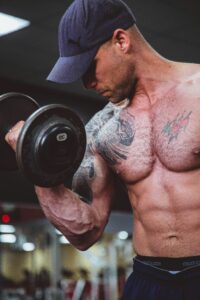
The best barbell and weights training program workouts can take your fitness routine to the next level with just a few pieces of equipment, delivering total body results in less time
Integrating multi-purpose plate exercises activates more muscle groups than traditional isolated movements, leading to a higher calorie burn and strength gains
Creative plate workout progressions allow for continuous advancement without the need for costly equipment upgrades
Core-focused plate exercises develop functional strength that translates to better performance in everyday activities
Iron Bull Strength's specialized weight plate designs enhance grip and versatility for these targeted workouts
Weight plates aren't just for loading barbells anymore. These versatile training tools can completely revolutionize your workout routine, delivering impressive results with minimal equipment investment. The beauty of weight plate training lies in its simplicity and effectiveness, you can target virtually every muscle group using creative movements that challenge your body in new ways.
Are you feeling like you’re not making any progress in your fitness journey? Weight plate workouts could be the solution you need to overcome stagnation and breathe new life into your training sessions. By ditching the machines and embracing the sheer functionality of plate exercises, you’ll be activating stabilizer muscles that tend to be overlooked in traditional workouts. Iron Bull Strength provides weight plates that are specifically designed for these functional movements, with ergonomic grips that make the exercises more comfortable and efficient.
Weight Plate Workouts: The Hidden Key to Surpassing Fitness Plateaus
When progress slows, it's not usually about effort, it's about creativity. The best barbell and weights training program offer a new challenge to muscles that have become used to your regular routine. The unique resistance patterns created when moving a plate through different planes of motion test your neuromuscular system in ways that machines just can't copy. This new challenge is often all you need to kickstart growth and development.
Another great aspect of weight plate workouts is that they are very functional, meaning they prepare you for the strength you need in your everyday life. Instead of isolating muscles in fixed positions, you're improving your coordination, stability, and power through integrated movement patterns. This directly translates to better athletic performance and functionality in your day to day life. Many professional athletes incorporate plate-based training specifically for this reason, it's a great way to bridge the gap between gym strength and practical application.
Moreover, weight plate workouts are fantastic for generating time under tension, which is key for muscle development. The challenging grip positions and ongoing stabilization needed when working with plates ensures muscles are active throughout the entire range of motion, making each repetition as productive as possible.
Why You Should Embrace Weight Plates in Your Workouts
Weight plates are often overlooked in the gym. Most gym goers tend to gravitate towards the shiny machines or specialized equipment, but the truth is, weight plates are a versatile and cost effective tool for any workout. With just a few different weight options, you can create hundreds of effective exercises that target every major muscle group.
What makes weight plates so useful is their flexibility for different fitness levels. Beginners can start with lighter weights to perfect their form, while more advanced lifters can move on to heavier plates or increase the difficulty by adjusting the leverage. The same 45-pound plate can provide a suitable challenge for both beginners and advanced individuals, it's all about how you use it.
- Instant access to resistance without setup time
- Portable options for home, outdoor, or travel workouts
- Budget friendly alternative to multiple pieces of equipment
- Develops grip strength as a beneficial side effect
- Enhances mind muscle connection through direct handling
Versatility That Conventional Equipment Lacks
Weight plates offer movement possibilities that simply aren't available with traditional equipment. Their shape allows for rotational exercises, offset loading, and unique leverage challenges that dumbbells and barbells can't provide. This versatility means you can target muscles from angles they rarely experience, creating new growth stimulus without needing additional equipment.
Weight plates, with their round shape and different grip options, are perfect for both traditional strength exercises and more dynamic, athletic training. You can use them for presses, swings, rotations, or as resistance in ways that match your body's natural movement patterns instead of making your body adapt to the equipment.
Affordable Workout Option
Creating a full fledged home gym can be a costly endeavour, but weight plate workouts are a fantastic value for money. Buying a set of good quality plates is much cheaper than purchasing several machines or specific pieces of equipment, and yet it offers the same or even more workout flexibility. Even one 25 or 45-pound plate can be used to perform a wide variety of effective exercises.
Not only are weight plates more cost efficient upfront, but they also last a long time with proper care. They can last for decades without losing their functionality. If you compare this to electronic equipment or complex machines that have parts that wear out, you can clearly see the long term value.
Great for Small Spaces
Weight plates are compact and stackable, making them perfect for home workouts, especially if you’re short on space. You don’t need much room to store them, but you can still get a full body workout. They’re especially good if you live in an apartment or share your living space, and you can’t have a whole room just for working out.
What's more, weight plates are easy to store and keep out of the way when you're not using them. Unlike big, bulky exercise machines that take up a lot of space, you can tuck plates away in closets, under furniture, or stack them neatly in a corner. This practical feature has made plate training more and more popular with city dwellers and people who don't have a lot of space.
Must-Have Gear: Picking the Perfect Plates for Optimal Outcomes
Not every best barbell and weights training program is equal in terms of exercise flexibility. While conventional barbell plates are sufficient, a number of specialized designs provide improved functionality for dedicated plate workouts. The perfect plate has easy to hold grip options, evenly distributed weight, and sturdy construction that can handle direct contact with the floor.
When you're assembling your weight plate collection, go for versatility over specialized designs. Plates with built in handles can be a game changer for many exercises, but even standard plates with finger slots or grip texturing can do the trick. The main thing is to pick plates that you can comfortably hold through all kinds of movement patterns without putting too much strain on your grip.
Standard Weight Plates vs. Olympic Weight Plates
When it comes to planning your plate based workout, the question of whether to use standard (1-inch centre hole) or Olympic (2-inch centre hole) plates can be a big one. Olympic plates are generally more sturdily built and better balanced, making them the better choice for most direct exercises. Plus, their larger centre hole can provide an extra grip option for some movements, adding to their versatility.
Regular weight plates, though typically cheaper, may not have the same level of precise edge finishing and balance that you can find in high quality Olympic plates. This might make them less comfortable for workouts where the edges of the plate touch your body. However, for those just starting out or those who are watching their wallets, regular weight plates are still perfectly good for most weight plate workouts.
“If you're serious about weight plate workouts, I suggest you get at least one pair of Olympic plates with handles. The better grip and balance you get from them make a big difference in how well you can do exercises and how comfortable you are doing them, especially for moves like Russian twists and overhead presses.” Professional Strength Coach
1. Plate Squat for Quad and Glute Activation
The plate squat is one of the most effective exercises for your lower body that you can do with a weight plate. To do this exercise, hold a weight plate at chest level with your arms extended, but keep your elbows slightly bent so that you don't strain your joints. Then, squat down while keeping your spine straight and pushing your knees outward so that they are in line with your toes. Holding the plate in front of you will naturally help you to keep your posture correct during the squat, and it will force you to engage your core and keep your body upright. This is something that many people find difficult to do when they do traditional back squats.
2. Romanian Deadlift with Plate for Building Strong Hamstrings
The Romanian deadlift with a weight plate is a fantastic way to work your posterior chain. Stand up straight with your feet hip width apart and hold the plate securely with both hands. Start the exercise by bending at the hips and pushing your buttocks back. Keep a slight bend in your knees and your back flat.
Bring the plate down to the ground, stopping when you feel a strong stretch in your hamstrings, usually when the plate is about halfway down your shin. The most important thing is to keep your hamstrings tense during the whole movement, and never completely relax at the top or bottom.
This workout is especially potent because of the immediate response you get from the plate's placement. Unlike barbell versions where the weight is close to your body, the plate compels you to activate your lats and keep your back in the correct position to bear the weight in front of your centre of gravity.
For the best barbell and weights training program results, concentrate on a controlled lowering phase that lasts between 2 and 3 seconds, followed by a powerful contraction where you squeeze your glutes at the top position. This rhythm increases the amount of time your muscles are under tension and optimizes muscle fibre recruitment across the entire back of your body.
- Start with a lighter plate (10-25 lbs) to master proper hip hinge mechanics
- Keep your shoulder blades pulled back and down throughout the movement
- Maintain a neutral neck position by focusing your gaze about 6-8 feet in front of you
- Ensure weight remains balanced over mid foot throughout the exercise
- Progress by adding weight or extending time under tension rather than increasing range of motion
3. Lateral Lunge with Plate for Inner and Outer Thighs
The lateral lunge with a weight plate targets those commonly neglected lateral movement patterns that traditional forward exercises miss entirely. Hold the plate at chest level and take a wide step directly to the side, keeping your toes pointed forward. Push your hips back and bend the stepping leg while keeping the stationary leg straight, creating a deep stretch in the inner thigh of the straight leg while loading the quadriceps and glutes of the bent leg.
This exercise is particularly beneficial because it can help correct muscle imbalances between the legs while also improving hip flexibility. The inner and outer thigh muscles get a targeted workout that can improve athletic performance and help prevent injuries. You can make this exercise more challenging by using a heavier weight plate or adding a pulse at the lowest point of the movement to really feel the burn.
4. Sumo Squat Hold for Intense Glute Activation
The sumo squat hold takes a regular exercise and turns it into a potent glute and inner thigh workout. Begin with your feet placed much wider than shoulder width apart, with your toes pointed out at about 45-degree angles. Hold the weight plate at arms' length between your legs, then drop into a deep squat where your thighs are almost parallel to the floor. The real workout comes when you hold this position for periods of time, firing up the glutes, adductors, and quads all at once.
For the best results, make sure you're actively pushing your knees outward during the hold to create what's called “external rotation torque” in your hips. This small change makes a big difference by increasing glute recruitment and keeping your knees properly aligned over your toes. Start with 30-second holds and work your way up to 60-90 seconds as you get stronger. You can also add pulses to make it more challenging once you're comfortable with static holds.
Weight Plate Workouts That Will Crush Your Core
Your core is so much more than just your abs, it’s the whole group of muscles that stabilize your spine and help transfer force between your upper and lower body. The best barbell and weights training program provide unique benefits for core training because of their shape and the way their weight is distributed. Unlike medicine balls or dumbbells, plates create leverage challenges that force you to stabilize and engage your entire core in a deeper way. The exercises below target different parts of core function, from rotational power to anti-extension strength, in a systematic way.
1. Russian Twists with Extra Weight
Adding a weight plate to your Russian twist routine will really up the ante. Start by sitting on the floor, knees bent, with your feet either flat on the ground or raised, depending on how fit you are. Take the plate in both hands and hold it at chest level, then lean back a little until you can feel your core muscles engaging. Now, twist your upper body so that the plate touches the floor on each side of you, making sure to use your full range of motion. The plate will give you more leverage than dumbbells or medicine balls, making the exercise more challenging and working your obliques and deep rotational stabilizers with every twist.
2. Plank with Plate Pull Through
Take your usual plank to the next level by adding a dynamic movement that tests your core stability from multiple angles. Start in a high plank position with a weight plate just outside your right hand. Without moving your hips or shoulders, reach across with your left hand to pull the plate under your body to the left side. Return to the plank position, then repeat the movement with the other hand. This exercise makes your core resist rotation while keeping a stable spine position, building the anti-rotational strength that's key for athletic performance and injury prevention.
3. Standing Side Bends for Toned Obliques
Standing side bends are a great way to target your oblique muscles and define them. All you need is a weight plate. Hold the plate in one hand, with your arm straight but not locked. Stand straight and keep your hips and shoulders facing forward. Then, bend to the side, letting the plate travel down the side of your leg as far as you can.
Plate side bends stand out from dumbbell alternatives because the thin profile of the plate enables a greater range of motion. You'll notice a fuller contraction throughout the whole oblique complex, especially at the end of the movement. To get the most out of this exercise, concentrate on a slow, controlled pace and take a short break at the point of maximum stretch before going back to the beginning position.
4. Weighted Dead Bug for Intense Core Activation
The dead bug exercise becomes a lot more difficult when performed with a weight plate. Lie on your back holding a plate directly above your chest with arms fully extended. Start with both knees lifted to a 90-degree angle, then slowly extend one leg straight while simultaneously lowering the opposite arm (still holding the plate) behind your head. The key is to keep your lower back in full contact with the floor throughout the movement, which requires intense activation of your transverse abdominis and deep core stabilizers.
This workout builds the core strength you need for correct spinal alignment during compound lifts and everyday movements. Start with a lighter plate (5-10 pounds) to get the movement down before moving on to heavier loads. Quality is more important than quantity here, focus on doing repetitions perfectly instead of rushing through sets with bad form.
3 All Encompassing Weight Plate Workout Programs
Now that you've nailed down the individual weight plate exercises, it's time to put them together into structured workout programs that provide the most bang for your buck. These three workout programs are designed to target different fitness goals while taking advantage of the unique benefits of weight plate training. Each program can be adjusted to different fitness levels by changing the weight, number of reps, or rest periods. The best part about these workouts is their simplicity, with just one or two weight plates, you can do professional-level workouts just about anywhere.
20-Minute Full Body Power Workout
This workout is perfect for those with a busy schedule as it combines strength and cardio into a time efficient circuit. Each exercise should be performed for 40 seconds, followed by a 20-second rest before moving onto the next exercise. The entire circuit should be completed four times with no additional rest between rounds. You will only need one weight plate that is heavy enough to challenge you but light enough to allow you to maintain proper form throughout all exercises.
The circuit consists of the following exercises: plate squat to press, Romanian deadlift, plate push-ups, Russian twists, plate halos, lateral lunges (alternating sides), plank plate drag, and plate crunch. This workout is particularly effective because it keeps your heart rate up while focusing on different muscle groups, which allows you to work out intensely without getting too tired. If you're pressed for time but still want a high-impact workout, this routine is a great choice.
Upper, Lower Split with a Strength Emphasis
This best barbell and weights training program split is a two day routine that focuses on gradually building strength while still incorporating some metabolic work. On the first day, focus on your upper body with exercises such as the plate press, plate front raise, bent over rows, halos, skull crushers, and plate pull a-parts. Do 4 sets of 8-12 reps of each exercise, taking a rest of 60-90 seconds between sets. Prioritize quality reps with controlled negatives to ensure maximum muscle tension.
On the second day, concentrate on the lower body with plate goblet squats, Romanian deadlifts, walking lunges, sumo squat holds, calf raises, and weighted glute bridges. The trick to making this split work is progressive overload, every week, strive to either increase weight, repetitions, or decrease rest periods. This systematic progression guarantees continued strength gains even when working exclusively with weight plates, which offer limited resistance options.
Intense Metabolic Circuit
If you're aiming to lose fat and improve cardiovascular fitness, this metabolic circuit provides exceptional calorie burning while preserving lean muscle. Set up five stations with a weight plate at each: 1) plate thrusters, 2) plate swings, 3) mountain climbers with hands on plate, 4) plate push press, and 5) plate burpees. Work for 30 seconds at each station, then rest 15 seconds before moving to the next. After completing all five stations, rest 60 seconds and repeat for a total of 6 rounds. The combined cardiovascular demand and resistance training stimulus creates the perfect environment for maximizing fat oxidation while maintaining muscle tissue.
How to Keep Pushing Your Limits
What really matters in a good workout isn’t just the exercises you choose, but how you build on them over time. Weight plate workouts give you a lot of ways to keep pushing yourself, and it’s not just about lifting heavier plates. You can also change things like your leverage, the speed of your movements, your balance, and how complex your movements are. Even if you don’t have a lot of different weights to choose from, you can keep making progress. These advanced techniques can help you keep improving your fitness even when you would usually hit a plateau.
Increasing Time Under Tension
One of the most effective ways to progress with weight plate training is by altering the tempo to increase the time under tension. Instead of moving to heavier weights, you can slow down the eccentric (lowering) phase of each repetition to 3-5 seconds. This method significantly increases muscle fibre recruitment and metabolic stress without requiring extra resistance. For exercises like the plate squat or Romanian deadlift, this tempo alteration can turn moderate weights into serious muscle building stimuli that will continue to challenge you for months of training.
Using Supersets and Compound Sets
When single exercises aren't challenging enough, combining movements into supersets can create a new stimulus for growth. Try pairing complementary exercises like plate front raises immediately followed by plate lateral raises, or Romanian deadlifts immediately followed by sumo squats. This method not only increases workout density and burns more calories, but it also creates metabolic overload that drives adaptation. The versatility of weight plates makes transitioning between superset exercises nearly instantaneous, allowing you to maintain intensity levels that would be difficult to achieve with more cumbersome equipment.
When and How to Increase Weight
The beauty of weight plate training lies in its progressive nature, allowing you to incrementally increase challenge as you develop strength. Rather than immediately jumping to heavier plates, first master movement patterns with perfect form using lighter weights. Only when you can complete 12-15 repetitions with impeccable technique should you consider increasing load. This methodical approach prevents injury while ensuring consistent progress.
When you're ready to level up, don't increase the weight by more than 10-15% at a time. For most people, this means adding just 5-10 pounds at a time. Keep in mind that smaller increments let your connective tissues and stabilizer muscles grow along with your main muscles, resulting in balanced, functional strength development instead of isolated muscle growth that outstrips supporting structures.
Avoid These Common Weight Plate Exercise Mistakes
The best barbell and weights training program exercises might seem simple, but there are a few technical mistakes that many people make that can limit their progress and increase their risk of injury. The most common mistake is using momentum to move the plate, rather than controlled muscle contractions. This jerky, swinging motion doesn't just reduce the amount of muscle you're working, it also puts a lot of stress on your joints, particularly in your shoulders and lower back.
One common error is letting your workout form slide as you get more tired. Even though high intensity training is important, it's not worth it to do more reps at the expense of good form. In fact, it's not helpful at all. When your form starts to falter, it's better to either lighten the load or take a short break instead of pushing through with bad form. This is because bad form can lead to bad habits and a higher risk of injury.
- Using plates that are too heavy, compromising range of motion and proper alignment
- Neglecting proper breathing patterns during challenging movements
- Failing to maintain core engagement throughout exercises
- Rushing through repetitions instead of controlling the movement
- Gripping plates incorrectly, creating unnecessary wrist strain
The mindful practice of weight plate exercises requires attentiveness to subtle details. Rather than fixating on repetition counts or weight used, focus on movement quality, muscle engagement, and proper joint alignment. This precision approach yields far superior results compared to haphazard execution with heavier weights.
Dealing with Grip Problems
During weight plate workouts, grip fatigue is often the limiting factor, especially for exercises that require you to hold for a long time or maintain awkward positions. To overcome this common problem, you should change your grip style depending on the exercise you're doing. For example, for movements like plate front raises or overhead presses, you should squeeze the plate between your palms. This way, you distribute the pressure more evenly across your hands, instead of just relying on the strength of your fingers. For exercises that involve rotation, you should use the centre hole or edge grip positions on the plate to have maximum control.
Buying chalk or products that enhance your grip can significantly improve your workout, especially when using heavier plates or doing sets with a higher number of repetitions. These cost effective solutions stop your grip from failing too early, so you can really push your target muscles to their limit instead of being held back by how long your hands can last. Iron Bull Strength sells plates that enhance your grip and are specially made to overcome this common problem in plate workouts.
Warning Signs of Bad Form
There are a few key signs that your form might be off during weight plate exercises. If you see your lower back arching a lot during overhead movements, that's a red flag for core instability and possible compression of your spine. If your shoulders are shrugged or raised during plate raises or presses, that means your scapulae are not in the right position, which could lead to impingement issues over time. And if your wrists are bending backward during pressing movements or forward during curling exercises, you're putting too much stress on these relatively delicate joints.
Precautions to Take for Risky Exercises
Some weight plate exercises require extra care because they are biomechanically demanding. For instance, overhead movements like plate presses need a comprehensive shoulder mobility assessment before you add a lot of weight. Likewise, you should approach rotational exercises gradually. Start with a smaller range and slower speeds, then move on to full range dynamic movements. For exercises where plates pass close to your face or over your body (like pull overs or skull crushers), always use plates with smooth, finished edges. Consider using rubber coated versions for added safety.
Monitoring Your Development with Weight Plate Workouts
Successful weight plate workouts demand methodical progress monitoring to guarantee ongoing improvement. In addition to noting the weights lifted and reps achieved, keep track of your technique milestones, recovery ability, and improvements in the quality of your movements. This well rounded method gives a more precise view of your progress than just the numbers. Many successful fitness enthusiasts keep workout diaries that describe not only what they lifted but also how the movements felt. This can help identify minor improvements in coordination, stability, and the mind muscle connection that you might overlook if you only focus on standard metrics.
Important Performance Indicators to Keep an Eye On
Although it's still crucial to keep track of the weight you're lifting, there are a few other metrics that can give you a good idea of how you're doing with plate training. Time under tension (how long your muscles are actively engaged during sets) is often more relevant for hypertrophy goals than simply counting repetitions. For plate workouts that are more about conditioning, keep an eye on your work to rest ratios and recovery heart rate to measure your cardiovascular progress. Also, keep track of your exercise density, how much total work you're able to get done in a certain amount of time, which is often the most practical way to measure overall work capacity development.
For those targeting changes in body composition, taking regular progress photos along with performance metrics provides more meaningful information than just weight on the scale. The visual evidence of muscle development often shows up before significant weight changes register, particularly when building muscle and reducing fat at the same time. Keep in mind that plate training is great for developing functional, dense muscles rather than the puffy volume that is sometimes associated with traditional bodybuilding approaches.
When Will I See Results?
Assuming you stick to the best barbell and weights training program, you should start to feel stronger within 2-3 weeks. This is due to neurological adaptations that make your muscles work more efficiently. You'll probably start to see physical changes around the 4-6 week mark. The most dramatic transformations usually happen after 8-12 weeks of consistent training. How fast you progress depends a lot on your diet, how well you recover, and how consistently you train. Even the best plate workout program won't do much if you don't also focus on these other areas.
Get the Most Out of Your Workouts: The Last Rep
Weight plate training is not just an alternative for when other equipment is not available. When you see the full potential of weight plate training and combine the movements in this guide into complete workouts to meet your goals, you create a whole training system. This system can be just as effective, if not more so, than more complex and costly methods. Plate training may seem simple, but it's actually quite sophisticated. These basic tools can provide incredibly detailed strength development when used wisely and consistently.
Lastly, it’s important to bear in mind that the most successful workout program is the one you’ll stick to. The flexibility and convenience of weight plate workouts remove many common obstacles to regular exercise. They don’t need much space, not a lot of equipment, and can be done in a reasonable amount of time. By using these benefits and the tips provided in this guide, you’re setting yourself up for long term fitness progress, not just a quick fix.
- Start with mastering basic movements before advancing to complex exercises
- Focus on consistent progression rather than sporadic max efforts
- Track both objective metrics and subjective feedback
- Prioritize recovery between workouts to maximize adaptation
- View weight plate training as a complementary system, not just an alternative option
Frequently Asked Questions
As weight plate training continues gaining popularity, many practitioners share common questions about optimizing their approach. The following section addresses the most frequently asked concerns, providing evidence-based answers to help you maximize your training effectiveness. Remember that individual responses vary based on training history, body composition, and specific goals, always personalize these recommendations to your unique circumstances.
Also, bear in mind that weight plate training is continually progressing as fitness experts come up with fresh, creative uses for these adaptable tools. Stay open to trying out new movement patterns and workout formats, while still sticking to the basic principles of correct form, progressive overload, and systematic recovery.
What weight should I use for these weight plate exercises?
The weight you should use will depend on your current fitness level and the type of exercise you're doing. If you're a beginner, you'll probably find that a 10-15 pound plate is plenty for upper body exercises like presses and raises. For lower body exercises, you might need something a bit heavier, like a 25-35 pound plate. If you're at an intermediate level, you might want to use a 25-45 pound plate for upper body exercises and a 45+ pound plate for lower body exercises. But don't get too hung up on the numbers. The most important thing is to choose a weight that allows you to use good form and that's challenging enough to make your muscles feel tired by the time you've done 8-15 reps (which is the usual rep range for most weight plate exercises).
Is it possible to build considerable muscle with just weight plate exercises?
Definitely. Although weight plates may not offer the same maximum load as barbells for certain movements, they produce unique resistance profiles that stimulate muscle growth through different mechanisms. The constant stabilization needed during plate exercises activates more total muscle fibres than many machine based movements, creating a significant growth stimulus even with moderate weights.
When it comes to building muscle with plates, the secret is all about properly managing training variables like time under tension, metabolic stress, and mechanical tension. By using techniques like tempo manipulation (slower negatives), partial range pulses at positions of peak contraction, and minimal rest between sets, you can create a strong muscle growth stimulus without the need for extremely heavy weights. Many professional athletes have developed impressive bodies using primarily plate based training because it builds functional, athletic muscle rather than just muscle for looks.
How many times a week should I do weight plate workouts to see results?
To get the best results, you should aim to do weight plate exercises 3-4 times a week, making sure to leave at least 48 hours between sessions that target the same major muscle groups. This frequency gives your body enough stimulus to adapt while also giving it enough time to recover. Many people who have had success with this type of training follow an upper, lower split using plates, training their upper body on Monday and Thursday and their lower body on Tuesday and Friday.
When using a full body approach, it's best to limit intense plate workouts to 3 non-consecutive days a week (like Monday, Wednesday, Friday), especially when first getting used to this type of training. Many plate exercises are compound in nature, which means they create a lot of systemic fatigue. This requires proper recovery to ensure you're making progress, not going backwards.
Keep in mind that your workout frequency should be based on the intensity and volume of your workouts. If you're doing high intensity workouts with loads that are near your maximum, you're going to need more recovery time than if you're doing moderate-intensity workouts with a higher number of repetitions. Pay attention to what your body is telling you, if you're constantly sore, if your performance is going down, or if you're losing motivation, those are often signs that you're not giving yourself enough time to recover between workouts.
Are these weight plate exercises safe for beginners?
Actually, weight plate exercises are a great starting point for beginners because they are self limiting. Unlike machines that may allow for bad form because they follow a fixed movement path, plate exercises require good technique and body control for successful execution. Start with lighter plates to get the movement patterns down before adding a lot of weight, focusing on developing stability, coordination, and mind muscle connection. Many trainers specifically like to start beginners with plate exercises because they build basic movement skills along with strength.
Which is better for weight plate workouts: bumper plates or iron plates?
Each type of plate has its own unique benefits for different uses. Bumper plates are designed with a more comfortable grip surface for long holds and usually have the same diameter regardless of weight, which makes them perfect for exercises where the plate touches your body. They're also built to withstand dynamic movements without the worry of damaging floors or equipment.
On the other hand, iron plates often offer more bang for your buck and are more space efficient, packing more weight into a smaller size. Their slim profile is a plus for exercises that involve manoeuvring the plate through tight spaces or where the thickness of the plate can limit your range of motion. For most people, a mix is best, use bumper plates for exercises that involve the floor or body contact, and iron plates for resistance exercises where how comfortable the grip is isn't as important.
For those on a tight budget, rubber coated iron plates are a good middle ground. They provide some of the comfort of bumpers while still being space efficient and affordable like traditional iron plates. Iron Bull Strength offers specialized training plates that marry the best of both worlds. They have ergonomic grips and are durable, designed specifically for direct exercise use, not just for loading barbells.