




Main Points
- Eric Murray, an Olympic champion, has created the “Endure and Survive” challenge. This challenge are rowing machines good for weight loss involves 5×7-minute intervals and is designed to provide maximum fitness results with proper technique guidance.
- Rowing works 86% of your body's muscles at the same time. This makes it significantly more efficient than typical cardio workouts that only work 20-40% of muscles.
- The (RE)COMMIT 6-week program is designed to take athletes from basic stroke technique to completing their first competitive 2000m piece with expert coaching.
- Elite swimmers and cross country skiers use rowing as a form of cross-training. This helps to maintain cardiovascular fitness while working muscles in different movement patterns.
- British Rowing's programs are structured but flexible. They involve 2-3 sessions per week, making them suitable for athletes at all fitness levels.
These Rowing Challenges are Favoured by Elite Athletes for Total Body Fitness
Rowing machines used to be found in the corners of gyms, gathering dust. Now, they are at the heart of elite athletic training programs. The reason for this is simple. Rowing provides unmatched full body conditioning with minimal joint impact. This makes it the ideal training method for athletes who want to achieve peak performance. The difference between casual rowing and transformative training is the use of structured challenge programs. These programs are developed by world class athletes who understand both technique and progression.
When Olympic champions and expert coaches create rowing challenges, their focus is on optimizing your body's potential, not just wearing you out. These aren't just any workouts, they're carefully crafted, progressive systems that help you develop proper technique while also building your cardiovascular capacity, muscle endurance, and mental toughness. The best rowing challenges strike a balance between intensity and proper recovery, technical skill and fitness improvement, and structured progression and adaptability for different athletic backgrounds.
Elite athletes often say that incorporating structured rowing workouts into their training routines boosts their main sport performance by increasing aerobic capacity, muscular endurance, and core stability. The cross training advantages are especially beneficial during off season conditioning or recovery periods when movements specific to their sport might raise the risk of injury. Let's look at the rowing challenges that Olympic champions, professional athletes, and top-tier coaches have recommended and endorsed.
Eric Murray's Olympic “Survive and Endure” Challenge
Eric Murray, a two time Olympic champion, has created a rowing challenge that many top athletes view as the ultimate test. His “Survive and Endure” section consists of five seven minute intervals with strategic rate changes that improve technique, stamina, and mental toughness all at the same time. This is not your usual interval training; Murray's regimen includes specific technical prompts to ensure efficiency during both low and high intensity periods.
What sets Murray's challenge apart is its progressive structure. Athletes start with basic technique drills and then move on to the interval format, which makes sure that correct form is not compromised for intensity. The program also includes in-depth Q&A sessions in which Murray discusses the technical problems that typically arise during high intensity rowing, giving athletes not just the workouts but also the information they need to make them as effective as possible.
Top-tier endurance athletes love this challenge due to the fact it encourages the specific cardiovascular changes required for long term performance. The changes in speed in each interval train both aerobic and anaerobic energy systems, and they also teach athletes to keep their technique even when tired, a key skill for competing in any endurance sport.
The Cardiovascular Impact of Rowing
This challenge are rowing machines good for weight loss offers a level of cardiovascular benefit that's hard to match with traditional cardio workouts. When done right, rowing engages about 86% of your muscles at once, creating a huge demand for oxygen that forces your cardiovascular system to adapt in a big way. This total body engagement means your heart has to pump blood efficiently to your whole body, building both your heart's central capacity and the efficiency of your blood vessels.
Top-tier endurance athletes often include rowing challenges in their training regimen because these exercises are particularly effective at increasing cardiac stroke volume, or the amount of blood that the heart pumps with each beat. This leads to a lower resting heart rate, faster recovery after intense workouts, and better oxygen delivery during competitive events. Additionally, because rowing is a low impact activity, athletes can get a lot of cardiovascular training in without putting undue stress on their joints, as they might with running or other high-impact exercises.
During the base building phases of training, professional coaches often schedule rowing challenges because they help build strong cardiovascular systems that will be beneficial for sport specific work later in the training cycle. Many elite endurance athletes also keep up with 1-2 rowing sessions every week throughout the year as a way to “ensure” their cardiovascular fitness, even during the competition phases of training.
Why Do Athletes Who Cross Train Choose Rowing?
Cross training has gone from a way to recover to a strategy for improving performance, and rowing is leading the charge. Elite swimmers are incorporating rowing challenges because the pulling motion is a good complement to the shoulder training they do for their sport, and it develops core and leg strength in different movement patterns. This balanced approach helps to prevent the muscular imbalances that can lead to overuse injuries in athletes who only do one sport.
Rowing is a popular off season training option for cross country skiers. The power used in rowing moves from the legs to the core to the arms, which is the same kinetic chain used in skiing. This allows athletes to keep their sport specific strength patterns even when they can't ski. Coaches have found that athletes who row during the off season come back to skiing with better technique and fitness levels.
Even athletes who participate in high impact sports such as basketball and soccer have begun to incorporate rowing challenges into their recovery and conditioning routines. These athletes appreciate the way that rowing allows them to maintain their cardiovascular fitness while giving their high impact joints a chance to recover from the demands of training and competition. The precise and controlled movements required in rowing also help to develop kinaesthetic awareness, which can improve movement control in their primary sports.
Get Fit With These Rowing Programs Endorsed By Athletes
- (RE)LIVE: Olympic level interval training that focuses on endurance, technique, and strength
- MASTER THE BASICS: Technical foundation program with expertise from British Rowing
- SWEAT FACTORY: High intensity sessions that burn calories and include complementary bodyweight exercises
- (RE)COMMIT: A six week progressive journey from basic stroke to 2000m competition piece
- TRAINING DAY: Performance focused workouts that include insights from GB Team members
Swimmers Achieve Perfect Cross-Training Balance
Elite swimmers have found that rowing is the perfect cross training complement to their water workouts. Swimming puts a lot of strain on the shoulders and upper body in overhead positions, which can lead to muscle imbalances over time. The pulling motion of rowing works the posterior shoulder muscles, creating balanced strength that can prevent common swimming injuries. It also maintains cardiovascular fitness during recovery periods or off-season training.
Rowing challenges like the (RE)LIVE series are becoming more popular among Olympic swimming coaches. The reason for this is that the physiological changes that occur as a result of rowing have a direct impact on swimming performance. The power that is developed in a sequential manner from the legs to the core to the arms in rowing is similar to the kinetic chain activation that is needed for powerful swimming strokes. Swimmers who incorporate 2-3 rowing sessions into their weekly base training phases have reported improved core stability, enhanced breathing control, and better maintenance of technique during high-intensity swimming sets.
Advantages for Cross Country Skiers
It's always a struggle for cross country skiers to stay in shape for their sport when there's no snow. Rowing is an ideal way to solve this problem because it mimics the full body power sequencing of skiing and builds the strong aerobic system required for competition. The way double poling and rowing use muscles is so similar that training in one helps the other, which is why national team coaches use programs like Eric Murray's interval challenges during summer training camps.
Athletes in High-Impact Sports Use Rowing for Recovery
Athletes in high impact sports like basketball and soccer have found rowing challenges to be an excellent recovery tool that maintains fitness without causing further stress on their joints. The controlled, seated position of rowing eliminates impact forces while still providing a substantial cardiovascular workout. This allows athletes to maintain or even improve their conditioning while giving high stress structures like knees, ankles, and the lower back time to recover from the demands of competition and training.
Many professional sports trainers recommend a modified version of the MASTER THE BASICS program from British Rowing during recovery periods. This is because the correct rowing technique can help develop core stability and postural control, which can directly prevent injuries in primary sports. The progressive nature of these rowing challenges allows sports trainers to precisely control training loads while maintaining the competitive stimulus athletes need for psychological well being during recovery periods.
Why Rowing is a Great Full Body Workout
Research shows that are rowing machines good for weight loss is a very effective way to lose weight. Each stroke uses about 86% of your body's muscles, both in the front and the back. This means your body has to work hard to keep up, which is what exercise scientists call a “cascading metabolic demand”. This makes your body change and grow stronger more effectively than just doing cardio. Studies that compare how much oxygen people use during different types of exercise consistently show that rowing uses more oxygen at the same perceived effort levels as running or cycling. This makes rowing a very effective way to train.
Rowing Engages More Muscles than Other Cardio Workouts
Did you know that traditional cardio activities like running only engage about 40% of your total body muscles? And cycling does even less, engaging only 20-30% of your muscles. But rowing is a game changer. It engages over 80% of your muscles, which creates a completely different physiological environment for training. This means that you burn more calories per minute of activity, your muscles develop more evenly, and your hormonal responses improve, which enhances your performance and body composition. Exercise scientists have found that rowing intervals lead to significantly higher post exercise oxygen consumption (EPOC) compared to running or cycling sessions of the same intensity. This means that rowing has a greater overall metabolic impact.
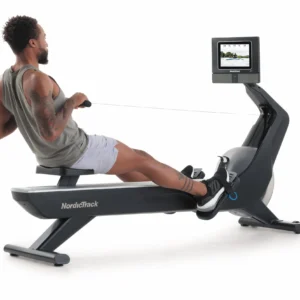
Rowing offers a full body workout that starts with your legs, goes through your core, and ends with your arms. The movement of rowing is more complex than other cardio workouts, which is why gymnasts and martial artists use rowing to improve their coordination and body awareness. This is something they can't get from running or cycling.
Train Hard, Stay Safe
One of the greatest benefits of rowing is that it offers an amazing workout for both your cardiovascular system and muscles without the joint impact you get from running or plyometric training. Studies of the biomechanics of rowing show that when done correctly, it puts very little compressive or shear force on vulnerable areas like the lower back, knees, and ankles. This makes it a low impact exercise, which means athletes can do a lot more of it without increasing their risk of injury. That’s a big deal for top-level athletes who need to get the most out of their training while avoiding downtime due to injury.
How to Tailor Your Rowing Challenge to Your Fitness Level
The most successful rowing challenges incorporate a gradual increase in difficulty that aligns with your current fitness level and steadily raises the bar. Top athletes arrange their rowing training around three main factors, volume (total meters, time), intensity (pace, power output), and technical complexity. The best plans, like those designed by Olympic gold medallists, adjust these factors in a strategic way rather than just ramping up the difficulty without thought.
Before recommending a rowing challenge program, coaches usually evaluate an athlete's rowing skills using standardized tests. These tests often include technique evaluations, steady state capacity tests (such as 20-minute distance trials), and power output assessments (like 1-minute maximum effort tests). This initial data ensures that athletes start challenges at the right level, providing a stimulus without overwhelming their technical ability or recovery systems. The most successful athletes keep detailed training logs that track not only performance metrics but also technical improvements and subjective feedback on the difficulty of the workout.
For Beginners: 8-Week Progressive Challenge
The “MASTER THE BASICS” program from British Rowing is perfect for beginners and athletes who are new to rowing. This 8-week challenge focuses on technique before intensity to make sure athletes learn the right movements for performance and to avoid injury. The first two weeks are mostly about getting the sequence right, legs, core, arms for the drive, arms, core, legs for the recovery and doing so at a low intensity and for a short time (usually 10-15 minutes).
As you get the hang of the technique, the program will introduce interval work with structured rest periods. This will allow you to continue to focus on your technique while gradually building your cardiovascular capacity. By weeks 6-8, you'll be able to progress to continuous rowing sessions of 20-30 minutes while maintaining proper form. This will create the foundation necessary for more advanced challenges. Elite coaches value this approach because it prevents the technical compensation patterns that often develop when intensity precedes technical competence. This creates lasting movement efficiency that supports future development.
Intermediate Challenge: The Pyramid Workout
Intermediate athletes can benefit from “pyramid” structures that systematically vary intensity and duration. A classic pyramid workout starts with longer intervals (5-7 minutes) at moderate intensity (70-75% of maximum effort), progresses to shorter intervals (1-3 minutes) at higher intensities (80-85% effort), and then returns to the longer, moderate intervals. This structure develops both aerobic capacity and lactate tolerance while teaching athletes to recover effectively between high intensity efforts, a critical skill for competitive performance in any sport.
High Level Challenge: 5×7-Minute Intervals
Eric Murray's “Survive and Thrive” 5×7-minute interval challenge is the ultimate in rowing programming for top-tier athletes. Each 7-minute segment includes deliberate rate changes that require athletes to keep their technique while moving between different energy systems. The interval structure usually adheres to a 2-3-2 minute pattern with the middle section at considerably higher stroke rates, developing both aerobic base and anaerobic capacity at the same time.
5×7 Interval Structure by Olympic Champion Eric Murray
Interval 1: Start by focusing on technique at 22-24 strokes per minute
Interval 2: Increase the intensity to build sustainable power at 24-26 strokes per minute
Interval 3: Mix up the rhythm with rate changes between 24-28 strokes per minute
Interval 4: Push your limits by challenging your anaerobic threshold with 28-30 stroke segments
Interval 5: Finish strong by maintaining technical focus even when fatiguedThe rest periods between each interval are set at 3 minutes to allow for some, but not complete, recovery. This creates the perfect conditions for the body to adapt and improve. Athletes will monitor their heart rate during these rest periods, with top performers typically seeing a drop of 25-35 bpm from their peak interval rates. The overall effect of this challenge is that it will improve your cardiovascular fitness and mental toughness, which are both key for any endurance event.
Advanced rowing challenges are unique because they incorporate technical execution standards even when the intensity is high. Murray's program includes specific technical checkpoints that athletes must maintain regardless of how tired they are, full leg extension, proper sequencing, controlled slide return, creating not just fitness but technical resilience that transfers directly to competitive performance, also a lot of people ask are rowing machines good for weight loss and the answer is yes.
Rowing Success Comes From Expert Coaching
Though the quality of equipment is important, studies have repeatedly shown that having an expert coach can make a much bigger difference in performance improvement than simply upgrading equipment. Rowing is a technical sport, and even small changes to form can make a huge difference in efficiency, often resulting in 10-15% improvement in performance without any increase in physical ability. Programs that include coaching from Olympic champions like Eric Murray or members of the GB Team not only provide structured workouts, but also the technical knowledge that can turn rowing from a simple workout into a truly effective fitness routine.
What You Can Learn From Olympic Champion Eric Murray
When you train with double Olympic champion Eric Murray, you gain access to top-notch technical knowledge. Murray doesn't just show you the perfect form, he breaks down the biomechanics of efficient rowing into actionable steps that you can put into practice right away. His coaching emphasizes the important link between technique and power generation, especially the exact timing of the leg drive and body swing that many beginner rowers overlook.
Murray's programs are designed to correct technique in real time while progressively increasing intensity, which helps athletes develop correct movement patterns that can withstand fatigue. He provides detailed explanations of common mistakes, such as bending the arms too early, rushing the recovery phase, and not compressing the legs enough, which helps athletes identify and correct technique errors during their workouts. His (RE)LIVE program includes Q&A sessions that address specific performance issues that even seasoned rowers run into, providing solutions that can help shave seconds off their personal best times.
Training Tips from Saskia Budgett of the GB Rowing Team
Saskia Budgett, a member of the GB Rowing Team, uses her experience as an elite competitor to inform her technical coaching. She emphasizes the elements of rowing that have the most direct impact on racing results. Budgett is an expert at teaching athletes how to maintain technical efficiency when they switch between different stroke rates and intensity levels. This is a crucial skill for both competitive rowing and fitness training. She also provides guidance on how to breathe correctly in sync with the rhythm of the stroke, which helps athletes get the most oxygen during high intensity intervals.
Budgett's coaching in the TRAINING DAY program highlights the importance of small posture adjustments that can significantly enhance power transfer throughout the stroke. She instructs athletes on how to identify and fix minor efficiency leaks, such as slight shoulder hunching, early wrist break, and inconsistent pressure application, that can collectively reduce power from each stroke. Elite athletes appreciate her technical cues for maintaining form during the crucial last 500 meters of a 2000m piece, when technique usually breaks down due to fatigue and lactic acid build-up.
Coach Johan's Studio to Home Training Techniques
Coach Johan has been a trailblazer in adapting high level rowing training techniques from professional training facilities to home settings. He recognizes the real world limitations many athletes have limited time, different equipment, conflicting priorities and still retains the basic principles that lead to performance enhancement. Johan is an expert in designing versatile workout plans that enable athletes to modify the length and intensity while keeping the essential stimulus thresholds required for adaptation, he is always asked are rowing machines good for weight loss and his reply is always yes.
Johan’s ground breaking technique blends rowing intervals with matching bodyweight exercises that focus on muscle groups specific to rowing, developing workouts that not only improve performance on the machine but off it as well. His detailed guidance on how to set up an ergometer for various body types is highly valued by athletes, as it prevents the typical technique adjustments that result in inefficiency and possible injury. His focus on translating technique cues from the studio to home practice fills the gap between sporadic coaching sessions and regular independent workouts.
Let's Get Rowing: Kickstart Your Fitness Challenge Now
Embarking on your rowing fitness odyssey is as easy as one, two, three: choose a challenge that matches your fitness level, set up initial measurements to monitor your progress, and pledge to regular sessions concentrating on technique. Top athletes, no matter their fitness level in other sports, often begin with technique centred programs such as British Rowing's MASTER THE BASICS. They understand that rowing effectiveness comes before rowing intensity. Be realistic when setting your initial goals, concentrate on correct form and regular completion before performance metrics.
Make sure you plan your rowing workouts wisely. It's best to do them after a rest day or after a less intense workout to make sure you're able to perform at your best. Don't just keep track of your performance, but also your technique. Pay attention to things like fully extending your legs, maintaining the correct sequence, and controlling your recovery. This will help you develop efficient movements. Keep in mind that professional rowers measure their progress over weeks and months, not individual workouts. This gives your body time to adapt and prevents your technique from getting worse due to too much intensity too soon.
Common Questions
Beginning athletes who are new to structured rowing challenges often ask similar questions about how to get started, what kind of progress they should expect, and how to integrate rowing with their existing training. The answers provided here reflect current best practices as recommended by elite rowing coaches and exercise physiologists who specialize in cross training applications.
How often should I take on these rowing challenges for the best results?
For the best results, you should tailor the frequency of your rowing challenges to your training experience and recovery capacity. Beginners should start with 2-3 sessions per week, with at least 48 hours between rowing workouts to allow for technique consolidation and to prevent overuse injuries. Intermediate athletes can progress to 3-4 sessions per week, potentially including back to back days with varied intensity levels. Advanced athletes following programs like Eric Murray's intervals typically do 4-5 sessions per week while monitoring recovery markers like morning resting heart rate and perceived exertion during warm-ups.
Top trainers stress that regularity is more important than the occasional high volume workout, regular sessions focused on technique produce far better improvements than sporadic “all-out” workouts. Pro rowers usually keep at least one low intensity session focused on technique every week, even during high volume training periods, acknowledging that improvements in efficiency often result in better performance gains than simply conditioning.
Is there a specific machine I need for these rowing challenges that athletes swear by?
Although professional grade rowing ergometers like Concept2 offer the most reliable metrics and resistance profiles, all the challenges we recommend can be done on any good rowing machine. The key features for a good workout are consistent resistance, precise stroke tracking, and suitable monitor feedback (at the very least showing stroke rate, split time, and workout duration). Technique focused aspects of programs like MASTER THE BASICS can be done effectively on any machine that allows for correct body positioning and full range of motion.
Top trainers suggest buying a heart rate monitor before splashing out on new gear, because knowing how your heart responds to different exercise intensities is a more useful training guide than minor differences in equipment. If you’re training specifically to improve your performance in a boat, machines that have a similar resistance curve to a boat (like water rowers) might give you a slight advantage, but the principles of good technique are the same whatever machine you use, but when he was asked about, are rowing machines good for weight loss, he said yes, and you could use any rowing machine for for that.
Is it possible to merge these rowing challenges with my existing workout schedule?
Combining rowing challenges with your current workout plan requires careful planning and arrangement throughout your week. For those who focus on strength training, it's best to schedule rowing sessions on days separate from intense lower body workouts or as a low intensity active recovery after upper-body workouts. Endurance athletes can use rowing challenges as additional cardio on lighter workout days or as the main workout during recovery weeks from sport specific training. Rowing is especially useful during times when it's important to lessen the stress on joints from primary sports due to its low impact nature.
Expert trainers suggest swapping out instead of adding training volume when first starting rowing challenges. This keeps total training stress the same while moving some stimulus to this new modality. As your body gets used to it, rowing can either mean more training volume or better quality work within the existing volume. This depends on how well you recover and what your performance goals are. A lot of top athletes keep up with “maintenance” rowing sessions all year round. Even when they're mainly focused on training for their sport, they know rowing is a great way to keep their cardiovascular fitness up without putting too much stress on their joints.
When will I start seeing the benefits of these rowing workouts?
Rowing programs are structured in such a way that you can expect to see improvements in your fitness level at certain points. Coaches who have been in the business for a while can give you a good idea of when to expect these improvements. You'll typically start to see improvements in your technique within the first 2-3 weeks of regular practice. This is because your brain is learning the correct sequence of movements. You may even see your performance improve right away as a result of these technical improvements, before your body has even had a chance to adapt. You can expect to see measurable improvements in your cardiovascular fitness, like a lower heart rate after exercise and better performance during steady state exercise between weeks 4 and 6 of regular training.
For noticeable improvements in performance, particularly in benchmark tests like 2000m times, most athletes require 8-12 weeks of structured training. Elite athletes who follow programs like (RE)COMMIT or Murray's interval challenge often see improvements of 5-10% within this timeframe. When it comes to body composition changes from rowing programs, these generally become noticeable after 6-8 weeks of consistent training and proper nutrition. During the initial adaptation period, the most successful athletes tend to focus on process metrics such as technique consistency, workout completion, and recovery quality, rather than on outcome measurements.
Can these rowing challenges be used for injury recovery or rehabilitation?
Because of the controlled, seated position and adjustable resistance of rowing, it's often used during rehabilitation from many common athletic injuries. Physical therapists frequently recommend modified rowing programs during recovery from lower extremity injuries. This is because the closed chain leg drive builds strength and proprioception without impact forces. For upper body injuries, especially shoulder rehabilitation, technique focused programs with the right modifications allow controlled loading through functional movement patterns. This could potentially speed up the return to sport specific activities.
- Recovering from lower back injuries: You should focus on programs that emphasize proper posture and controlled movements. A good example is the MASTER THE BASICS program, which initially has a reduced range of motion.
- Rehabilitating the knee: Start with shorter slide positions and gradually increase the range as the healing process progresses.
- Recovering the shoulder: Adjust the grip width and possibly reduce the intensity of the pulling phase while maintaining leg drive.
- Returning to activity after a concussion: Steady state rowing can be used to reintroduce controlled exertion without head movement or impact.
- General deconditioning: Start with shorter duration sessions that focus on technique before progressing to interval challenges.
Always get clearance from your doctor before you start rowing during injury recovery. The most effective rehabilitation applications involve collaboration between medical professionals and rowing technique specialists. They can develop appropriately modified movement patterns that support healing while maintaining fitness.
Rowing challenges created by top athletes offer the right mix of technical growth, physical stimulation, and joint-friendly workouts that all athletes and fitness fans require. The structured progression from basic movement patterns to high intensity intervals ensures both immediate engagement and long term development. Whether you're supplementing sport specific training or using it as your main fitness method, these athlete-endorsed rowing programs provide outstanding results through their combination of biomechanical efficiency and physiological optimization.
If you're an athlete looking for the best cross training method or a fitness enthusiast who wants to get the most out of your limited training time, structured rowing challenges are the way to go. They're efficient, effective, and sustainable. Plus, they engage your entire body, require technical precision, and can be adjusted to match your intensity. This makes them valuable for all fitness levels and athletic backgrounds.
If you're ready to take your fitness journey to the next level, look no further! Our fitness equipment like rowing machines are designed to unlock your full potential and help you achieve your goals. From tailored workout routines to expert nutrition advice, we've got you covered. Click Here to learn more and get started on the path to a healthier, stronger you.